
Datsun Man
Member
So for about the past 8,000 miles I have been running the Dobinsons MRR Shocks and Struts on my 2012 Frontier. Before that I had the Dobinsons GS Twin Tubes, Bilstein 6112/5160 and the Bilstein 4600 with spacers. With a 1993 Pathfinder I had the Dobinsons GS and Old Man EMU Nitro charger Shocks. I also had a 2019 Ranger with Old Man EMU Nitro charger Shocks and Struts. With my experience with all these different shocks and struts, I can say they all have their own special quirks. Even with those different quirks, I found the Dobinsons MRR to be on top and we shall go over why I believe such.
Let's start with the reason I went with Dobinsons to begin with. A few years back I had my 1993 Nissan Pathfinder. With that vehicle it was the SE Sport(back in the day when it actually meant something). That vehicle came with Electronic Adjustable Shocks that went from soft for comfort and a bit stiff for a more sporty feel or Off-road use. As long as they were not blown, they were fantastic! Sadly I was missing the rear and the fronts were flogged. Because I was familiar with them, I decided to go with Old Man EMU. I remember it from my 2019 Ranger and how well it made the vehicle handle both on the pavement and on the dirt. At first it felt good, but later I found out that the Nitro charger Shocks and Struts had some very poor compression and rebound causing a very uncomfortable ride on the trail.
After getting very displeased with the Old Man EMU suspension I was on a hunt. I was talking to another individual and was introduced to Dobinsons and was informed that I would most likely be happy with them. Well I made the jump to the Dobinsons GS on that vehicle and was extremely happy with them!! They did a much better job at controlling the the up and down movement both on the street and the dirt.
Now fast forward to my 2012 Frontier. When I got it, it still had the OEM Bilstein 4600 Shocks and Struts with Daystar Spacers. In general it was ok, but not that great. While trying to make some decisions and getting some not so helpful information from those spell bound from All Dogs(seriously it's like the plague), I decided to go to Bilstein 6112/5160 with some HD Leaf Springs in the rear. For the dirt and general pavement it was alright. When I got to certain sections of I-25 in Colorado it got horrible! It was so bad that the vehicle sucked like a bronco and almost went into the next lane into another vehicle(talk about an exciting time right?!
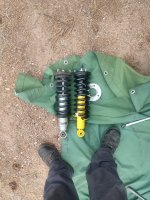
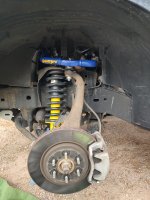
At the beginning of this year I finally made the switch to Dobinsons GS Twin Tubes with the Heavy Coils up front and the Super Heavy Leafs in the rear(my vehicle is a bit heavy). Once the suspension was installed I was happy to have my vehicle at an appropriate height(roughly 1.5 inches by suspension lift). On the street it felt great along with the dirt. On the other hand when I got to certain concrete sections the ride felt horrible like what I felt with the Bilsteins, but a little better at the least. To say the least I was a bit unhappy as I wanted a suspension that could control the ride in all conditions well for Touring purposes.
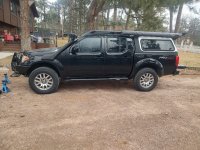
After dealing with the horrible ride problems, I started looking at some other reasonable options for the Shocks and Struts. Because of this I decided to stick with Dobinsons since it would let me keep the same Coil Springs up front. That gave me the options of the Dobinsons IMS and MRR Shocks and Struts. Between the two I decided to go with the MRR Shocks and Struts due to having the ability to find tune the Rebound with High Speed and Low Speed Compression.
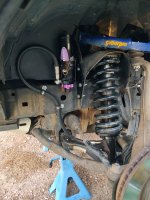
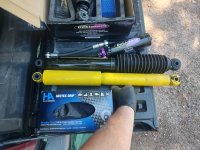
After I got the MRR Shocks and Struts I started with the tuning process. For what it's worth I will say that Shock and Strut tuning is not easy if you don't understand what each function does. That said once you play with it for a bit, it becomes easy to understand. What I did was follow the guidelines from Dobinsons and set both the Front and Rear to the Loaded with Accessories settings since my vehicle is heavy. After that I went to the trail and started playing to see what I could do. I honestly thought I had it set in a few hours and went from there. To say the least I was happy at first, but I still had a while to go.
After a recent trip to my folks place in Arizona from Colorado and back I decided to see if I could play with the settings again. Man was I glad I did such. I first started with the rear. What I found with my vehicle to be best was to set the Rebound to Comfort up front and a little higher than the Loaded suggestion along with the High Speed Compression to the Loaded suggestion. Low Speed Compression is set to 4 clicks on all 4 at the moment and this seems to do well for me. After running around on the Pavement and the Dirt for a bit, I can say it was the best thing ever since installing these Shocks and Struts! Yes I still feel the bumps in the road, but the vehicle is still controlled and not jumping all over the place! Even over some very rough washboards I was highly impressed (that was with 265/70-18's at 35 PSI BTW)!
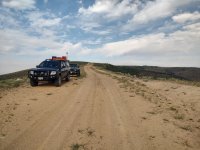
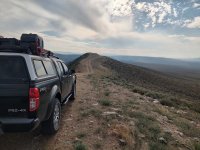
To put things simple, once you get these Shocks and Struts tuned right to your application you will get an excellent ride for Touring/Overlanding! It is certainly worth the cost to say the least and I say you should spend the money if you are able!
Let's start with the reason I went with Dobinsons to begin with. A few years back I had my 1993 Nissan Pathfinder. With that vehicle it was the SE Sport(back in the day when it actually meant something). That vehicle came with Electronic Adjustable Shocks that went from soft for comfort and a bit stiff for a more sporty feel or Off-road use. As long as they were not blown, they were fantastic! Sadly I was missing the rear and the fronts were flogged. Because I was familiar with them, I decided to go with Old Man EMU. I remember it from my 2019 Ranger and how well it made the vehicle handle both on the pavement and on the dirt. At first it felt good, but later I found out that the Nitro charger Shocks and Struts had some very poor compression and rebound causing a very uncomfortable ride on the trail.
After getting very displeased with the Old Man EMU suspension I was on a hunt. I was talking to another individual and was introduced to Dobinsons and was informed that I would most likely be happy with them. Well I made the jump to the Dobinsons GS on that vehicle and was extremely happy with them!! They did a much better job at controlling the the up and down movement both on the street and the dirt.
Now fast forward to my 2012 Frontier. When I got it, it still had the OEM Bilstein 4600 Shocks and Struts with Daystar Spacers. In general it was ok, but not that great. While trying to make some decisions and getting some not so helpful information from those spell bound from All Dogs(seriously it's like the plague), I decided to go to Bilstein 6112/5160 with some HD Leaf Springs in the rear. For the dirt and general pavement it was alright. When I got to certain sections of I-25 in Colorado it got horrible! It was so bad that the vehicle sucked like a bronco and almost went into the next lane into another vehicle(talk about an exciting time right?!
At the beginning of this year I finally made the switch to Dobinsons GS Twin Tubes with the Heavy Coils up front and the Super Heavy Leafs in the rear(my vehicle is a bit heavy). Once the suspension was installed I was happy to have my vehicle at an appropriate height(roughly 1.5 inches by suspension lift). On the street it felt great along with the dirt. On the other hand when I got to certain concrete sections the ride felt horrible like what I felt with the Bilsteins, but a little better at the least. To say the least I was a bit unhappy as I wanted a suspension that could control the ride in all conditions well for Touring purposes.
After dealing with the horrible ride problems, I started looking at some other reasonable options for the Shocks and Struts. Because of this I decided to stick with Dobinsons since it would let me keep the same Coil Springs up front. That gave me the options of the Dobinsons IMS and MRR Shocks and Struts. Between the two I decided to go with the MRR Shocks and Struts due to having the ability to find tune the Rebound with High Speed and Low Speed Compression.
After I got the MRR Shocks and Struts I started with the tuning process. For what it's worth I will say that Shock and Strut tuning is not easy if you don't understand what each function does. That said once you play with it for a bit, it becomes easy to understand. What I did was follow the guidelines from Dobinsons and set both the Front and Rear to the Loaded with Accessories settings since my vehicle is heavy. After that I went to the trail and started playing to see what I could do. I honestly thought I had it set in a few hours and went from there. To say the least I was happy at first, but I still had a while to go.
After a recent trip to my folks place in Arizona from Colorado and back I decided to see if I could play with the settings again. Man was I glad I did such. I first started with the rear. What I found with my vehicle to be best was to set the Rebound to Comfort up front and a little higher than the Loaded suggestion along with the High Speed Compression to the Loaded suggestion. Low Speed Compression is set to 4 clicks on all 4 at the moment and this seems to do well for me. After running around on the Pavement and the Dirt for a bit, I can say it was the best thing ever since installing these Shocks and Struts! Yes I still feel the bumps in the road, but the vehicle is still controlled and not jumping all over the place! Even over some very rough washboards I was highly impressed (that was with 265/70-18's at 35 PSI BTW)!
To put things simple, once you get these Shocks and Struts tuned right to your application you will get an excellent ride for Touring/Overlanding! It is certainly worth the cost to say the least and I say you should spend the money if you are able!