
Get your tickets to THE BIG THING 2026!

Do Garage-Kept Jeeps Really Last Longer?

When at home, where/how do you park your Jeep?


  • Total voters
    11

GladiatorUp.com

New member
We’ve all seen them: legendary old Jeeps with faded paint and 300,000 miles on the odometer, still running like they’ve got something left to prove. And then there are the others—the ones that don’t even make it past 120k before electrical gremlins, leaks, and corrosion start winning.

I'm curious if the difference between those two Jeeps often starts in the same place every night.

So here’s the question worth asking:

Is garage-keeping the secret to a long-life Jeep?

I propose yes—because most modern vehicle deaths come from environmental stress (including poor maintenance), not mechanical wear.

And it gets even more interesting when you look at how late-model Jeeps age.

More: Read full post at GladiatorUp.com

Comment and take the poll!
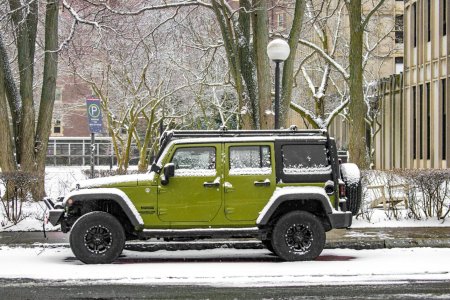
snowy-jeep-wrangler.jpg
 
I have had garage kept vehicles that get moved outdoors to make room for the replacement and immediately start visibly rusting. Indoors is better. If mine gets snowed on like that, it was by accident....
 
We had a regular customer when I was at Chrysler, he had a soft top TJ he drove an hour each way to work every day. He had around 400k on it, it wasn't a creampuff but it also wasn't super sketchy. They guy deserved a medal for putting up with that vehicle for a long distance DD for so long...

We had much rougher looking ones come in with a lot fewer miles.

I've heard in snowy climates outside is better if they are driven. If the stuff stays frozen on your car it doesn't really interact with your car. If your car melts off every night it gets a salt bath every night and when it dries off the salt is still there.
 
Considering the above posts, it would seem that salt exposer is the determining factor. While most California and Florida vehicles fair very well, the ones closer to ocean air, seem to have the same issues as ones in the rust belt.
 
I read the article and for myself, The climate where roads have salt on then and how much they are used in bad climate zones, makes a big difference. California 60+ living there distance from the coast always 20+ miles from the beach. I had very light problems. For the people which live less then 2 miles from the coast have a lot more rust problems. They still have fog which can get up to 40 miles inland for months at a time, so that is a contributor.

Where I live in New Mexico for the last 15 years with a year round average of near 15% humidity. You do not see very much rust compared to even California.

What I see has not taken into consideration is the how each person uses it. The Pacific North West with drizzle and a lot of mud is much harder on every part of a vehicle then the dry desert with far less moisture.

Also the ability to navigate around boulders and trees and not through them. Driver skills!

Just also maintenance and pride in their vehicle.
 
Last edited:
Considering the above posts, it would seem that salt exposer is the determining factor. While most California and Florida vehicles fair very well, the ones closer to ocean air, seem to have the same issues as ones in the rust belt.

Salt air rust is weird.

I have lived in the rust belt my whole life. Rockers, wheel arches etc are common to see rust in vehicles around here.

We went to Hawaii for our Honeymoon and it was nuts. They had no "common areas" like we do, it was rust anywhere and everywhere... it was chaos.
 
I live in the middle of everything, so salty air isn't an issue. Winter rolls around and the brine used on the roads sticks like crazy. I've found that regular washing helps, but rust will happen regardless. It always creeps into places on the body where drainage isn't the best. I have a 97 XJ with a good size hole on the back passenger quarter, and an 05 TJ that's got a couple good spots going, one back passenger quarter, and below passenger door toward the back. I think the spot on back started as a scratch, but the side spot is due to mud and water retention... both there when I bought it.

Either way, this summer I'll be doing some body work, at least on the XJ.

Both jeeps reside in the wild, either on the driveway or in the street.

XJ Rust..
IMG_9302 by Tim, on Flickr

TJ rust
IMG_9294 by Tim, on Flickr
 
We had a regular customer when I was at Chrysler, he had a soft top TJ he drove an hour each way to work every day. He had around 400k on it, it wasn't a creampuff but it also wasn't super sketchy. They guy deserved a medal for putting up with that vehicle for a long distance DD for so long...

We had much rougher looking ones come in with a lot fewer miles.

I've heard in snowy climates outside is better if they are driven. If the stuff stays frozen on your car it doesn't really interact with your car. If your car melts off every night it gets a salt bath every night and when it dries off the salt is still there.

Everything "garage-kept" lasts longer. Cars, trucks, snowblowers, garden tractors, chainsaws... Snowy climate included. Stuff like
Salt does indeed interact with your car throughout the winter as it actively melts the ice anyway. The key is to wash/rinse the underside periodically and fluid film the underside every couple years. Barring that, when ot gets rough, get under it with a wire brush and re-coat with wax or paint or POR 15 or something

400K...in a soft top! Just, wow. Im just at 240k in my Sierra - way more comfy and smooth than an old soft top Jeep, and I KNOW this is a big year for maintenance
 
I live in the middle of everything, so salty air isn't an issue. Winter rolls around and the brine used on the roads sticks like crazy. I've found that regular washing helps, but rust will happen regardless. It always creeps into places on the body where drainage isn't the best. I have a 97 XJ with a good size hole on the back passenger quarter, and an 05 TJ that's got a couple good spots going, one back passenger quarter, and below passenger door toward the back. I think the spot on back started as a scratch, but the side spot is due to mud and water retention... both there when I bought it.

Either way, this summer I'll be doing some body work, at least on the XJ.

Both jeeps reside in the wild, either on the driveway or in the street.

XJ Rust..
IMG_9302 by Tim, on Flickr

TJ rust
IMG_9294 by Tim, on Flickr

Love that XJ and I even like the color !
 
Even it the low humidity in New Mexico we do get some snow and in the crushed volcanic ash they add salt to the gravel. We get 4 to 6 storms where they gravel and salt some of the roads and intersections.

I have a couple of power washers at the house. I had a friend tell me about a product he found. It has multiple fan spray tips screwed into a aluminum tube with wheels on each end/ It has a handle (pressure tube with matching quick connectors to attach to your pressure washer hose. It is much better then trying to get a decent spray going up into the little nooks and cranny's. Just like a English muffin! Since the spray is shared to 4 tips the pressure is not as strong as a single spray tip. It sure works good for year round cleaning under the vehicle. The cleaning is quick getting the pressure washer out and hooked up to the water supply takes most of the time.

For many people living where the snow is more common you probably already do this. But as a sun shine barefoot boy in short pants this was new to me. I am very pleased with the use of it year round.

A mud puddle splashes up and sticks under the vehicle will stick and any little moisture get into the dry stuck mud can get wet again, retaining the moisture against the metal without protection you will get rust. It all comes down to your feeling of is your vehicle worth a little time and effort to protect your investment.

The one I bought was this one through Amazon, this is the part #
 
Last edited:

Forum statistics

Threads
191,319
Messages
2,935,579
Members
235,317
Latest member
5mouse
Top