Get your tickets to THE BIG THING 2026!

You are using an out of date browser. It may not display this or other websites correctly.
You should upgrade or use an alternative browser.
You should upgrade or use an alternative browser.
pull pal alternatives
- Thread starter big sky trapper
- Start date


dieselcruiserhead
16 Years on ExPo. Whoa!!
Here are photos of the home made pull pal I have.. Havn't tried it yet...

crawler#976
Expedition Leader
any updates???
Pull pal alternative
I know this post has gone cold but I just built me one of these so here are some pics.
I know this post has gone cold but I just built me one of these so here are some pics.
Attachments
-
 all together.jpg27.8 KB · Views: 440
 -
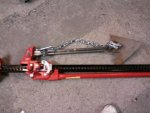 broken down.jpg24.4 KB · Views: 355
 -
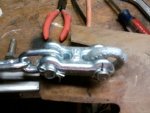 eye bolt and shackle.jpg22.2 KB · Views: 301
 -
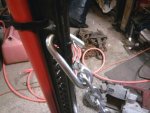 Safety chain clip on jack.jpg25.4 KB · Views: 283
 -
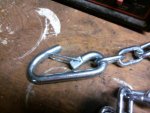 Safety chain clip.jpg24.9 KB · Views: 233
 -
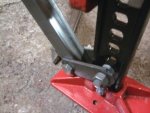 shackles on base of jack.jpg23.1 KB · Views: 269
 -
 trailer spring shackles.jpg26.1 KB · Views: 272

StumpXJ
SE Expedition Society
I dig the idea, how does it work? Need a video... 
Also, what prevents this thing from allowing the entire mechanism of the jack to pull itself into/under the dirt? We all know how *well* hi-lifts work when they are clean, throw a little dirt into the mix, and the jack is almost useless until its torn apart and cleaned. I know the pull palls often have to get pulled under VERY deep until it starts working. Just curious... neat idea for sure. Just wondering how well it actually works.
~James
Also, what prevents this thing from allowing the entire mechanism of the jack to pull itself into/under the dirt? We all know how *well* hi-lifts work when they are clean, throw a little dirt into the mix, and the jack is almost useless until its torn apart and cleaned. I know the pull palls often have to get pulled under VERY deep until it starts working. Just curious... neat idea for sure. Just wondering how well it actually works.
~James


CanuckMariner/Nomad
Love having fun 😊 in the 🌞 by the ⛵ and the ⏳
If a Hi-Lift can be used as a cum-a-long (manual winch) as well as lifting 1/4 to 1/2 the weight of one's rig then this idea certainly has merit and deserves to be tested as long as one is careful. I would suspect the Extreme version of the Hi-Lift would be better suited and safer than the cast (doesn't bend much without breaking) everyday version. Another way of having more than one use for one tool, makes it easier to justify having it along.

cruiseroutfit
Well-known member
...Also, what prevents this thing from allowing the entire mechanism of the jack to pull itself into/under the dirt? We all know how *well* hi-lifts work when they are clean, throw a little dirt into the mix, and the jack is almost useless until its torn apart and cleaned. I know the pull palls often have to get pulled under VERY deep until it starts working. Just curious... neat idea for sure. Just wondering how well it actually works..
A dirty hi-lift is a dangerous hi-lift and now you are compromising one recovery device to build another.
My other concern is using the hi lift mast in what could be a bending moment. For the two 'authorized' uses Hi-Lift designed for, the mast is used in pure compression (jacking) or tension (winching). When setting a winch anchor its very possible for it to dive at a varied angle, not inline with your pull, would worry me.
We discussed using the Hi-Lift mast as the main beam for a winch anchor device in the past. The biggest pro was weight and space savings for the vehicle. However I pulled apart my Pull-Pal and figured the net weight savings was just 7 lbs assuming you used the mast for a pull-pal like setup. The setup in this thread is obviously different and far lighter
You can read about that here:
http://www.expeditionportal.com/forum/showthread.php?t=15064
My logic was this. Sure, the entire Pull-Pal represents a lot of weight, but I'd guess that the beam itself isn't going to save you more than 10lbs. (later measured to be under 7 lbs) Consider my complete Pull-Pall weights 34lbs, 36lbs with the case... add to that I don't carry a Hi-Lift (26lbs) rather an exhaust jack (15 lbs)... I'm at a net savings. Not that I'm honestly ever worried about 10 lbs in a 7500lb setup

cruiseroutfit
Well-known member
who said he was trying to save weight?
Read the link referenced by that comment and you'll see as was clearly stated weight came up as an advantage. My comments are based accordingly no?
the concept is still the same and i doubt the mast of a Hi-Lift is much weaker (if at all) than that of an actual Pull-Pal.
I wouldn't bet my recovery on it... nor would I feel remotely comfortable watching my hi-lift dig several feet into the ground. Different strokes for different folks but having used a Pull-Pal and seeing the forces it takes to get them started but not only anchored, the only glorified boat anchor is going to be whats left of your hi-lift. :elkgrin: Nobody is saying the Hi-Lift mast is 'weaker', what I am implying is that it is likely not designed to be used in anything but pure tension and compression, ie a potential bending moment like seen by a Pull-Pal recovery would not be a safe use imo of a cast mast arm.
Last edited:

1leglance
2007 Expedition Trophy Champion, Overland Certifie
How come no one comments on the fact that it isn't very nice to copy someone elses hard design work.
Yeah I know almost everything is based on something that came before...
But it still bugs me to see someone come along and copy something as a homebuild, teach others and knock the very company they are making copies of.
Now I am not picking a fight, just saying that it has an effect, a company wants to charge more to get money while they can, and many times not even bother since they just figure guys in garages will copy it.
Yeah I know almost everything is based on something that came before...
But it still bugs me to see someone come along and copy something as a homebuild, teach others and knock the very company they are making copies of.
Now I am not picking a fight, just saying that it has an effect, a company wants to charge more to get money while they can, and many times not even bother since they just figure guys in garages will copy it.

R_Lefebvre
Expedition Leader
How come no one comments on the fact that it isn't very nice to copy someone elses hard design work.
Yeah I know almost everything is based on something that came before...
But it still bugs me to see someone come along and copy something as a homebuild, teach others and knock the very company they are making copies of.
IF the Pull-pal were patented, is the patent still valid? Also, these setups are probably different enough they could get a patent if they wanted. The use of a standard, cheap, readily available farm blade is a significant improvement in construction, and also improves the design because it folds without needing to remove the blade. The patent laws are supposed to protect the rights of the holder to profit from their design. But it still allows considerable leeway to further improve the design for the benefit of society.
I intend on making one of these myself and will sleep well at night.
Nobody is saying the Hi-Lift mast is 'weaker', what I am implying is that it is likely not designed to be used in anything but pure tension and compression, ie a potential bending moment like seen by a Pull-Pal recovery would not be a safe use imo of a cast mast arm.
Technically... there is some bending moment in a Hi-Lift due to the fact that the lifting nose is several inches out of plane with the column.
cruiseroutfit
Well-known member
...I intend on making one of these myself..
Do you plan to use the entire hi-lift as shown? Your comfortable driving your hi-lift several feet or more into the ground?
...Technically... there is some bending moment in a Hi-Lift due to the fact that the lifting nose is several inches out of plane with the column.
A minor moment but true, exactly why hi-lift oriented the depth of their 'I-Beam' in that direction. The bending you're likely to encounter using this mast for a winch anchor is the opposite, across the weaker section. Will it fail, who knows, have hi-lift masts bent, yes. Regardless, I'm not over the point of burying my hi-lift mechanism in the ground several feet as its reverse logic and using the mast only as part of the winch anchor doesn't represent enough weight savings to mandate disassembling one recovery tool to build another when often time is crucial.
R_Lefebvre
Expedition Leader
Do you plan to use the entire hi-lift as shown? Your comfortable driving your hi-lift several feet or more into the ground?
Sorry, yeah, that wasn't clear. I don't intend on using the Hi-Lift beam. I agree, that the 7lbs or whatever weight savings isn't really worth worrying about compared to the disadvantages of using the Hi-Lift parts.

dzzz
™
How come no one comments on the fact that it isn't very nice to copy someone elses hard design work.
Yeah I know almost everything is based on something that came before...
But it still bugs me to see someone come along and copy something as a homebuild, teach others and knock the very company they are making copies of.
Now I am not picking a fight, just saying that it has an effect, a company wants to charge more to get money while they can, and many times not even bother since they just figure guys in garages will copy it.
Your against generic drugs? You only buy name-brand Tylenol?