Sad End to This Cautionary Tale, As Folks Start to Head Back Out Into the Wilds, Pls Be Careful

Since I started this thread, I’ll finish it up before going mostly offline for the next few weeks.
Here’s the wrap up of the original sad story that started this thread:

https://www.azcentral.com/story/news/local/arizona-breaking/2021/08/01/girlfriend-
honors-tucson-veteran-congressional-aide-who-died-camping/5446121001/


Girlfriend of Tucson man who died camping says legacy will live on in bill for veterans
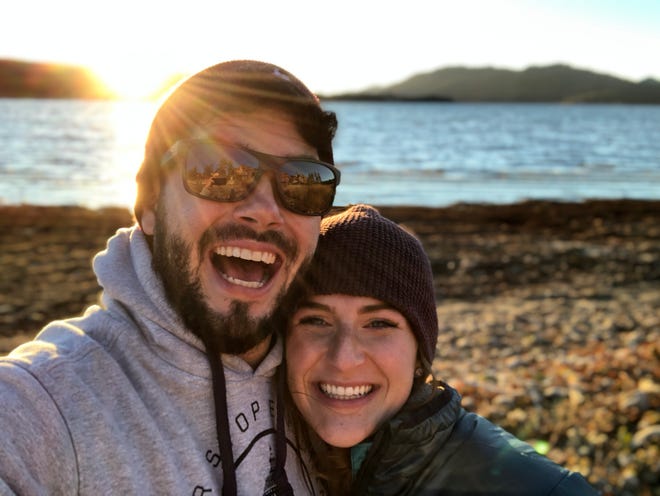
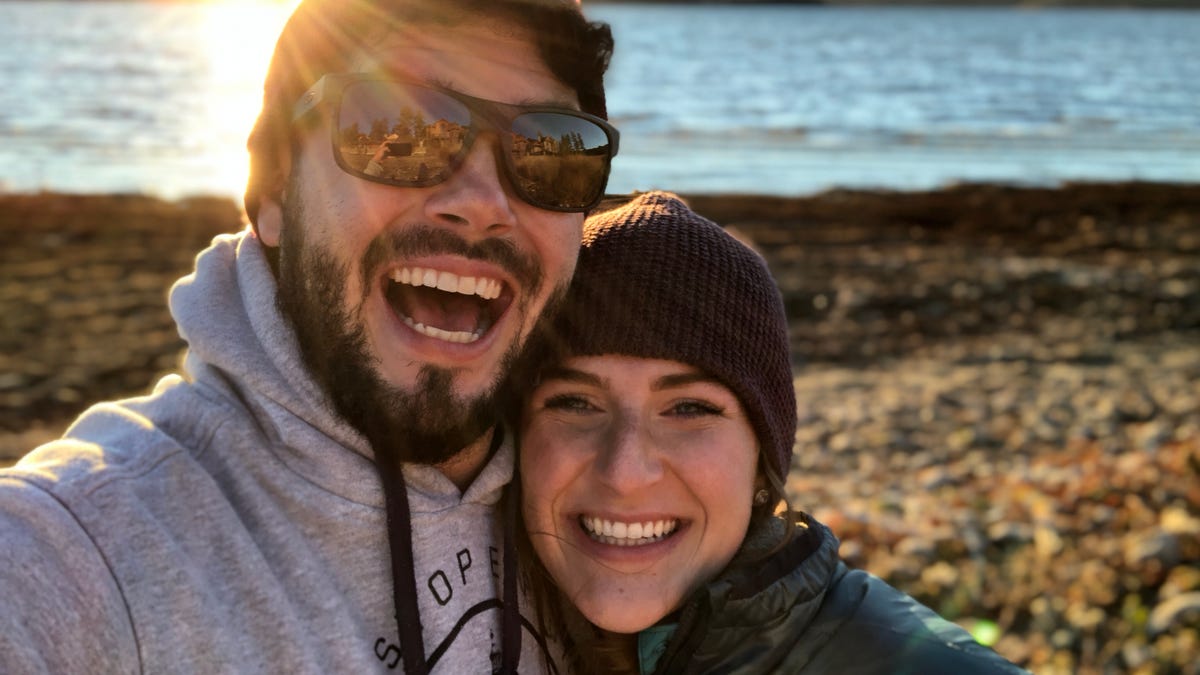
Alexander Lofgren, 32, a Tucson veteran and congressional aide who died in a hiking accident in Death Valley National Park in April 2021, poses with his girlfriend, Emily Henkel, 27, in California.

Every weekend for the past two years, Emily Henkel and her boyfriend, Alexander Lofgren, would spend time together exploring national parks or the outdoors.

Lofgren would show Henkel parks she’d never been to, and whenever they visited a new park, Lofgren’s eyes would fill with excitement, Henkel said. He was a combat veteran who used nature as therapy after serving in Afghanistan.

“He just had this absolute wonderment and complete awe of all these parks and just would be so excited to show me,” she said.

The Tucson couple both loved nature — they dreamed of opening their own plant nursery one day and had plans to visit many parks. But on Easter weekend this year, Lofgren, who worked as a caseworker assisting veterans, died in a hiking accident on a short camping trip with Henkel in Death Valley National Park.

Now, in honor of Lofgren’s love for parks and helping veterans, Henkel said his legacy will live on in a bill that would give veterans and Gold Star families free entry to national parks for life. It passed in the U.S. House of Representatives on Thursday.
The bill, which was introduced by U.S. Rep. Mariannette Miller-Meeks, R-Iowa, in July, was named after Lofgren, 32, who worked as a congressional aide for Rep. Raúl Grijalva, D-Arizona, before he died.

Henkel told The Arizona Republic she traveled to Washington, D.C. for Lofgren's final celebration of life and memorial last week, about the same time the House voted to pass the veterans' bill.

"It was a very emotional weekend knowing how, you know, the last time I was in D.C., I was with him, and this time I was by myself watching live from my phone from a restaurant," she said. "Every time another congressman or woman was up and voted yes, it was just a whole new slew of emotions — very bittersweet emotions."

Henkel remembers Lofgren's love for parks, helping veterans

Grijalva and others expressed their condolences after Lofgren's death and said he was passionate about helping veterans and nature — something he found therapeutic for himself and wanted other veterans to experience. It's why Grijalva wanted to name the veterans' bill after Lofgren, he said.

"Alex working with us here saw that nature, our open spaces, our state and federal parklands and wilderness areas and public places were therapeutic, that they were important in the reintegration of veterans back into our civilian life hereafter they completed their service to the nation, and he was a huge proponent of that," Grijalva told The Republic.
Henkel lived with Lofgren in Tucson and had been dating him for more than two years, she told The Republic. "We had an amazing relationship ... we were both beyond happy living life to the absolute fullest together," she said.

While together, Henkel said she and Lofgren explored countless parks across multiple states. The parks, Henkel said, meant an "incredible amount" to the couple — she said they frequented Saguaro National Park and wanted to get married at Valley of the Gods in Utah.

"The whole entire foundation of our relationship has been on our shared loved of nature and national parks and national lands, exploring them together," she said.

In July, shortly after the bill was introduced, Grijalva worked with Miller-Meeks to rename the bill in honor of Lofgren. Henkel said it was an "overwhelmingly amazing feeling" to see that Lofgren would be memorialized "in the absolute perfect way."

Lofgren was hired for Grijalva's district staff as part of the Wounded Warrior Fellowship program and worked as a caseworker helping veterans in Tucson after serving four years in the U.S. Army as a combat engineer and deploying to Afghanistan in 2011.

"It led onto a whole new range of emotions of just remembering ... all our memories in the parks and just how much this is exactly what he would have wanted," Henkel said.

As a liaison in Grijavla's office, Henkel said Lofgren proved he was capable of "absolutely amazing things" and wanted to leave the largest impact possible on veterans he helped.

"The amount of love and dedication that went into each and every 'case' and every constituent spoke volumes about how he was as a person," she said. "He could not go to bed at night if he knew anyone was suffering in any way."
Lofgren would spend his own money buying groceries on a Friday night for a veteran who didn't have enough food to last through the week, Henkel added.

"He was the type of person that would call and check up on a constituent well after the case was 'resolved' to make sure they were still doing okay. He is exactly the kind of person you would have wanted in your corner," she said.
Henkel said she hopes the bill impacts veterans, Gold Star families and service members as much as parks impacted her and Lofgren.

"I hope they're able to use this as an opportunity ... to see what is out there and experience the absolute, utmost joy that nature brings to people," she said.

What happened in Death Valley
Henkel and Lofgren went camping in Death Valley National Park on April 3 and intended to be home for Easter dinner the next day.

After the couple didn't return on the end date of their trip, the Inyo County Sheriff's Office conducted a days-long search for the two and eventually found their missing white Subaru and a note that said “Two flat tires, headed to Mormon Point, have three days’ worth of water.”

Henkel, 27, spoke publicly about the experience for the first time on the "Person of Interest with Natalie Jones" podcast in June.

After hiking on a designated trail down a slot canyon, the couple started looking for a way down a 70-foot cliff and waterfall. While looking, Henkel said Lofgren lost his grip, fell off the cliff and died shortly after on April 4.
Trying to get to Lofgren, Henkel said she climbed down the waterfall part of the way, but eventually fell and snapped her ankle. For days, she said she worked to survive in the remote area until officials could rescue her and Lofgren from the park.

On April 9, Lofgren was found dead on a remote, steep ledge, with Henkel, who was hospitalized.
A GoFundMe account that was set up for the family of Lofgren and Henkel had raised nearly $50,000 as of July 31.
More information about current free annual passes for active-duty service members and free entry for veterans and Gold Star Families can be found on the National Park Service's website.

More information about hiking safety tips can be found on the U.S. Forest Service's website.
Reach the reporter at Audrey.Jensen@arizonarepublic.com or on Twitter at @Audreyj101.
Support local journalism. Subscribe to azcentral.com today.


I was hoping someone would close the loop on this story. Thanks and Cheers!
 
Wow, much reading and many good suggestions on these pages. We all make mistakes folks so being critical of another persons decisions is helpful to the extent that it opens the discussion for additional choices and what-ifs?

My area of specialization was Airborne Warfare Operator / Aviation Rescue Swimmer in the Navy. I spent two years going through schools while watching others quit and/or DOR. Most of my training was focused on over water rescues but a significant portion was over land. Let's begin talking about rescue helicopters with four men aboard. You will have a pilot and co-pilot who's only job is to A-N-C (aviate, navigate, communicate). They are not looking for you - they are flying the bird, period. So now you have two other men in back - most likely one senior and one junior. The senior man will normally take up the position with the best visibility on one side of the aircraft - maybe an open cargo door. The junior man might be pressing his face up against a small plastic window that is older than him and it has the scratches to prove it. Depending upon how the sun hits it he may see next to nothing. What I am getting at here is even if you see a helo rolling in they are going to have a very tough time seeing a person compared to a vehicle. It's even worse over water since only your tiny head is visible in an endless sea of waves. It's kind of like being on a dark road and seeing a car with the headlights on (helo) driving towards you from a mile away. You can clearly see the car (helo) but he is nowhere close to seeing you and if he turns a few hundred feet away he many never see you.

Human eyes become tired quickly attempting to locate tiny "defects" in the surrounding landscape. I have been on searches and I will tell you that our human eyes are not good for extended searches. And yes, a sliver Subi or white RAM stands out quite a bit. Staying with your vehicle not only makes it better for you but much better for the men searching for you. And vehicles can carry massive amounts of supplies and water while we humans are generally limited to 50-75 lbs and that's in a proper backpack. Has anyone here mentioned that it is a good idea to stay with your vehicle?

None of us can peer into the future and imagine exactly what we will need and when we will need it so it's smart to have choices. Earlier someone mentioned an aviators survival vest - we carried an AN/PRC-90 survival radio (243.0 and 282.8 MHz), SDU-5/E strobe light (with a blue cover so it didn't look like muzzle flash), chem-lights, Mk 13 Mod 0 survival smoke/flare, pen-type flare gun, Mk 3 survival mirror, sea dye marker, whistle, etc. Now I am not saying to use these exact pieces but what I am attempting to establish is that we had choices depending upon the circumstances. This gear was carried over water, over land, all around the world and it works!

It's been said countless times here but remain with your vehicle and pack your vehicle with enough food and water for at least several days or maybe even a week. And carry options when it comes to signaling because human eyes are the weakest piece of equipment in a search scenario.
 
A sad story and lessons to be learned.

Over the last couple of years with retirement I have found myself traveling solo more and in areas that often had no cell service. I never invested in a personal rescue device like a SPOT or similar - but this year I did. I got a SPOT4 and to date have never used it for anything emergency related.

That being said, I use it frequently to check in with my "SPOT Group" which are all family members. At this point, the feedback from them is really what provides the primary "value" in having the SPOT. If I am out of cell contact for a few day...no worries, they get a SPOT check in daily. It really makes a difference for them to know where I am and that all is good. I have to admit that prior to getting the SPOT the only real value I saw was the small chance of use in an emergency. Not so...consider your family and friends.

Of course the bonus is that IF something goes bad, I have a method to get assistance.
 
Going to visit Death Valley for the last time.
If you are stuck and look at the map and, say, see Sheep Canyon trail or route, it doesn't mean there's actual route or that you can find what's left of it, which might had existed decades ago and been destroyed or never existed, without research in advance they couldn't be sure. I had seen those imaginary mapped "roads" not just "routes" going right accross some impassable terrain.

About ALWAYS staying with a car is also not true. People out there had died staying with their car and would likely have survived if they tried to walk out, it's well known, like the dude who starved to death on Bear Camp road. I've been there done that, I travel solo my entire life and I'm no marathon runner or prolific hiker, a woman in my 50s who can't be out in hot sun due to overheating, yet I full time camp solo all over remote arid areas as a lifestyle, had never notified anyone where I was going to in my life and never will, I walk remote deserts offroad daily in the dark too often without devices, the further from humans the better. This was 100% a walkout situation, they just took the wrong route. They had no satelitte comm or signal, complete nonsense to say to stay with a car on that desolate road. Unless you want nice grave shaped as a car. Typical wrong route choice situation.

Regular basic topo downloadable in multitide of online apps shows very bad, likely impassable terrain in both Willow creek canyon and Sheeps canyon. lt was clearcut walkout on roads 22 miles to paved road with 3 days of water, moving after dark (hopefully got flashlight). PCT hikers hike 20 miles in those deserts as average daiky distance. SAR, I dont hope for that ever and don't want them to look for me and bill me, I had been lost never called SAR. My biggest concern would be expense to get the vehicle outta there in that situation. Not everyone drops 100k on gear, your little world isn't the entire world, luckily, and people used to do all that and mine in those mountains with none of your yuppie gear. Always staying with a car is stupid, they had no expectation of anyone coming to save them. Even if they did: a woman died in Blythe region 2 years ago after giving her stuck car coordinates to worthless 911, who misinterpreted her coordinates, after being mean to her.

Where I grew up, it's bigger and wilder than USA, hardly any SAR, little kids walked all over the wilds without compass or map, I never seen a map until I was an adult yet I went gathering things in the wilds just fine, maps aren't everything. Say, if they had no maps downloaded, backtracking on roads is obvious choice. The worst choice is to stay with a car when no one is coming. Yeah I dk if you are SAR, marine, spaceship storm trooper, white house staffer, rich yuppie or whatever, not dying for your self aggrandising arrogant nonsense, don't push staying with car advice and "permits required" garbage
 
Last edited:
SAR, I dont hope for that ever and don't want them to look for me and bill me, I had been lost never called SAR. My biggest concern would be expense to get the vehicle outta there in that situation.

In the US unless you are frivolously calling for help and/or seriously abusing the SAR system you will never be billed for a legitimate rescue. SAR will look for you, and if they find you they will extract you for free. Getting your vehicle and associated equipment out though will be your responsibility.
 
The worst choice is to stay with a car when no one is coming.

If you don't know where you are staying with the vehicle is far from the worst idea.

Excellent shelter and possibly more supplies than you can carry. Most newer vehicles have GPS tracker type things integrated in them as well. Even if not they are generally much easier to see than a person wandering around. If times are really tough... a burning vehicle will put forth a smoke plume visible for many miles.

That is also one big reason I don't mind not wheeling by myself.
 
I remember this discussion from almost 5 years ago. It is good to bring it back up so people can refresh the problems that happened and take a moment to plan ahead.

Many overlanders' do like to travel by themselves. This is fine as long as you have some preparation"Just in Case"!

For myself I generally enjoy have another vehicle a long. For safety is a important to myself. Whether it is Death Valley, Colorado mountains or hundreds of places you may never heard of. I have stumbled across people stuck in the middle of no where! If I can get a stuck vehicle out or not I at least can get the people out safely. A person with a broken back or a dead person. I am there to give assistance to the best if my skills.

All of my vehicles have a collection of First Aid gear, water, survival food, Ham Radio, GPS, Recovery gear and more in them. I just never know what will show up. With my over 50 years of back-country time I have seen a lot and helped many!

I feel that you only have to save one persons life and that feeling has got me wanting to help more people!

Thanks for the reminder!
 
Last edited:
Planning and Preparations

As we start getting closer to warmer weather in the norther hemisphere. We will probably be spending more time in the Back Country, Outback, Boonies or what ever you want to call it.

I want to discuss something. There was a saying many years ago (at my age that covers a lot of territory) they would say “Most accidents occur close to home!” (This was a advertisement on the Televison.) You will see where this is going in a little bit. I will start with some questions. How many trips do you take a day in your vehicle or vehicles? Driving to a store, work or hundreds of other things. How many times do you get in your vehicle and drive 1,200 mi. (2,000 K)? For most of us when we are driving great distances we plan better. We check what we have in the vehicle and if we are in open terrain (out of th cities) we bring extra supplies with us, Just in Case. First Aid Kit, drinking water, survival food, tool box, commutations device (cell phone, a 2 way radio or personal locator device). Then you have the extra gear!

Well then when we are just going out, for a day or two drive we have a tendency to not worry so much about checking the supplies. One more time! “Most accidents occur close to home!” Maybe the closeness to a persons home they feel that they have more safety, (just one of many possibilities) but, they forget about safety supplies.

As I get “Long in the tooth” what I am saying indirectly to you is prepare and keep these safety items in your vehicle at all times. I would give you a list of items, but you will read it and say well I always carry this or that and it is not on your list. Yes! This is why I am not giving you a list. If you have to spend some time looking for recomendations then you may come across items that you may not what it is or how to use it. This may cause you to get some training on what it is and how to property use it.

Whether it is for First Aid (First Responder of more advanced Wilderness First Responder Training) we should have it. Training is available in most towns through the “Red Cross” and Certified Private Originations and if not is a family members life worth your time!!! This is not just for when you are on the road, it is also for your home or your neighbors and friends. Then for the one time when you are hours away from any medical help arriving, and “Minutes Do Count”, and you are there and they may not have hours!

Now for your vehicle!
With my business, I was responsible for people in remote locations. I was responsible for people and their vehicles. With vehicles used off-highway you have a grater stress put on your vehicle. This can lead to parts to fail and not in a mechanics shop. You need to have some basic skills like changing tire, fixing a leak. You do not need to know how rebuild a engine or transmission, but the basics. You need to be able to safely remove the vehicle to where it can be picked up and get fixed. There are a group of basic things that I have in a container that are useful and generic for use. It contains the bailing wire duct tape, bubble gum etc.

For the medical and mechanical I have found for the gear I carry that the Plano boxes are the right size for my vehicles and the amount of gear. I have all of my boxes labeled and I use our house scale to weigh them. When I have them fully loaded I check the weight and have that written on all gear in every box. This lets me know the weight of what I am carrying. Each box has a list of what is inside it. For reference my First Aid box loaded is 28# and the Repair Parts 46# (the heaviest box). Just for reference the First aid box is always in the vehicle. To get certified trainers for your vehicle. I recommend the I4WDTA (International 4 Wheel Drive Trainers Association) they have certified* trainers around the world, they can give you training on all of the ways to safely extract vehicles and field repairs. Each company offer general and specific classes. Certified* Trainers These are people who have years of experience and have passed week long grueling testing, by other certified trainers all to make sure that you get tested and proven proper education.

We know that you may never have need for any of this training for your vehicle or life. You do not want to live with your decision to not get the training!

Now coming back to reality. What do I get from this? The Red Cross pays me in blood. I just call this Blood Money! The right to give them my blood.

From the I4WDTA I get the privilege to administer testing of the people from around the world. I am one of the many testers that are a part of the team. All at my own expense! I do this because we may share the same roads.

After all of this, what do I get from this? I will never know if anything I say or do will ever help people in their future. I do hope it will! I guess this is asking a parent why do you put your life on the line protecting your child. It comes from within you, it is just part of us!

I know you have got the message!

May when a person needs a hand to hold, may I be the first to reach out!

Frenchie
 

Forum statistics

Threads
191,185
Messages
2,933,967
Members
235,134
Latest member
2eleven
Top