Better RTT for extended use and possible International travel?

Sid Post

Observer
I am looking for a hard shell RTT for a trip through Alaska and back from Texas being likely with a possible adventure going South pending political considerations through the Darien Gap and places less friendly to Americans.

The RTT needs real 4-season capability to deal with rain and snow loads easily along with potential high or gusty winds in mountainous areas. I'm in a 2013 Tacoma that has been heavily reworked for rough terrain. I have a TrukD bed system on its way to me along with Prinsu racks from the windshield to the tailgate. Most of this was ordered at the Flagstaff Expo last weekend is expected to ship in ~2 weeks for most major pieces.

I have been looking at the Ikamper and FSR tents mainly and I am receptive to other options if they meet my needs. I travel alone so modest sizing is desired but, I don't want to be trapped in a Cocoon if I hit heavy rains for example. The tent may move to an Expedition Trailer which is being considered currently (something similar to a Nuthouse Hickory or similar). CONUS and Surf Fishing will see it on the Tacoma for the most part so, any overly complicated installs need to be avoided.
 
James Baroud? Highest quality in regular use plus a solar fan to keep the inside dry during extended travel. With my simple RTT this is the biggest problem we have during shoulder season multiple nights during cool humid weather on the west coast to the north. Regular camping/hiking friends have had a JB on their Taco for years now

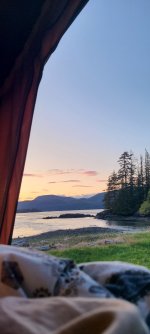
20250503_204150.jpg
 
There is only one professional grade hardshell RTT on the market - there are Autohome tents still in use that are older than every other tent company in the business...

Finding a used or NOS tent that works for you is the most cost effective way to get one - we know that most people don't need a pro-grade tent and that the lesser Baroud, Ikamper, FSR, etc... stuff works fine for a fair weather weekender. The >2025 tents are more expensive (any tent is expensive if you only use it once) but most will last 15-25 years of regular use. We have an 18 year old Airtop with 500+ nights on it that is still going strong...
 
I am looking for a hard shell RTT for a trip through Alaska and back from Texas being likely with a possible adventure going South pending political considerations through the Darien Gap and places less friendly to Americans.
No tent needed to get through the Darien Gap. 😝

I have had nothing but wonderful experiences with everyone in Mx, and both Central and South America. So, by “less friendly to Americans“ , I assume you mean Canada?
 
No tent needed to get through the Darien Gap. 😝

I have had nothing but wonderful experiences with everyone in Mx, and both Central and South America. So, by “less friendly to Americans“ , I assume you mean Canada?

Regarding Canada, outside of the coasts, central Canada has been pretty friendly and welcoming to me. I will say that was my experience before Trump started talking about making Canada our "51st state". I was pretty reluctant to venture into Canada around the Great Lakes though during Trudeau's term in office.

With all the controversy going on right now with various "protests" over immigration in general and deporting criminals, I'm not sure I would want to "test the waters" right now in Mexico and Central America in general. South America seems to be relatively unaffected so, other than the normal crime and militia concerns, pretty much the same as far as I can tell.
 
Just came back from BC- everyone was super polite- even those I know I’d disagree with. Mexico is really no different. They want you to spend money. Be polite and you get that in return
 
Is it too late to punt on a RTT and get a topper style RTT instead. I imagine a project M or Tune style would be so much comfortable for an extended trip.
 
I have has and used Autohome RTT's since Rich H. brought in the First RTT (*#1) to the USA. When I was working (*#2) I would spend over 250 nights a year in my Autohome RTT's. For extended use the wings and awning with a changing room very handy. These set up fast and give you privacy for changing room and Potty/shower room. If your plan is setting up and staying put for a few days to a week get a 8' X8' Awning and 8' X8' room. I forget the year it was I got my first Autohome RTT. But it has been over 25 years ago. I am retired now and still have a Autohome on my Jeep.

This is just my experience as a guide.
 
With my personal experience, in a small trailer, roof top tent, ground tent or Bear Burrito. What makes a big difference is the ability to get cleaned up! A shower, swim in a river or lake or just a sponge bath makes a very big difference, in how I feel!

Then again the tent is only one part of the sleeping arrangement. The mattress is very important! a light soft foam is like sleeping on a flat board. A high quality foam is generally better. It is like every mattress everyone has different needs.

What many people find out when using a RTT is the cold air can come through the bottom of the tent. Some tents only have sheet of plywood under your body. The mattress then becomes your insulation. House bedding sheet is next to no insulation. The sleeping bag insulates through tiny air pockets in the insulation. When you lie on it the weight will compress down and you lose the air pockets = very little insulation.

This varies between the high quality and the cheap ones. This also is related to sleeping bag rating. The Autohome has sandwiched between the inside and outside layers of fiberglass Polystyrene (Styrofoam (Trade name)). This insulates your bottom side. The non-insulated floors in RTT's can then sweat, causing the material to get wet.

Most of the cheap tents like ground tents the Fabric will not breath so you can get consideration on the ceiling and walls as well. The easiest way to prevent this is to open windows for ventilation, this is most tents. The larger tents with a single person generally small to no consideration. A small tent with more people inside will have more consideration.

With the Autohome the fabric breaths so you have less chance for consideration. The special fabric breathes but is waterproof. This is from deserts where it is near 100 degrees F. and 85% humidity to single digits with 10" of snow on the top of the tent. This is with well over 2,000 nights in my RTT's.
 
Last edited:
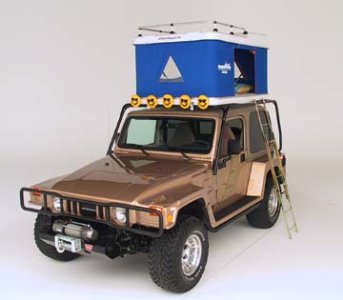
I used to defer to Frenchie when it came to extended camping. Rooftents have come a long way since we played with them back in the 90's. What holds then still holds true. We did a concept car back in like 2000 that sort of encapsulated what we thought of as a "world" car for extended travel anywhere. Back then the choice of vehicles was easy - Jeep, Land Rover, or the Land Cruiser, or a Cherokee like Frenchie used or in this case a YJ for more extreme travel. You might recognize the roof tent.

Gold+Landrunner.jpg
Looks pretty dated today but the concept I think still holds. First, the vehicle, it is a little Jeep on purpose and at the time in Europe they were putting in a small Italian diesel. This had that diesel which was the power choice because you could get gasoil anywhere. These little Jeeps came with 29" tires and normally to put on 33's you needed a 2" body lift, so we raised the fenders, and made the flip up front end. Jeep did not like the Hummer look but there was a common heritage. The roof tent is small by today's standards. This is the original Maggiolina and it was small and short on purpose. It came with one door, the second door was something we added. Tents are for cold weather and these small Maggiiolinas were superb, I'd say better than today's tents. The top rack wasn't just for looks, you would throw your wet dirty stuff up there and strap it down. Even the ladder was weird by today's standards, it was welded steel and both half were independent. The top part was hooked to the tent and the lower part would sink in so it wouldn't slide. You could easily separate the two halves and use the ladder as a sand ladder if needed. If you broke it, you would straighten it or weld it.

The tent itself was brilliant. Your first question is why blue? The Italians explained that they liked the "quality of light" it relaxed you. If you were in a foreign country and tired of all the strange stuff, you could crawl up into your tent with a good book and listen to your walkman, and you were soothed and in your own country. This is back before iPhones and Internet. Exploring was different, there were times when you just had to go slow, and that was good.

You could be like Frenchie and live out of your vehicle or take advantage of what is around you. My wife was a girly girl and liked comfort. The tent suited her well but she would also like a fine hotel, and nothing in between. The idea here was you could park anywhere and the vehicle wouldn't attract attention. You were a bit limited in vehicles, Jeep, Land Rover and the little Land Cruiser were the obvious choice. Your roof tent didn't have to be aerodynamic as you were pushing it to do 60.

So, my choice for an extended trip, a medium Maggiolina, one with the crank and basic. Bring a few extra crank handles, you lose them. Get the mat under the mattress, works like a box spring and put down a bottom sheet and thrown in a big down duvet and your aren't camping anymore, it is your home.
 
I used to defer to Frenchie when it came to extended camping. Rooftents have come a long way since we played with them back in the 90's. What holds then still holds true. We did a concept car back in like 2000 that sort of encapsulated what we thought of as a "world" car for extended travel anywhere. Back then the choice of vehicles was easy - Jeep, Land Rover, or the Land Cruiser, or a Cherokee like Frenchie used or in this case a YJ for more extreme travel. You might recognize the roof tent.

View attachment 906637
Looks pretty dated today but the concept I think still holds. First, the vehicle, it is a little Jeep on purpose and at the time in Europe they were putting in a small Italian diesel. This had that diesel which was the power choice because you could get gasoil anywhere. These little Jeeps came with 29" tires and normally to put on 33's you needed a 2" body lift, so we raised the fenders, and made the flip up front end. Jeep did not like the Hummer look but there was a common heritage. The roof tent is small by today's standards. This is the original Maggiolina and it was small and short on purpose. It came with one door, the second door was something we added. Tents are for cold weather and these small Maggiiolinas were superb, I'd say better than today's tents. The top rack wasn't just for looks, you would throw your wet dirty stuff up there and strap it down. Even the ladder was weird by today's standards, it was welded steel and both half were independent. The top part was hooked to the tent and the lower part would sink in so it wouldn't slide. You could easily separate the two halves and use the ladder as a sand ladder if needed. If you broke it, you would straighten it or weld it.

The tent itself was brilliant. Your first question is why blue? The Italians explained that they liked the "quality of light" it relaxed you. If you were in a foreign country and tired of all the strange stuff, you could crawl up into your tent with a good book and listen to your walkman, and you were soothed and in your own country. This is back before iPhones and Internet. Exploring was different, there were times when you just had to go slow, and that was good.

You could be like Frenchie and live out of your vehicle or take advantage of what is around you. My wife was a girly girl and liked comfort. The tent suited her well but she would also like a fine hotel, and nothing in between. The idea here was you could park anywhere and the vehicle wouldn't attract attention. You were a bit limited in vehicles, Jeep, Land Rover and the little Land Cruiser were the obvious choice. Your roof tent didn't have to be aerodynamic as you were pushing it to do 60.

So, my choice for an extended trip, a medium Maggiolina, one with the crank and basic. Bring a few extra crank handles, you lose them. Get the mat under the mattress, works like a box spring and put down a bottom sheet and thrown in a big down duvet and your aren't camping anymore, it is your home.
Rich knows these tents better then anyone else! From where they were in the 1990' with the Europeans prospective and the differences in what the Americans expect are a little different. Rich and I made suggestions for slight changes to the original RTT over the years. Every person has their special needs and wants for their life style.

Ask a Hot Rod owner why a vehicle that cost 5 to 10 times what it sold for originally new. They built it to the way they wanted it. Even the Rat Rod owner has spent a lot of money making it the best vehicle for them.

As most of us have experienced over the years, Is it better to get the best first or keep buying cheap stuff over and over.

The one draw back with the crank handle to open some models, is the operator. Yes! the crank is not made to stay in the crank hole for off road or on road,driving. I had a problem of forgetting to remove mine from the tent. For those who know me I can get talking and get side tracked. I then jump in the vehicle and off I go. Good thing for me is it is easy to make a handle at a hardware store. I have been carrying a spare with me for 5 or 6 years now. Because I have it as a back-up, I have not needed to use it.
 
Haha. I lost my handle years ago on my Maggie and Frenchie sent me a spare and told me the trick of using a socket in the meantime. I still have an Autohome tent. Best made.
 

Forum statistics

Threads
191,065
Messages
2,932,336
Members
234,995
Latest member
tbnd88
Top