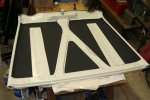
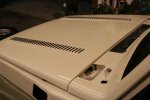
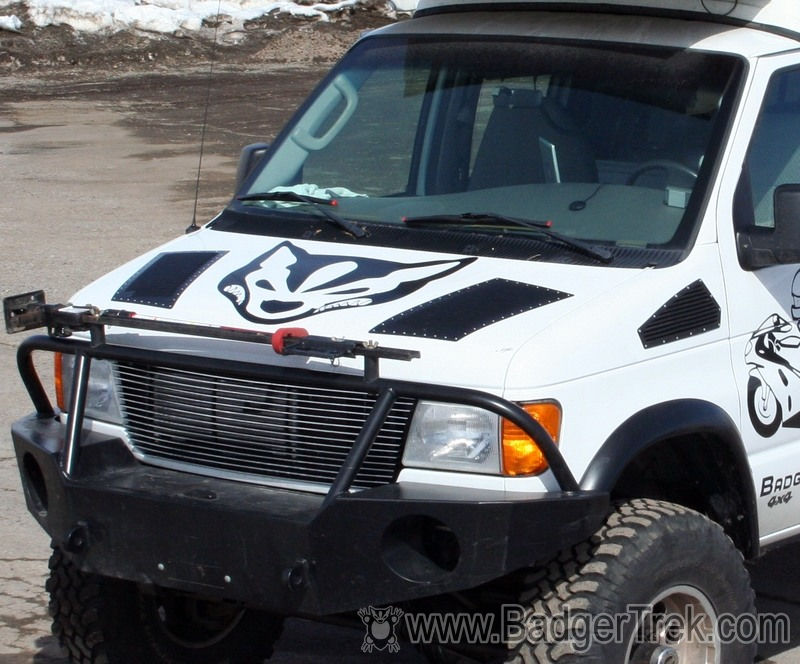
We added hood and cheek louvers to let hot air out of our engine compartment, especially at lower speeds. The results are significant, and, while coupled with increased size in transmission cooler, also reduced our measured engine coolant, oil, and exhaust gas temperatures under similar conditions.
The hood louvers do allow some rain/snow and leaves to enter the engine compartment, though we placed them such that the water coming in does not drip on much affected by water. In fall I toss a tarp over the hood if we are parked under deciduous trees. When parked and idling after a hot drive the heat pumps out of the louvers, and seems to reduce the amount of heat that comes through the firewall/doghouse into our cabin.
I did place the hood louvers as far to the sides as possible given our hood construction, and have verified by yarn tufts while driving that air is exiting rather than entering at speed. Further toward the hood/windshield junction in the middle is usually considered a high-pressure area and might push air into the engine compartment, adding back-pressure to the radiators and reducing effectiveness.
Little write-up I did at our web-log soon after installing:
www.badgertrek.com/sportsmobile/vehicle.shtml#Louvers
-e




.jpg)