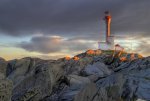
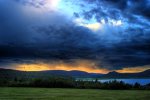
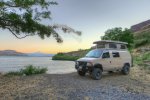
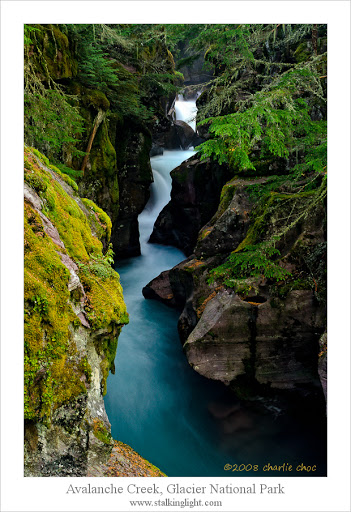
I'm not afraid to use HDR, either when truly needed for more dynamic range nor as a stylistic tool, despite there being a lot of crap HDR work (IMO) giving the process a generally bad rap. Here are a few of mine ...
6 exposure HDR merged/tone mapped in Photomatix Pro 3.2 then further post processed in CS4 to bring back contrast, tone down the HDR effect and modulate saturation.
f/8.0 | 1/13 to 1/400 sec | ISO 200 | tripod mounted
 Bending the light [HDR] ...
 by
Rob Overcash Photography (robotography), on Flickr
And in B&W
 Chicken Point
 by
Rob Overcash Photography (robotography), on Flickr
6-exposure HDR (-2EV to +3EV), processed and tone mapped in dphdr (Human Eye mode) with final processing in CS3.
EXIF: f/16, ISO 200, shutter speeds between 2.5sec and 30sec
 This is not a mirage ...
 by
Rob Overcash Photography (robotography), on Flickr
3 exposure HDR (+/- 2EV) processed and tone mapped in dphdr with final processing in PS CS3.
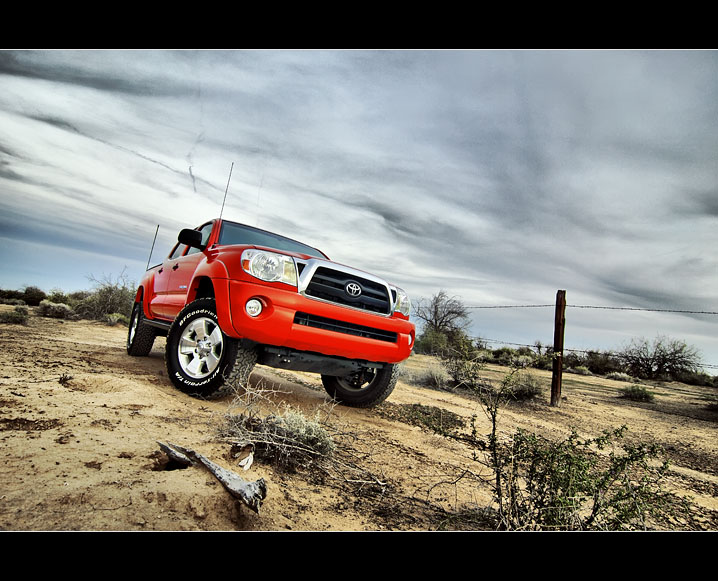 Who says the desert lacks color? [HDR]
 by
Rob Overcash Photography (robotography), on Flickr
This is a 7-exposure HDR ranging from -2EV to +4EV. I needed the extra stops over to get enough light and detail on the shady side of the cactus; going to -3EV went nearly black so 2 stops were enough. Blended and tone mapped in Photomatix Pro 3 then further processed in CS3. A lot of work for what is essentially a snapshot (random find).
 Disco in the Desert at Dusk [HDR]
 by
Rob Overcash Photography (robotography), on Flickr
And this one was processed using DRI -- dynamic range increase -- whereby a single RAW image file is processed multiple times to effectively widen the dynamic range, like HDR froma single exposure. I'll use this more often than HDR when I want a realistic final image.
Single image file processed three times (baseline image, then again for shadow and highlight recovery) and manually blended (via layers) in PS CS3.
 Mountain House
 by
Rob Overcash Photography (robotography), on Flickr