Unicorn on the Ocean - 1120AF Coming to Canada

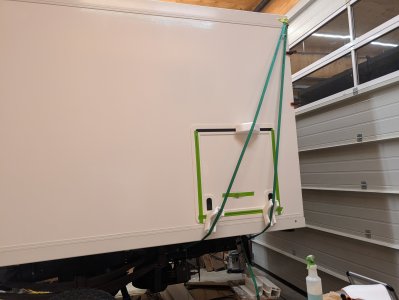
Small update for now, finally bit the bullet and cut some holes in the box. Started with the garage hatches since they're the most similar to the entrance door in profile, and least critical to get spot on. But they actually turned out great. Both in the same spot on each side. Took half the time to do the second one of course, and all the time measuring for the first one.

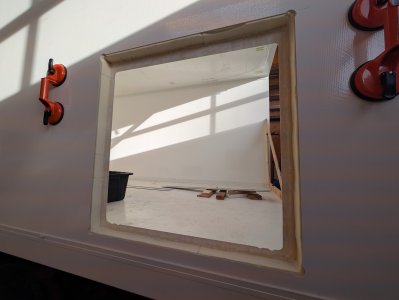
The Motorcraft hatches have a step in them, so you have to cut a different size hole inside and out. But the way these are profiled, the second flange is able to be glued onto the back side of the interior wall panel skin with the TC 50mm wall panels. Which means that not only the main front flange is bonded, but the inside is bonded too. I feel better about this, it makes the whole thing that little bit more robust.

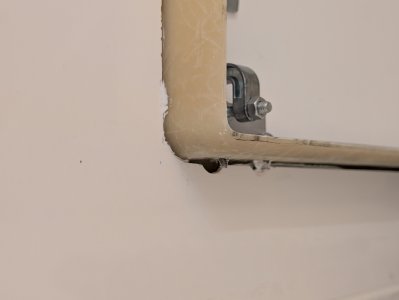
I cut large reliefs in the corners (32mm) and left the foam a little smaller than the main cut out. Then I just took it back slowly until the hatch fit just snug all the way around. That way I keep as much insulation as possible.
PXL_20251219_214148028.jpg

Plenty of glue and in she goes.

PXL_20251220_015913907.jpg

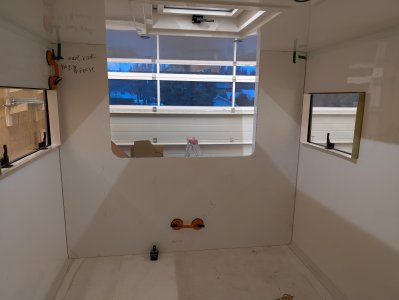
You can see from the inside I kept the cut out as snug as possible. I'm happy how it turned out, I will need a small trim around the inside and I'll cut back the hatch flange to suit with a oscillating cutter.

The only downside I now see to these hatches is the uninsulated latch. This will probably get moisture collecting on it in the winter. I'll have to keep the garage area nice and dry, which is a good idea anyway. We'll see.
PXL_20251220_045908068.jpg
 
Allllll righty then. I'll go into a little more detail on my process here because it worked well and perhaps it will help someone.

This is for installing Motorcraft Adventure Development glass windows into a Total Composites 50mm wall.

Firstly, the door went in the same as the hatches. With the exception of the handle side not needing the stepped cut. So 3 out of 4 sides are glued to the outside and inside skins which I am really happy about. I installed this entirely by myself, it took some careful planning.
PXL_20260102_193303057.jpg
PXL_20260103_233326864.jpg

It looks and feels good. I threw a magnet hold-open latch onto it for now with double sided tape. I'll try to avoid opening the window though as I think I'll forget to close it before slamming it into the side of the truck. It opens nearly 180 degrees.

Ok, so, my process for the windows

Draw on outside of the wall the size I want for the outside, and the inside cuts. Since these windows have a step in them.
Mark the centre spot of the hole saw you're using. I went with 32mm. So offset 16mm up and in. Although I went with 12mm on the outside since the radius on the windows is tighter.
Drill right through with a vertical drill guide thing on the inside holes, not the outside.
Drill all 8 outside marks, and 4 inside marks with the hole saw.
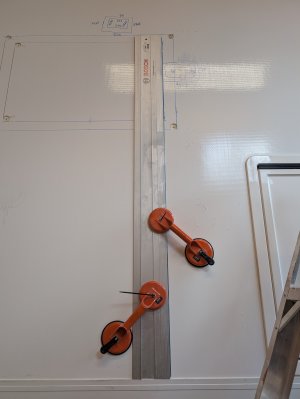
I modified some glass suction cups to hold my tracksaw track. It worked well as long as I kept the dust away.
PXL_20260109_182913503.jpg
PXL_20260109_215159691.jpg

For the outside lines I cut at 10mm depth, for the inside lines my saw could plunge to 55mm so I cut the inside and outside at the same time. This worked great as it saved lots of marking up on the inside.

Then I peeled off the intermediate bit of skin on the outside, and checked it around the window to make sure it was right.

Next I set the router to the 30mm depth to match the window "step". And made a huge mess cutting out the foam.
PXL_20260109_191016264.jpg

By doing this before removing the inner, it made routing much easier.

Then I finished up the cuts on the inside with a multitool, and popped out the panel.

I had to do a little sanding where the window latch backing plate is, but overall this method seemed to be a good way to do a nice job making things nice and square for setting windows into place without having to shim etc.

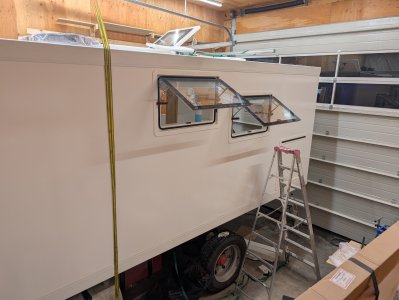
So now I have a skylight, crawl through and four windows to glue into place. Oh, and a GIANT mess to tidy up.

PXL_20260110_011645529.jpg
 
Last edited:
What is the weight like on those motorcraft windows? Quality worth the price and weight over acrylic style units?
 
What is the weight like on those motorcraft windows? Quality worth the price and weight over acrylic style units?
They're fairly weighty. The biggest window must be getting on 20kg, the smallest one at least 10. Not a big deal for my truck gvw.
I bought these when they were doing 30% off, so for that price I'm happy. It was more about thermal bridging for me, I didn't want aluminum frames or windows that stuck out like some plastic ones do.

They did recently release acrylic instead of glass options I notice.

But I also noticed today they have a new version of window now, V3, with regular hinge, gas strut and a metal frame around the glass....

So time will tell. I'll report back any issues I have down the road.
 
More progress in the last couple of weeks.

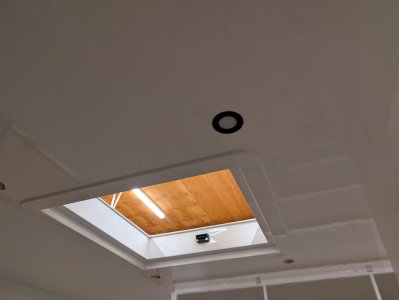
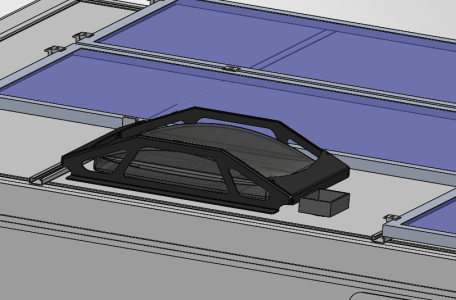
I've got all the windows glued in, the skylight all done and the crawl through as well as the bathroom extractor fan. I went with the "Airplus deluxe" or whatever it's called. The only real Maxxfan alternative, and better priced.

PXL_20260119_013223823.jpg

I've cut all the pot light holes into the ceiling, I just need to run the wire around. I managed to get a large amount of automotive grade TXL wire in all the colours and AWGs I could wish for. Very happy to be using "the good stuff". If you don't know the difference between regular PVC and TXL/GXL/SXL it's worth looking into. I'm sure PVC would be fine, but I like this stuff better.

PXL_20260124_012749366.jpg

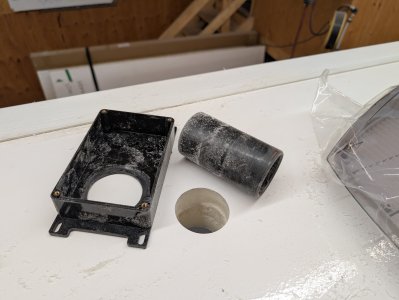
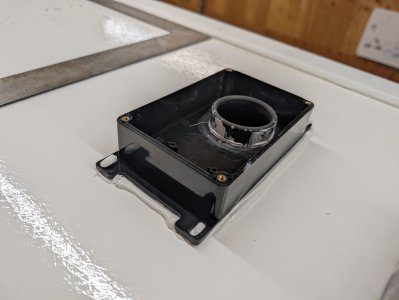
I also took a slightly different approach to the entry port for the solar wires, satellite internet, and anything else that will live on the roof. I've put in an ABS tube up into a ABS box with a lid. Then I can drill and add glands as I need them, and fish them down the tube nicely. I'll put some insulation inside the tube once the majority of wires are through it. I feel like although this is another risk of a leak since it has a lid, it's more flexible than the normal entry glands and will let me run all the wires I would ever need with lots of glands around the sides of the box.

PXL_20260123_234226865.jpg
PXL_20260124_011219807.jpg

If there is a reason why this was a terrible idea please let me know! The glue isn't set yet, it's not too late!

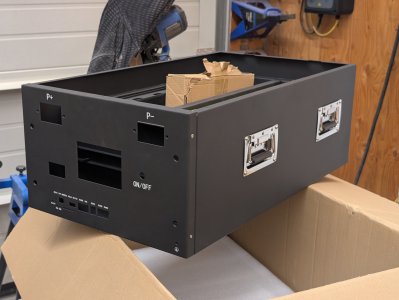
My DIY battery kit arrived. 314ah at 48V LiFePo4 for a very good price. Less than 3k CAD shipped to my door. All the assembly required....

PXL_20260117_005737022.jpg

Hoping the get the back wall glued on soon, then get everything sealed in and ready for some light use this spring/summer. The major finishing work will happen next winter, it's about time we got some use out of this.

Next is interior walls, rear all, marker lights, bed frames... and on, and on, and on.
 
I have been telling folks to use a single large pass-through box for floor and roof for a while now. Its way easier to work with and expandable. Plus a single penetration is easier to seal.

A few thoughts. Not all of those ABS boxes are UV tolerant, so it may be worthwhile to put a coat of paint on it just in case. I would also suggest putting a couple small drain holes in the plastic sleeve near the level of the roof. If you get water entry that will stop it from pooling and will give you an earlier warning so you can notice and remedy the leak.

ABS parts can stress crack in certain situations, so smooth/deburr your holes when you cut them. Obviously avoid being too close to the edges.

I will be curious what bus bars and attachment method your battery kit uses. I have seen mixed results depending on materials, fasteners etc. So there is a bit of a learning curve.
 
I have been telling folks to use a single large pass-through box for floor and roof for a while now. Its way easier to work with and expandable. Plus a single penetration is easier to seal.

A few thoughts. Not all of those ABS boxes are UV tolerant, so it may be worthwhile to put a coat of paint on it just in case. I would also suggest putting a couple small drain holes in the plastic sleeve near the level of the roof. If you get water entry that will stop it from pooling and will give you an earlier warning so you can notice and remedy the leak.

ABS parts can stress crack in certain situations, so smooth/deburr your holes when you cut them. Obviously avoid being too close to the edges.

I will be curious what bus bars and attachment method your battery kit uses. I have seen mixed results depending on materials, fasteners etc. So there is a bit of a learning curve.
Thanks for the suggestions, good thoughts. I was looking for a more skookum PVC electrical box but couldn't find one that I liked that wasn't too deep so decided to send it with what I had on hand. It lives right next to my extractor fan so I'll probably attach an aluminium "roof" that bolts onto the aluminium of that to protect and cover this box.

1769259679483.png

I was in half a mind to put a drain hole from the box onto the roof, so if it did collect inside, it would weep back out. I think to start with I'll just watch it closely and check on it often.

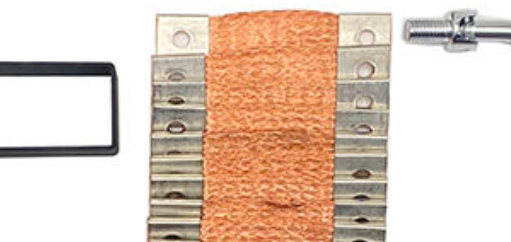
The battery came with a type of busbar I haven't seen before, but I really like. They are a nice thick and very flexible woven style, like the ground strap on a car. Since it's 48v the current is fairly low, these 314ah cells have a 0.5C discharge limit, which is 150A, or 7.5kw. It came with a 200a jk-bms. I'll document the build process but since the whole thing I believe is upwards of 140kg I'm going to build it in-situ when I get to that stage. I'm planning on keeping it off the floor an inch or so so that if there's a major water leak, it doesn't flood into the battery.

1769260289769.png
 
I would check the bus bar end crimps to make sure they are nice and flat. If they aren't a hydraulic press and some flat dies can flatten them out. I would also consider using a belleville washer under the nut head, along with some low strength loctite on the threads. I have seen the crimps relax a bit over time, or the nuts come loose due to vibration. Generally not a problem, but it can cause balance issues long term.

I would be interested in a writeup. I am currently fleshing out my electrical system (mostly likely 48V). I am currently looking at 100AH server rack style batteries, but I could be persuaded to go back with DIY if the price is right.

Does that BMS support any of the common battery communication protocols (Pylon, Victron, etc)?
 
I would check the bus bar end crimps to make sure they are nice and flat. If they aren't a hydraulic press and some flat dies can flatten them out. I would also consider using a belleville washer under the nut head, along with some low strength loctite on the threads. I have seen the crimps relax a bit over time, or the nuts come loose due to vibration. Generally not a problem, but it can cause balance issues long term.

I would be interested in a writeup. I am currently fleshing out my electrical system (mostly likely 48V). I am currently looking at 100AH server rack style batteries, but I could be persuaded to go back with DIY if the price is right.

Does that BMS support any of the common battery communication protocols (Pylon, Victron, etc)?
Yes they looked extremely well pressed, the end view appeared as though it were solid copper. I'm not sure how I feel about loctite, but I believe the nuts are serrated and I'll assemble to the correct torque. I'll give it some thought though. It will be accessible and I'll make a mental note to inspect after the first few outings. I've built a 12v 100ah pack I built for my VW with a DIY 3D printed housing and never had a single issue with it, which is why I was confident in this DIY kit. Same seller as I bought raw cells from 6 years ago.

Yes the seller asked what inverter communications I needed and sent a BMS to suit my Victron inverter.
 
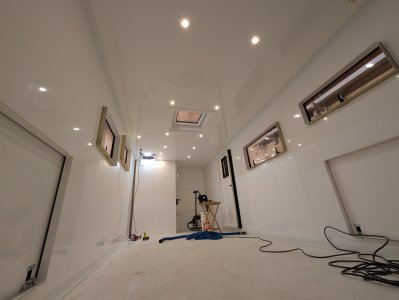
Still working towards getting the back panel in place. All my wires run, lights looking good.

PXL_20260127_041643048.jpg

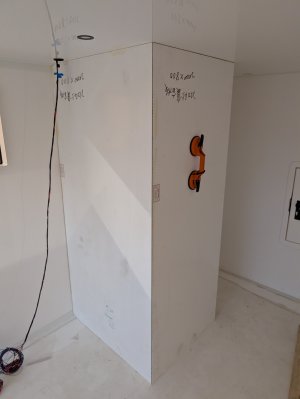
The interior honeycomb walls have been cut to size. Where they meet the walls and ceiling, I am going to epoxy in a small strip of plywood to help spread the load into the foam panels, but where they meet the floor I'm not going to worry. I'm going to do the same on the interior exposed cut of the bed bulkhead wall. This will all make more sense when I actually do it.

The bathroom front wall I am going to worry about later, I need to cut a door, put the shower pan in etc. I'd be making my life harder if I did it now and it's small enough I can bring it through the entry door at a later date. I've cut the panels in such a way that I shouldn't need to trim the corners, just a very small caulk bead along the edge. At least that's the ambition.

PXL_20260130_214956094.jpg

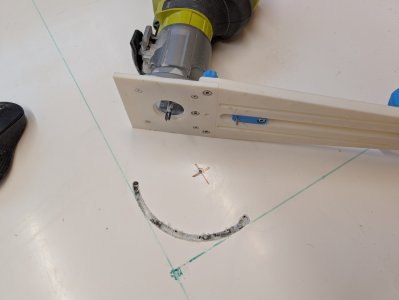
A helpful 3D printed jig to cut a nice corner with the router for the back wall. I'm considering gluing a strip of the FRP to act like edge banding on the cut-out edge. Backed with plywood.

PXL_20260130_230725799.jpg
PXL_20260131_000847622.MP.jpg
 
I have seen some discussion about interior walls which indicates some builders don't secure the walls rigidly on more than 2 sides. I guess some boxes will twist a bit in service, and have three rigid connections can cause failure of the joint. At least for the lighter panels. Not sure what the best alternative would be, or if its necessary of course.
 
I have seen some discussion about interior walls which indicates some builders don't secure the walls rigidly on more than 2 sides. I guess some boxes will twist a bit in service, and have three rigid connections can cause failure of the joint. At least for the lighter panels. Not sure what the best alternative would be, or if its necessary of course.
Right yes I recall seeing those suggestions before as well. Especially for differing materials. Speaking with Total Composites, Andreas's suggestion is to use interior walls and cabinets as part of the structure which makes sense to me, such as supporting the ceiling especially. I think it helps in this case that it's all fiberglass so there isn't going to be, or at least shouldn't be, any wildly different thermal expansions/contractions. Looking at some of the pro manufacturers like Krug/Motorcraft they have the same kind of full height interior walls with similar construction.

It should also help that the panel-panel bonding will be with the Korapop stuff, that is pretty flexible so should help soak up any flex between the panels and the walls. I guess time will tell. Thanks for raising the point.
 
Right yes I recall seeing those suggestions before as well. Especially for differing materials. Speaking with Total Composites, Andreas's suggestion is to use interior walls and cabinets as part of the structure which makes sense to me, such as supporting the ceiling especially. I think it helps in this case that it's all fiberglass so there isn't going to be, or at least shouldn't be, any wildly different thermal expansions/contractions. Looking at some of the pro manufacturers like Krug/Motorcraft they have the same kind of full height interior walls with similar construction.

It should also help that the panel-panel bonding will be with the Korapop stuff, that is pretty flexible so should help soak up any flex between the panels and the walls. I guess time will tell. Thanks for raising the point.
You are correct any material with move with temperature changes. By using the same type of FRP products throughout you won't have to worry about conflicting expansion/contraction between materials like you would see with an Aluminum/FRP combination.
 

Forum statistics

Threads
191,137
Messages
2,933,437
Members
235,080
Latest member
NorthCaptiva
Top