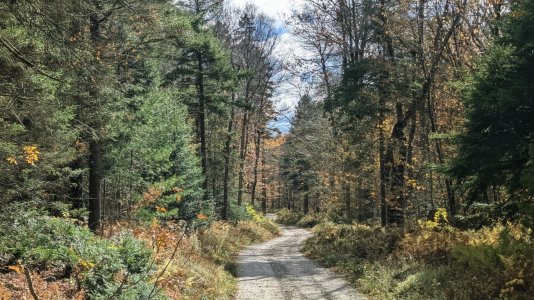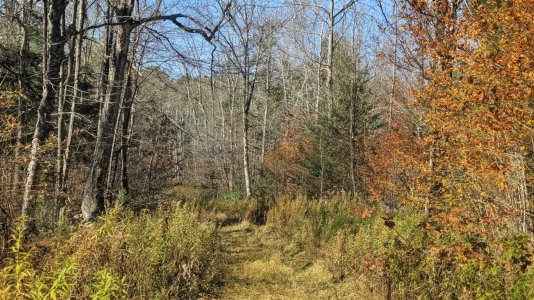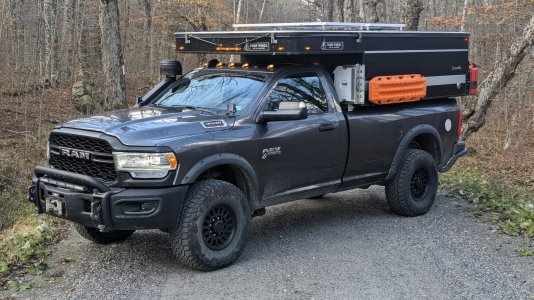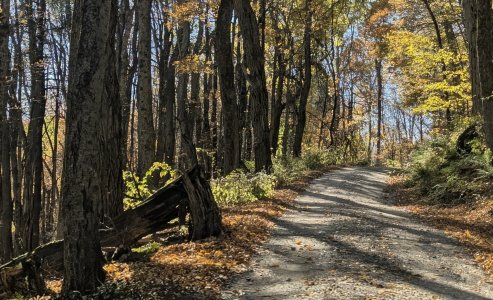
2021 RAM 3500 Tradesman | AEV Prospector | FWC Grandby

The latest Arctic blast that hammered the Northeast was all the reminder I needed to pull a full “gear day” – shut everything else down, dive into specs and reviews for twelve straight hours, and finally replace a few pieces of cold-weather kit that were long overdue. It also gave me the perfect excuse to round out some gaps in my industrial field kitchen.

What made the timing even better is that, completely out of the blue, my incredible mom sent me a very generous gift. Anyone who knows me understands I’m borderline impossible to shop for – if I truly need something, I’ve usually already researched it to death and bought the exact model I want. Because of that, when someone I love hands me spending money instead of a physical gift, I treat it with deep respect: I buy things that are bomb-proof, highly functional, and that I’ll use for years. Every single time I pull that item out of the kit, I think of them and smile. I also make a point to fire off the occasional photo from the backcountry or a quick story the next time we talk, just so they know their gift is out there living a very hard (and very appreciated) life.

So here’s the lineup, all made possible by Mom’s thoughtfulness and trust – thank you again, Ma, these are already earning their keep:

The Fjällräven Tab Hat, crafted from 100% polyester waffle-knit fabric that's lightweight, packable, quick-drying, and moisture-wicking. It's got a wide fold-up edge for extra coverage and weighs just 100 grams – perfect for stuffing in a pocket when the wind chill isn't trying to freeze my scalp solid. I've worn it every day since the mercury cratered; my head finally stays happy without the bulk.

RC 25-575.jpg

Seirus Xtreme All Weather Gloves in black, with a 100% waterproof and breathable XTreme membrane, fleece lining for warmth equivalent to bulky 200g insulated gloves, a SoftGrip palm for dexterity, and a stretch cuff to seal out the elements. They're the warmest, driest lightweight option out there – my hands stayed functional for four straight hours of chopping frozen firewood last week. Total game changer for sub-zero belays.

RC 25-576.jpg

A commercial-grade Thermalloy 2-quart stainless steel deep sauce pan from Browne & Co., featuring a 6 mm impact-bonded aluminum sandwich base for rapid, even heat distribution up induction-ready cooktops, stay-cool hollow cast handles with offset rivets for rock-solid grip, and an ergonomic design that cuts down on fatigue during long simmers. This tank lives on my diesel stove for one-pot meals and, when I'm off-grid, for boiling water to feed my battle-tested NEMO Helio pressure shower.

RC 25-577.jpg

The Winco TKP-41 steak/burger turner, with a sturdy 4-1/8" x 3-3/4" satin-finish stainless steel blade, offset for easy flipping under high edges, and a black polypropylene ergonomic handle that's slip-free and dishwasher-safe (NSF-listed, of course). I eat an absurd amount of meat cooked over open fire; the old spatula was comically undersized. This beast feels like it could flip an entire brisket without flinching.

RC 25-578.jpg

A genuine Rada 6-inch bread knife, boasting a surgical-quality T420 high-carbon stainless steel serrated blade that slices through crusty loaves, bagels, and buns without compressing the soft interior – it even tackles tough veggies like cabbage. At 10-3/8" overall with a lifetime guarantee and made in the USA, it's a precision tool. No more mangling good sourdough with a chef’s knife like some kind of animal – clean slices, every time.

RC 25-579.jpg

The TableCraft Silicone Funnel in black – NSF-certified, dishwasher-safe, and sized at 4.5" × 3.875" × 3.25" with a built-in stabilizing tab that keeps it perfectly steady on bottles and dispensers. Officially rated for temperatures up to 450°F, so I can confidently pour boiling water straight from the 2-quart pan without any melting, deforming, or messy spills. Quietly one of the most useful pieces of camp/kitchen gear when I'm refilling my 10-year-old NEMO Helio shower.

Every one of these items is already in heavy rotation, and every time I use them I’m reminded how lucky I am to have a mom who gets it – who knows that the best gift she can give her nomadic, tool-obsessed son is simply the freedom to choose the right tool for the job.

Love you, Mom. These are perfect.

RC 25-580.jpg
 
Last edited:
Nestled on Mount Desert Island in Maine, Bar Harbor is the quintessential gateway to Acadia National Park, one of America’s most spectacular and visited national parks, where the town’s charming seaside character perfectly complements the park’s majestic granite peaks, ancient forests, and wave-carved coastline. The area was settled by Europeans in 1763, incorporated as the town of Eden in 1796, and renamed Bar Harbor in 1918. Its golden era arrived in the late 19th and early 20th centuries, when Hudson River School painters like Thomas Cole and Frederic Church popularized the dramatic scenery, attracting America’s wealthiest families - the Rockefellers, Astors, Vanderbilts, and Pulitzers - who built grand “summer cottages” along the shore. Tragedy struck in October 1947 when the Great Fire swept through the island, destroying many of those opulent estates and forever transforming the town from an exclusive enclave into a welcoming resort destination.

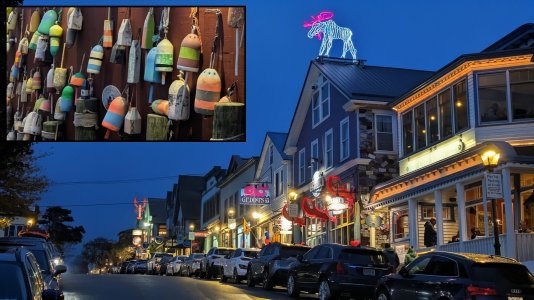
Few places in the country have offered me such an intimate and rewarding pairing of a picturesque small town with a world-class national park. One evening, standing in Agamont Park as the light faded, I took a photograph looking south down Main Street, and there it was: the warm glow of the neon moose sign perched atop Geddy’s - a quirky beacon that has welcomed visitors to this beloved pub and pizzeria since the 1970s and an endearing symbol of the town’s playful spirit. The colorful lobster buoys hanging nearby are a perfect illustration of Maine’s enduring lobstering tradition: each one painted in its own unique pattern and palette, serving as a personal signature for the lobsterman who owns the traps below.

If you’re craving natural wonder, fresh seafood, and small-town charm all in one unforgettable trip, I can’t recommend anything more highly than planning a vacation that combines Bar Harbor and Acadia National Park. It’s a rare and rejuvenating experience that has lingered with me long after I departed.
RC 25-581.jpg

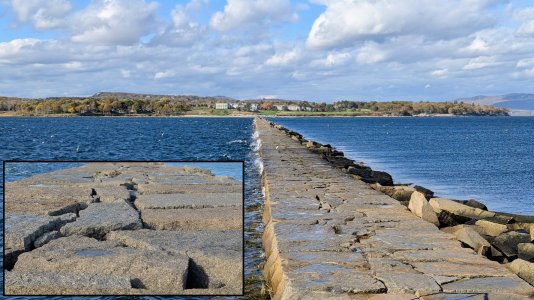
On a cold and windy day in Rockland, Maine, the remarkable 19th-century stonework of the Rockland Breakwater - a nearly mile-long (4,346 feet) granite marvel built with 768,774 tons of precisely cut local blocks - stood as an impressive testament to engineering ingenuity. Shaped like a trapezoid, the massive structure measures 45 feet wide at the top and 175 feet at the base. Although the stones were mostly level across the broad walking surface, large gaps between some demanded careful footing, made trickier by occasional wet sections and puddles splashed up from crashing waves. This created a mild but engaging challenge, requiring slow and deliberate steps that turned the out-and-back trek into a rewarding adventure, taking most visitors over an hour to walk to the lighthouse and back.
RC 25-582.jpg

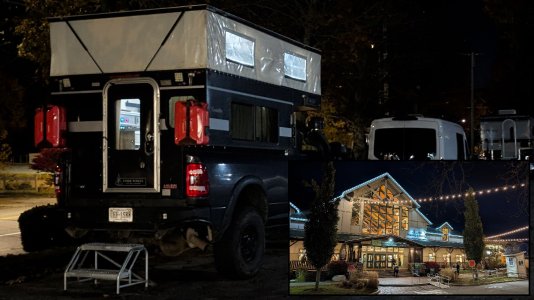
As I cruised south along U.S. Route 1 on Maine's stunning jagged coast, I stopped in Freeport to explore L.L.Bean's iconic flagship campus - the birthplace of the brand in 1912 with its legendary mail-order Bean Boots. I parked in the handy RV spot nearby and wandered the sprawling stores, hoping to snag some American-made gear. While virtually all items are sourced globally these days, I was disappointed to learn that only a few core classics like the hand-stitched Bean Boots are still proudly crafted in Maine factories - I didn't spend a penny. It's a reminder that supporting domestic manufacturing starts with choices like these - and real change often begins right in our own communities. Onward down the coast!
RC 25-583.jpg

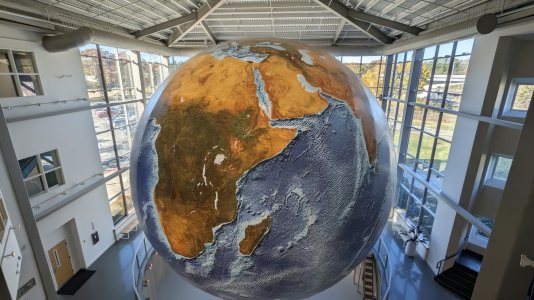
Eartha, the world's largest rotating and revolving globe located in Yarmouth, Maine, measures over 41 feet in diameter and weighs around 5,600 pounds. Built at a precise 1:1,000,000 scale (one inch represents roughly 16 miles) it features detailed surface mapping derived from satellite imagery, including shaded relief for mountains, ocean bathymetry, roads, and urban areas, all printed on 792 curved panels. The underlying structure is a lightweight yet rigid Omni-Span truss made from over 6,000 aluminum tubes, with panels secured via hidden bolts for a seamless appearance. Mounted on a cantilever arm at Earth's natural 23.5-degree axial tilt, it uses two electric motors: one spins the globe on its axis (rotation, simulating day-night), while the other orbits the entire assembly (revolution, mimicking the year's seasons), completing a full cycle in about 18 minutes.
RC 25-584.jpg

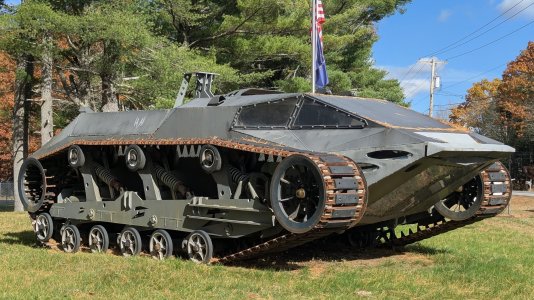
Since I was passing through the area, I was unable to resist stopping by Howe & Howe Technologies.
RC 25-585.jpg

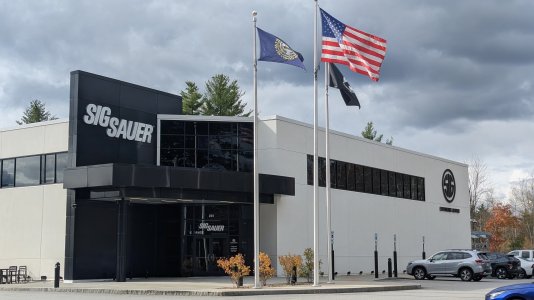
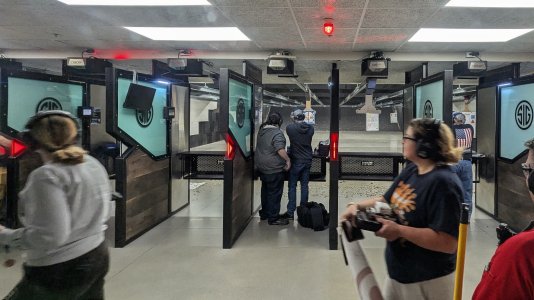
SIG SAUER Academy, located in Epping, New Hampshire, is a premier firearms training facility spanning over 140 acres, offering world-class instruction in pistol, rifle, and shotgun handling for law enforcement, military professionals, and civilians of all skill levels. With state-of-the-art indoor and outdoor ranges (up to 1,000 yards), tactical training areas, shoot houses, and a modern Experience Center featuring a flagship store and museum, it provides over 110 courses focused on self-defense, marksmanship, and tactics using innovative adult learning methods.
RC 25-586.jpg

The Museum of SIG SAUER is an immersive look inside the company both past, present and future. Exhibits include a historical wall chronicling the rich history of SIG SAUER, a full-scale interactive diorama showing the latest SIG SAUER military weapons, and a behind-the-scenes look at the SIG SAUER factory. Historical firearms, one-of-a-kind collections, and the latest SIG SAUER prototypes will be displayed in a rotating, ever changing center of discovery.
RC 25-587.jpg

The belt-fed experience at the SIG SAUER Experience Center, offers civilians a rare opportunity to fire the advanced M250 light machine gun - a 6.8x51mm belt-fed LMG adopted by the U.S. Army. This supervised shooting session allows visitors to handle cutting-edge military technology firsthand.
RC 25-588.jpg

At the Experience Center, training delivers the invaluable benefit of building essential firearm handling skills from the ground up, with beginner courses that provide the foundational knowledge needed for safe and confident operation. In their state-of-the-art facilities, you'll enjoy a perfect blend of classroom instruction and hands-on range time in a casual, stress-free environment, offering ample opportunity to develop proficiency at your own comfortable pace.
RC 25-589.jpg

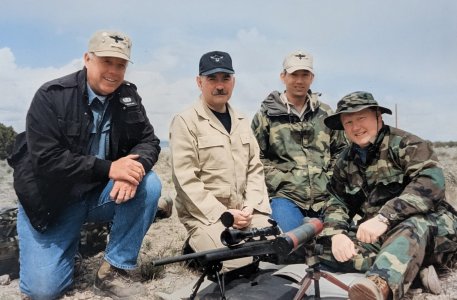
My late father (far right) served during Vietnam and continued training for decades afterward. This photo shows him upon graduating from a precision rifle course at Gunsite in 1994.

Gunsite was founded by Lt. Col. Jeff Cooper (WWII and Korea veteran), who stated that year: “That is why our masters in Washington are so anxious to disarm us. They are not afraid of criminals. They are afraid of a populace which cannot be subdued by tyrants.”

On the far left is my father’s best friend, Dr. Bill Adkins, who also passed away years ago. Bill was an extraordinary man, and some of my fondest memories are of visiting his home with my father when I was home on leave - firing mortars in his backyard, listening to his stories of sneaking into countries like Bosnia and Herzegovina or El Salvador with Peter Kokalis (of Soldier of Fortune magazine) to provide “training” amid active conflicts.

Next to Bill is Major John Plaster (5th SFG, MACV-SOG), author of The Ultimate Sniper and the instructor who shared his expertise in precision marksmanship (achieving first-round hits), practical field shooting positions (no benches), ballistics and optics (reading wind and uphill/downhill shooting), tactical considerations (stealth, camouflage, stalking, and observation), and equipment selection (including ammunition).

I don’t recognize the Gunsite staff member beside my father, though over the years my father has spent time alongside a remarkable list of individuals, including Bill Ruger, Hershel Davis (UDT/SEAL), Hans Vang, and many others.

The rifle in the photo is my father’s Remington Model 700 PSS in .308 Winchester, shooting 168-grain custom loads he developed specifically for this rifle. He relished his “unfair advantage” and outshot the other three students in the class - who were active duty and using military-issue precision rifles and ammunition.

The final test required identifying and stalking a target in the desert at night, with only one shot allowed at an unknown distance between 400 and 600 yards. I vividly recall my father describing how he crawled through the freezing desert night, his heart pounding like a war drum in his chest while uncontrollable shivers racked his body from the biting cold that seeped through every layer of clothing. As he finally settled into position, breath fogging in the moonlight, he fought to steady the crosshairs on his distant target, willing his trembling fingers and racing pulse to calm for the single, perfect kill shot.

While my father was still alive, he often spoke fondly of his time with his best friend Bill and their travels to faraway places. During a decade of rising federal gun control, they stood as the unflinching counterweight: skilled, defiant, and convinced that real men don't beg permission to protect what's theirs.

This is my rifle. It is my life. We are the masters of our enemy - until there is no enemy.
RC 25-590.jpg
 
Last edited:
Trans-Mass Trail

The Trans-Mass Trail's 95-mile north-to-south route offers an adventurous off-road journey through western Massachusetts and into Connecticut, beginning in Chicopee, Massachusetts, and heading west before turning south through the rugged terrain of the Peru Wildlife Management Area, and entering the expansive October Mountain State Forest with its mix of dirt tracks, forests, and potential seasonal challenges like mud or rocks. From there, it crosses the border into Connecticut at Campbell Falls State Park Reserve, then veers east for the final miles through the scenic and marshy Holleran Swamp, concluding in the Phelps Natural Resource Area. Drivers can expect a surprising amount of off-road sections amid the region's wooded landscapes, small towns, and natural reserves.
RC 25-591.jpg

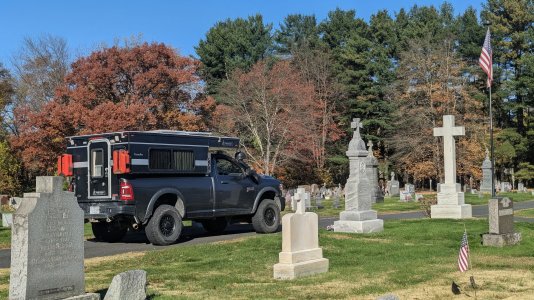
Saint Stanislaus Cemetery serves as an unexpected yet serene starting point for my journey on the Trans-Mass Trail. This historic site traces its roots to the wave of Polish immigrants who powered the region's industrial boom in the late 19th century. Though an unconventional trailhead, it invited me to pause and reflect. I wandered among the graves for nearly an hour, reading the inscribed names on the tombstones and quietly praying the rosary for the souls of those buried there.
RC 25-592.jpg

I first stumbled upon the Trans-Mass Trail while browsing online forums for new adventure routes. Given its location in western Massachusetts and its modest length, I initially figured it would be a quick, low-key ride with few surprises. Still, its proximity made it an easy choice, so I geared up and headed out with modest expectations.
RC 25-593.jpg

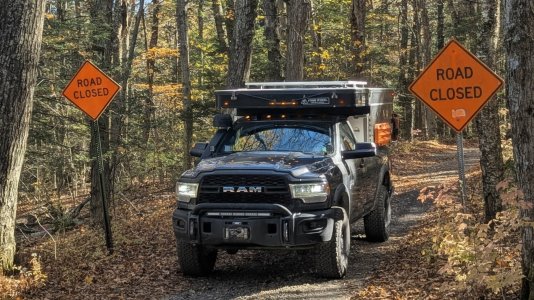
When I encounter a "road closed" sign on the trail, my first step is to consult my map. I assess the length of the closed section and ponder possible reasons for the closure. Near a river crossing, I might suspect a damaged bridge and look for detours. On steep, shelved terrain, I imagine washouts and scout for safe turnaround spots. In this instance, the signs appeared as I emerged from a forested area - likely placed in advance of winter to warn that plows won't maintain these unclassified roads. In my experience, about 75% of the time, I can safely navigate through such marked areas.
RC 25-594.jpg

As I pushed southward, I found myself truly enjoying the route. I reflected on how I had almost skipped it entirely - it's under 100 miles and runs somewhat parallel to Section 3 of the NEBDR, which I had completed just two months earlier. Pausing to compare the maps side by side, I was pleased to see they overlapped in only a few spots, totaling perhaps seven miles. Traveling in the opposite direction would make the familiar sections feel entirely new.
RC 25-595.jpg

What a delightful surprise this turned out to be; I had to double-check my map to confirm the trail actually went this way. Though the section was relatively short, it added real excitement to the ride, breaking up the rhythm of forest service roads and brief paved connectors. By this point, I was thrilled to have discovered this hidden gem and eager to share it with fellow adventurers like you.
RC 25-596.jpg

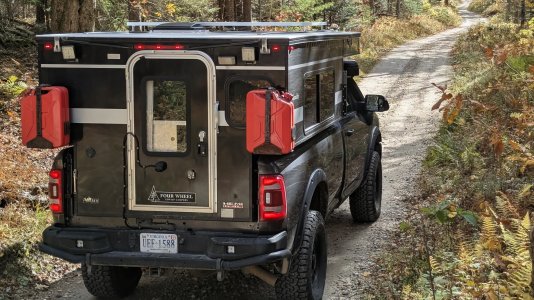
From time to time, I pull over in random spots along the trail to snap photos of my truck. Capturing it from various angles helps me document upgrades and modifications. Building this truck-and-camper setup has been a rewarding project, teaching me plenty about systems like the diesel stove/heater and solar setup. I'm pleased to say everything is performing beyond my expectations so far. The late nights of research, calls to manufacturers, and careful selection of tools and parts have all paid off.
RC 25-597.jpg

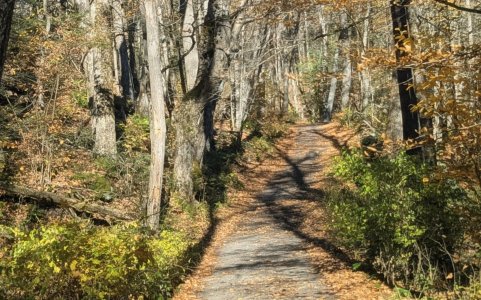
This particular section was so stunning that I stopped, rolled down the windows, turned off the engine, and simply sat there, smiling. It's hard to put into words, but there's something profoundly restorative about immersing oneself in nature. I truly believe it's good for the mind, body, and soul, and I encourage everyone to seek out these experiences more often.
RC 25-598.jpg

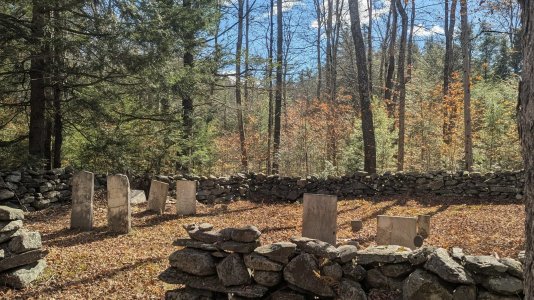
It's not uncommon to stumble upon small, forgotten cemeteries deep in the woods, tucked along overgrown paths or old logging roads. Many are in disrepair, with headstones tilted, sinking, or weathered by time and erosion. Older graves might be unmarked altogether, signified only by field stones or wooden crosses long decayed. Whenever I come across one, I stop to pay my respects, pondering the lives of those interred there - what their daily routines were like, what they thought about, and what dreams they held.
RC 25-599.jpg

I’ve reached the end of the Trans-Mass Trail under skies that feel more like January than December. An unseasonable deep chill has settled in for some time, nudging me to head south. All the same, there’s something quietly romantic about this life in a pop-up camper, where heat comes from a diesel stove and every comfort is basic, intentional, and enough.

For though they may be parted, there is still a chance that they will see. There will be an answer, let it be.
RC 25-600.jpg
 
Last edited:
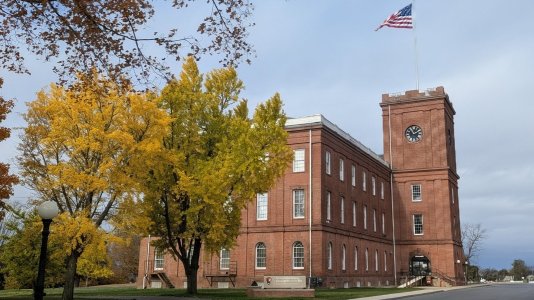
After completing the Trans-Mass Trail, the next stop was Springfield, Massachusetts - the "City of Firsts," birthplace of the first American gasoline-powered car, Smith & Wesson, Springfield Armory, and Indian Motorcycle. With a deep love and respect for all things mechanical and analog, this visit to a hub of innovation had long been anticipated. My first stop was the Museum of Springfield History.

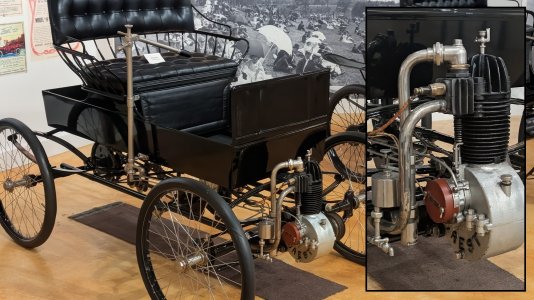
Springfield's automotive legacy began with the Duryea Motor Wagon, the nation's first successful gasoline-powered car, built by brothers Charles and Frank Duryea. This one-cylinder, four-horsepower vehicle debuted on September 21, 1893, embodying the straightforward mechanical ingenuity that launched America's auto industry.
RC 25-601.jpg

Smith & Wesson, established in 1852 by Horace Smith and Daniel B. Wesson in Springfield, revolutionized firearms through revolver innovations. Their Model 1 in 1857 was the first mass-produced .22-caliber revolver, followed by the swing-out cylinder for efficient reloading and the 1887 double-action model. The museum highlights their reliable, precision designs that shaped personal defense and law enforcement tools.
RC 25-602.jpg

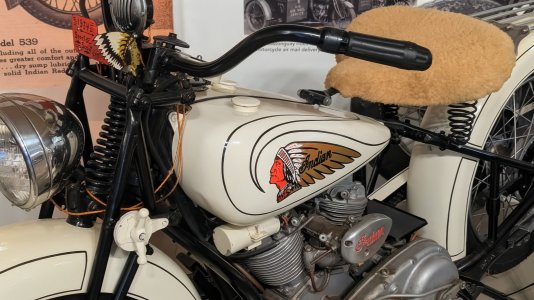
Indian Motorcycle, founded in 1901 in Springfield, emerged as an American icon with high-performance engines and innovative designs, including the 1907 V-twin that elevated speed and endurance standards. Renowned for racing success, military applications, and signature styling like fender skirts and headlamps, models such as the Scout and Chief exemplify engineering excellence in engines, chassis, and rider comfort. The local museum celebrates this legacy of craftsmanship.
RC 25-603.jpg

Springfield Armory, founded in 1794, served as the U.S. primary small arms arsenal for nearly 200 years, driving military firearm advancements through standardization and innovation. It produced icons like the WWII M1 Garand semi-automatic rifle, the 1903 bolt-action, and the M1911 pistol. The National Historic Site preserves this heritage with exhibits on historical weapons, tools, and mass-production methods that bolstered American military engineering.
RC 25-604.jpg

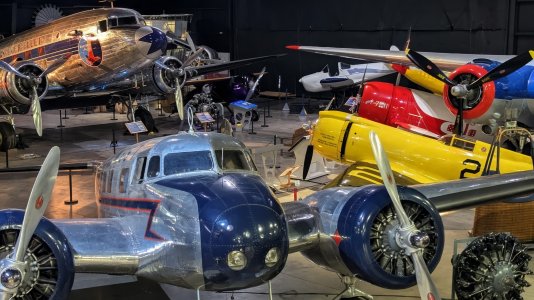
The New England Air Museum in Windsor Locks, Connecticut, near Bradley International Airport, honors the region's aerospace heritage as a center for aircraft design, engine development, and manufacturing from pioneers like Sikorsky, Pratt & Whitney, and Kaman. Its collection features mechanical breakthroughs, from early rotary engines and experimental helicopters to jet propulsion, through restored aircraft and displays linking local ingenuity to global aviation progress.
RC 25-605.jpg

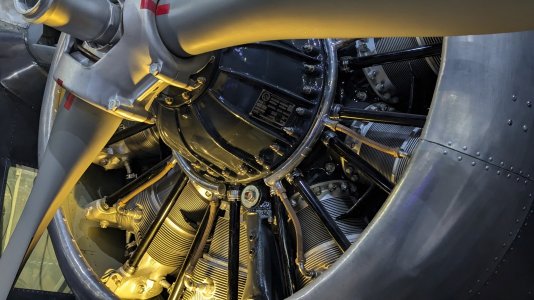
Pratt & Whitney's radial engines represent the height of early aerospace elegance, blending raw power with mechanical simplicity in air-cooled designs like the 1920s Wasp and WWII Double Wasp. Arranged in a circular cylinder layout with fewer parts than liquid-cooled alternatives and no vulnerable radiators, they delivered exceptional durability and maintenance ease for extended flights and combat. Their exposed fins, pushrods, and rhythmic thunder make them enduring icons of aviation's golden age.
RC 25-606.jpg

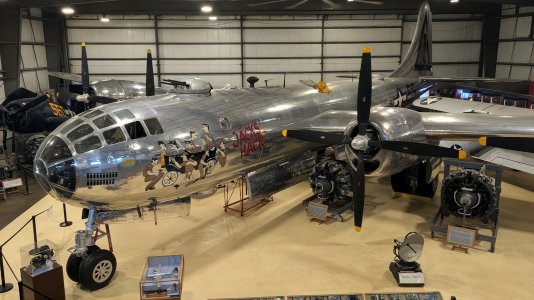
The Boeing B-29 Superfortress epitomized WWII engineering ambition in long-range bombing, incorporating pressurized compartments connected by a crawl tunnel for high-altitude operations without masks, remote-controlled guns via analog fire-control computers, and four Wright R-3350 engines requiring advanced cooling and materials. Elements like tricycle landing gear and high-aspect wings added to its complexity. The museum's restored Jack's Hack provides an up-close view of its scale and innovative systems.
RC 25-607.jpg

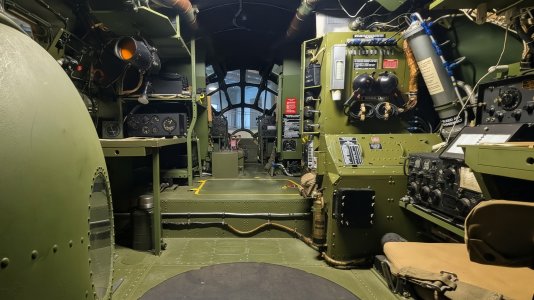
From the upper forward section of the B-29's interior at the museum, the pressurized compartment displays dense engineering optimized for high-altitude systems management. Forward: pilot and co-pilot stations; then the flight engineer on the right; followed by navigator and radio operator side by side, all amid instruments for real-time monitoring of engines, fuel, pressurization, and navigation. It resembles a flying command center where human oversight integrated seamlessly with mechanical precision.
RC 25-608.jpg

The B-29's centralized fire control system, an electromechanical analog computer by General Electric, unified remote turrets - upper/lower forward and aft with .50-caliber guns, plus the tail with a 20mm cannon - into a coordinated defense network. Gunners employed gyroscopic sights while the system computed variables like target speed, range, gravity, and parallax through cams, gears, and servos for accurate, adaptive turret control. This pre-digital automation advanced aerial warfare and human-machine synergy, paving the way for modern systems.
RC 25-609.jpg

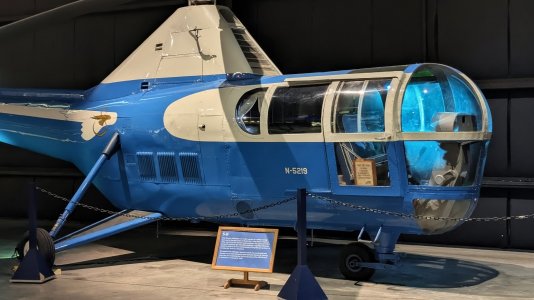
Sikorsky Aircraft, founded by Igor Sikorsky in 1923 and based nearby in Stratford, Connecticut, pioneered practical helicopters like the museum's H-5A (S-51) Dragonfly from the late 1940s. Adorned with the Winged S emblem for heroic rescues, this light utility craft included a single main rotor with articulated hub, all-metal fuselage, and precise cyclic/collective controls enabling hover and evacuations in challenging terrain. It combines engineering innovation with life-saving functionality as an early helicopter milestone.

I've come to help you with your problems so we can be free.
RC 25-610.jpg
 
Just in case you are interested:

I travel full-time across these United States in a Four Wheel Campers Grandby pop-up truck camper, equipped with a Wallas Nordic DT diesel cooktop/heater (variable output: 3,000–6,400 BTU/h).

To estimate heating needs, you can use this basic formula:

BTU/h required = Volume (cu ft) × Delta T (°F) × K (heat loss factor)
  • Calculate the volume: Width × Height × Length in feet
    • In my Grandby, I approximate 6 ft wide × 6 ft high × 10 ft long = 360 cubic feet
    • I use 10 ft for length to account for the cabover overhang, which adds volume despite the base floor being ~8 ft
  • Determine Delta T (temperature difference): Desired indoor temperature minus expected lowest outdoor temperature
    • Example: 70°F inside minus 30°F outside = 40°F Delta T
    • Adjust higher (50–60°F) for colder climates or windier conditions
  • Apply the heat loss factor (K): This accounts for insulation and air infiltration (BTU/h per cu ft per °F). Typical values:
    • Tent (soft-walled): Poor insulation → K ≈ 0.45
    • Pop-up camper (like the Grandby): Moderate (hard roof/floor/base with canvas sides) → K ≈ 0.30
    • Hardsided camper: Better rigid insulation → K ≈ 0.15
For my pop-up: BTU/h = 360 × 40 × 0.30 = 4,320 BTU/h

In practice, during recent arctic blasts with sustained temps in the teens and twenties (°F), my Wallas Nordic DT performed acceptably on higher settings. It maintained comfortable interior temperatures. Results will vary with wind, sealing, occupants (body heat helps), and exact Delta T, but this setup has proven reliable for my full-time travel.

I hope this is helpful - feel free to share your own experiences!

RC 25-258.jpg
 
Those airplanes were just BEAUTIFUL. Man, I miss when airplanes had such style

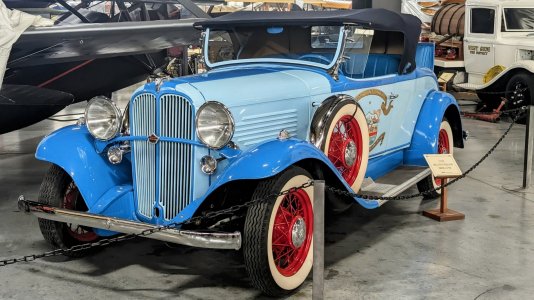
I agree wholeheartedly - here are some pictures of beautiful airplanes taken while I was out west last September working a few contracts for wildland firefighting.

Western civilization can be seen as a splendid old manor gradually tarnishing, a vision popularized by Oswald Spengler's The Decline of the West framing societies as organic beings that peak then wane due to self-serving burdens and complacent decay. During the dynamic late 19th to early 20th centuries, architecture featured lavish Beaux-Arts symbols of pride, art through Realism and Impressionism celebrated humanity's hope, and culture buzzed with meaningful literature and music. Now, bland glass structures and generic homes chase profits over artistry, numbing our hearts and curbing inspiration; art veers to nihilistic chaos echoing Jung's "universal destruction," while culture weakens with vague expressions, emotional detachment, and tech-amplified superficiality eroding connections and structures.

RC 25-621.jpg

RC 25-622.jpg

RC 25-623.jpg
 
Last edited:
My dear friends, after a half-century of wandering the globe, this is still my true home: Jamestown, Williamsburg, and Yorktown. After all those miles and memories, if I had to choose just one place to recommend above all others, it would be our Historic Triangle. I urge you to spend a full week here, walking these streets and breathing this air, absorbing some of the most extraordinary history mankind has ever produced.

Colonial Williamsburg stands as the world's largest living history museum, meticulously recreating the 18th-century capital of Virginia across 301 acres of restored buildings, gardens, and streets. This one-of-a-kind immersive experience transports visitors back to the era of America's founding, where costumed interpreters bring to life the daily routines, trades, and revolutionary ideas of colonists, enslaved people, and Indigenous inhabitants. As a literal walking outdoor museum, it offers unique hands-on encounters - from blacksmithing demonstrations to court simulations - blending education, preservation, and entertainment, with ongoing archaeological discoveries and events leading up to the 250th anniversary of the United States in 2026.

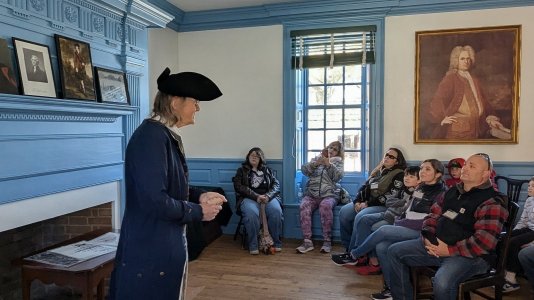
Gathered in one of the elegant wings of the Governor's Palace, our costumed guide - a lieutenant governor's aide in crisp linen and tricorn hat - captivated our group with tales of colonial diplomacy before launching our tour. His animated gestures painted vivid pictures of receptions for Indigenous leaders and fireworks-lit royal birthdays, drawing from historical accounts like the Cherokee Emperor's 1752 visit. As a globe-trotter accustomed to ancient ruins, I found this prelude a masterful blend of education and theater, setting the stage for delving into the opulent halls where power and peril intertwined in Virginia's early days.
RC 25-611.jpg

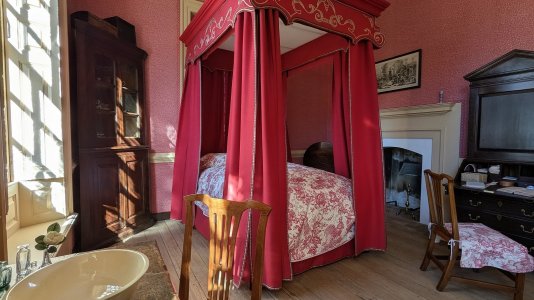
Nestled on the second floor, this intimate lady's bedchamber whispered of genteel colonial life, with its ornate four-poster bed draped in rich red canopy cloth for privacy and warmth against drafty nights. A petite washtub by the mirrored vanity evoked morning rituals of powdered wigs and rouge, while the nearby writing desk held quills for correspondence amid the era's social whirl.
RC 25-612.jpg

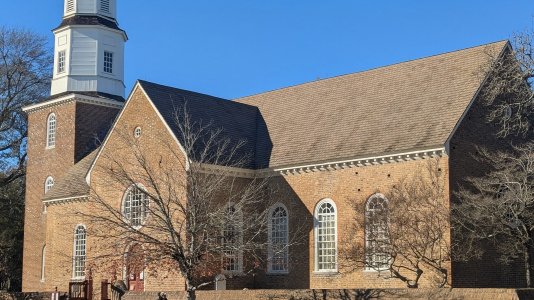
The sturdy brick facade of Bruton Parish Episcopal Church, completed in 1715, stands as a beacon of colonial resilience with its simple yet elegant cruciform design, tall steeple, and arched windows that have weathered centuries. This Episcopal sanctuary hosted luminaries like George Washington, Thomas Jefferson, and Patrick Henry, who drew inspiration from its sermons during revolutionary stirrings. From official records and traveler logs, I've learned its grounds hold graves of early governors, making it a cornerstone of Williamsburg's spiritual and political history, much like the ancient temples I've explored in far-flung lands.
RC 25-613.jpg

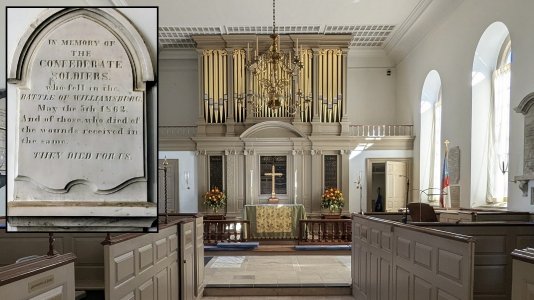
Inside Bruton Parish, the altar gleams under soft light, flanked by high-backed boxed pews - enclosed wooden stalls reserved for prominent families like the Wythes or Randolphs, fostering a sense of exclusivity that feels more hierarchical than welcoming. A solemn plaque on the wall commemorates Confederate soldiers fallen in the May 5, 1862, Battle of Williamsburg, now contextualized by a modern addition explaining its Civil War origins.
RC 25-614.jpg

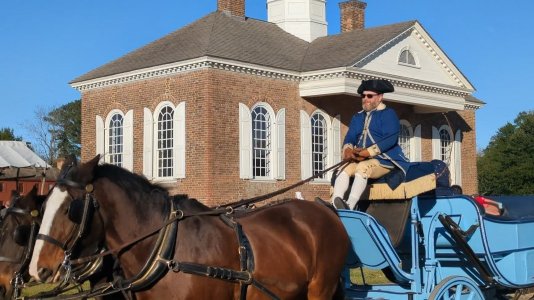
Clip-clopping past the 1771 Courthouse, a two-horse carriage driven by a period-attired coachman evoked the rhythm of colonial justice on Duke of Gloucester Street. This Georgian-style building, with its cupola and portico, hosted trials where figures like Patrick Henry argued cases, and punishments ranged from fines and public shaming in stocks to whippings for misdemeanors like theft or slander.
RC 25-615.jpg

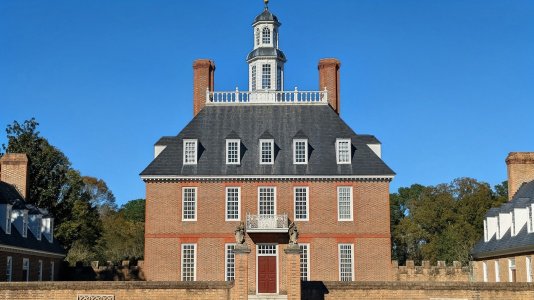
The grand front of the Governor's Palace, with its symmetrical wings flanking the central block, symbolized British authority in colonial Virginia, rebuilt in the 1930s from 18th-century plans after a 1781 fire. Home to governors like Spotswood and Dunmore, it hosted lavish balls and tense standoffs, including the 1775 gunpowder seizure that sparked revolutionary ire.
RC 25-616.jpg

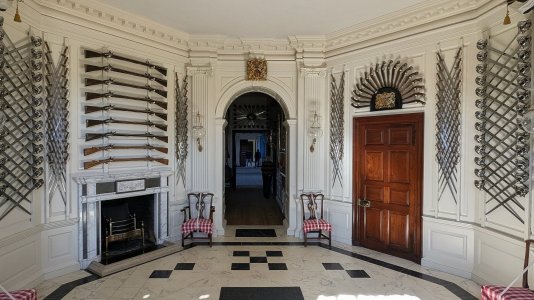
The palace's entrance foyer, where visitors were once greeted before audiences with the governor, bristles with an arsenal of rifles, swords, sabers, and pistols arrayed on paneled walls - an intimidating display of might meant to awe allies and deter foes. Inventories from the 1760s detail hundreds of such arms, later requisitioned for wars like the French and Indian. As an explorer of fortified citadels, I found this martial welcome a striking fusion of decor and defense.
RC 25-617.jpg

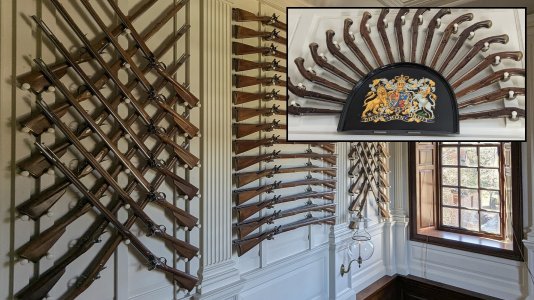
Ascending the palace stairwell, one is enveloped by walls lined with rifles symmetrically arranged in geometric patterns, a decorative flourish that exudes unyielding masculinity and military prowess. This feature, reconstructed from Jefferson's sketches and period descriptions, once led to private chambers amid the bustle of household staff. Visitor tales and my own impressions confirm it's the most boldly virile interior I've encountered - surpassing even the armories of medieval castles - inspiring me to one day echo its style in my own home when my travels finally ease.
RC 25-618.jpg

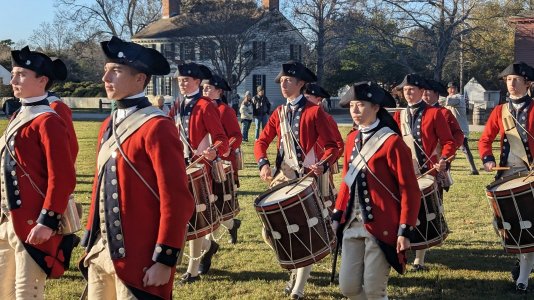
On the verdant Palace Green, the Williamsburg Fife and Drum Corps marches in crisp formation before the Governor's Palace, their shrill fifes and rumbling drums echoing 18th-century military signals that regulated camp life and battles. Founded in 1958 and drawing from historical manuals, this youth ensemble - often starting as young as nine - performs over 700 times yearly, blending tradition with community spirit. From annual Drummer's Call events and spectator stories, their spirited displays transport me to revolutionary fields, rivaling the rhythmic pageants I've seen in military festivals.
RC 25-619.jpg

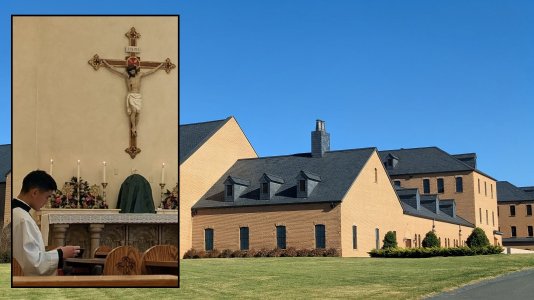
I also recently attended Mass at the St. Thomas Aquinas Seminary in rural Virginia - the seven year long seminary of the Society of Saint Pius X (SSPX), where it typically forms around 100 seminarians in traditional Thomistic philosophy, theology, and the pre-Vatican II liturgy. This institution embodies the SSPX's steadfast resistance to post-Vatican II reforms, stemming from a deeper conflict in the Catholic Church where traditionalists viewed the Council's changes as influenced by modernist (and in some narratives, communist-leaning) ideas that diluted doctrine. Having visited and attended a solemn sung Latin Mass there - rich with Gregorian chant and incense in the grand chapel dedicated to the Immaculate Heart of Mary - I experienced firsthand the profound spiritual depth and disciplined formation that continue to draw the faithful seeking the unaltered Tridentine Rite.

Here is a video the Solemn High Mass that I attended. The Solemn High Mass is the fully ceremonial traditional Latin (Tridentine) Mass of the Catholic Church, celebrated with priest, deacon, subdeacon, extensive Gregorian chant, incense, and ad orientem orientation, emphasizing the sacrificial re-presentation of Calvary.
RC 25-620.jpg
 
Last edited:
Skyline Drive

Skyline Drive, a 105-mile National Parkway, stretches from Front Royal in the north to Rockfish Gap in the south, where it seamlessly connects to the Blue Ridge Parkway. Constructed primarily in the 1930s by the Civilian Conservation Corps (CCC) as part of President Roosevelt's New Deal initiatives, the road was designed to provide jobs during the Great Depression while opening up the natural beauty of the Blue Ridge Mountains to the public. The first section opened in 1934, with the full length completed by 1939. Located just about 75 miles west of Washington, D.C., a drive of under two hours, it offers urban dwellers a quick escape into nature. Running parallel to Interstate 81 to the west, Skyline Drive provides a slower, more contemplative alternative to the high-speed highway, emphasizing scenic views over efficiency.
RC 25-624.jpg

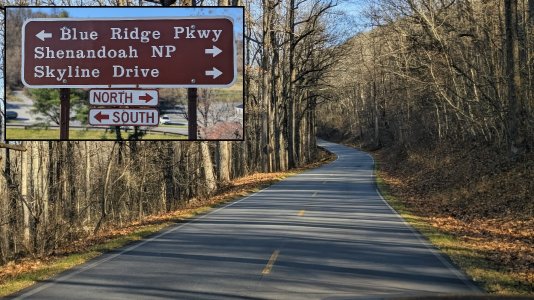
Unlike the longer Blue Ridge Parkway, which spans 469 miles southward without an entrance fee and traverses wilder, more varied terrain, Skyline Drive is entirely within Shenandoah National Park, requiring a park admission ($30 per vehicle). This national park status ensures protected habitats and managed facilities, though it means seasonal closures. The road features a low maximum speed limit of 35 mph, with few entrances or exits - primarily at Front Royal, Thornton Gap, Swift Run Gap, and Rockfish Gap - and no stop signs or traffic lights, allowing for uninterrupted immersion. Trees in mid-December are typically bare, heightening the stark beauty, and signage at the southern end clearly distinguishes the transition: Blue Ridge Parkway to the south, Skyline Drive to the north. While both roads were built with CCC labor, Skyline's park integration focuses more on hiking access and wildlife viewing.
RC 25-625.jpg

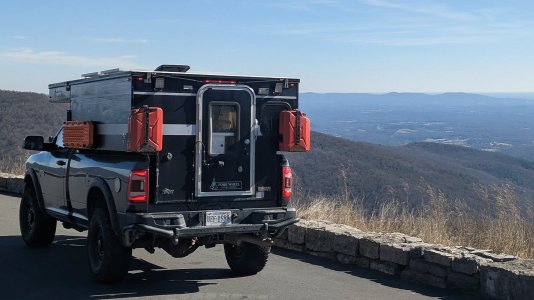
With 75 overlooks dotting the route, these pullouts are perfect for breaking up the drive - stop to stretch, eat a simple lunch from your cooler, or just sit in quiet contemplation. Popular spots include Pinnacles Overlook for sweeping valley views, Jewell Hollow Overlook showcasing layered ridges, Old Rag View Overlook with sights of the iconic Old Rag Mountain, and Big Meadows offering open fields ideal for picnics. My AEV Prospector truck with Four Wheel Camper fits easily at these sites, providing a mobile base for relaxation amid the mountains' embrace.
RC 25-626.jpg

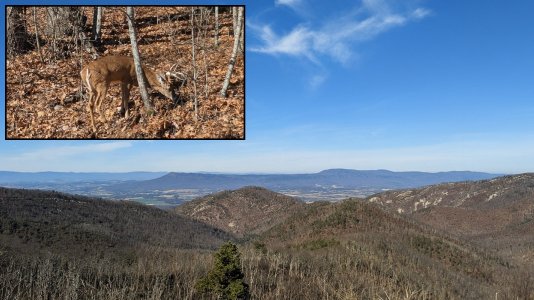
Looking west over the ranges, the Blue Ridge Mountains earn their name from the hazy blue tint created by isoprene emissions from the dense forests; these hydrocarbons scatter blue light in the atmosphere, a phenomenon noted since Cherokee times when they called the peaks "Sa-koh-na-gas," meaning blue. Wildlife encounters add to the drive's appeal - deer, including this six-point buck, are commonly spotted grazing roadside, alongside black bears, wild turkeys, red foxes, and even bobcats. Such sightings remind us of nature's vitality, encouraging slow drives and mindful observation.
RC 25-627.jpg

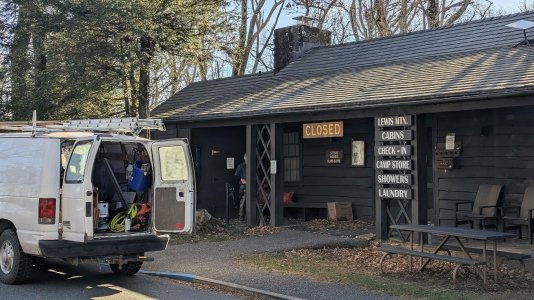
At Lewis Mountain Campground, the small camp store typically offers essentials and hot showers, but in mid-December, I found all showers across the park's three campgrounds closed for maintenance due to ruptured pipes. Adapting as a full-time traveler, I pulled into a secluded spot, boiled water on my stove, mixed it with cold, and took a quick outdoor shower beside the camper. This self-sufficiency highlights how embracing simplicity in remote settings fosters mental clarity and physical resilience.
RC 25-628.jpg

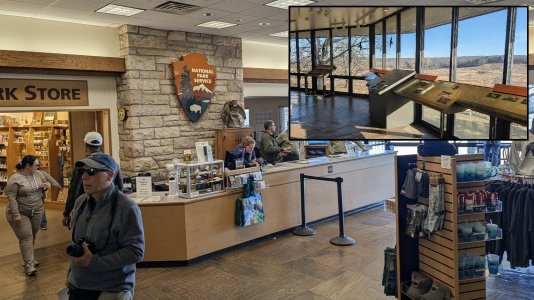
Inside the Harry F. Byrd, Sr. Visitor Center, amenities abound for practical needs: flush toilets, potable water stations, interactive exhibits on park history, a theater screening a film about the CCC's role in building the drive, and rangers available for info on trails or weather. It's a hub for recharging - literally and figuratively - before continuing north, reinforcing the value of pausing to learn and reflect.
RC 25-629.jpg

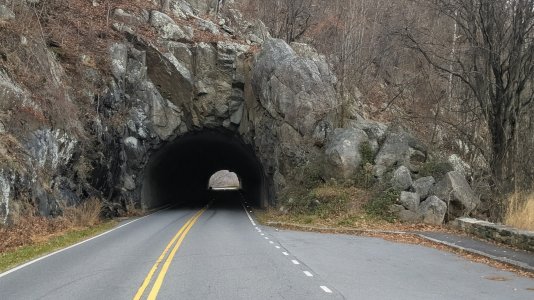
Skyline Drive features just one tunnel, the Marys Rock Tunnel, a 610-foot passage drilled through granite by CCC workers in the 1930s using dynamite, pneumatic drills, and hand tools amid challenging conditions. In contrast, the connecting Blue Ridge Parkway boasts 26 tunnels, with 25 in North Carolina alone, many also CCC-built to preserve the ridgeline's natural contours. These engineering feats symbolize human harmony with nature, carved during the Depression to create lasting access.
RC 25-630.jpg

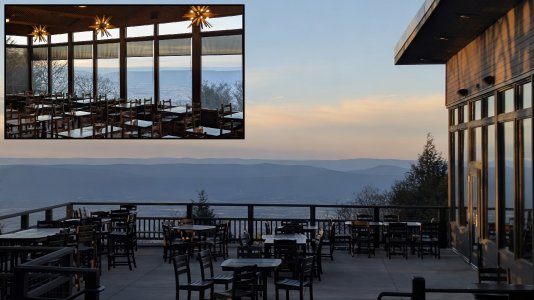
The Skyland Resort, founded in 1888 by George Freeman Pollock as a summer retreat, remains operational as a concession managed by a private company under National Park Service oversight, open seasonally. Its Pollock Dining Room - named for the founder - offers indoor and patio seating with panoramic valley views, serving a menu of regional fare like pan-fried rainbow trout, roast turkey, charcuterie plates with local ingredients, and unique items such as Stony Man pork chops. Skyland's location provides breathtaking elevated overlooks, blending history with modern comforts.
RC 25-631.jpg

As the sun set on my northern progress, the bare trees seemed to enclose the road like a comforting shroud, signaling time to unwind after a day of deep thoughts and simple joys like the wind rustling branches. If you're hauling along I-81 through Virginia, I recommend detouring onto Skyline Drive for at least a full day - it's a worthwhile investment in your well-being, breaking the work-consume cycle to truly live.
RC 25-632.jpg

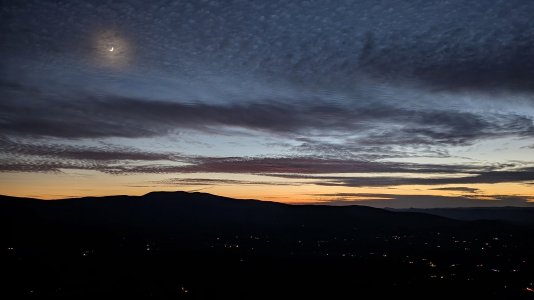
Nearing Front Royal with just miles left, I lingered by finding a stealthy overnight spot, warming soup on my diesel heater as a crescent moon danced with clouds in the low-20s crisp air. These old Blue Ridge Mountains feel like reuniting with a silent old friend - no words needed, just presence.

“The world is a book, and those who do not travel read only a page.” ~ Saint Augustine of Hippo

Take me with you to the mountains won't you please...
RC 25-633.jpg
 
Last edited:
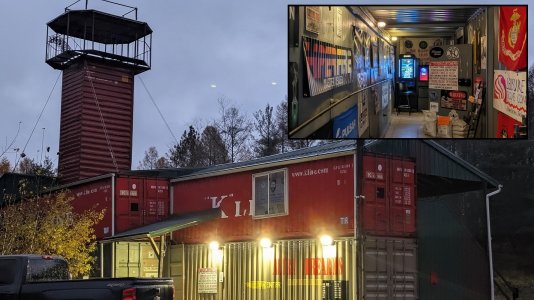
Deep in Pennsylvania's countryside, Altra Firearms defies vulnerability, buried under feet of earth and concrete, with entry confined to a gauntlet of perpendicular shipping containers and fortified doors. A guard tower surveys from on high, making it the ultimate deterrent for would-be aggressors seeking resources in turmoil. This echoes the eternal truth of God-given rights to defend life and property, a sanctuary where faith in self-reliance meets impenetrable engineering. No path from surface, subsurface, or flank could prevail, turning a simple gun store into a symbol of enduring protection on my northward Christmas pilgrimage.
RC 25-634.jpg

Within Altra Firearms' vast interior, a staggering array of nearly one hundred civilian-owned fully automatic machine guns adorns the walls - antique Japanese WWII models, battle-worn AK-47s from Asia, iconic Thompsons, and .50-caliber giants. This collection, rivaling the largest private hordes I've encountered, speaks to owner Paul's conviction that all rights stem from God, with the Second Amendment as a divine shield against governmental overreach. He declares gun laws futile and unlawful, advocating unrestricted access for the virtuous, as "dangerous freedom" trumps "peaceful slavery." In this bunker during my Pennsylvania sojourn, such variety underscores the unalienable right to self-defense, a bulwark for faith and family.
RC 25-635.jpg

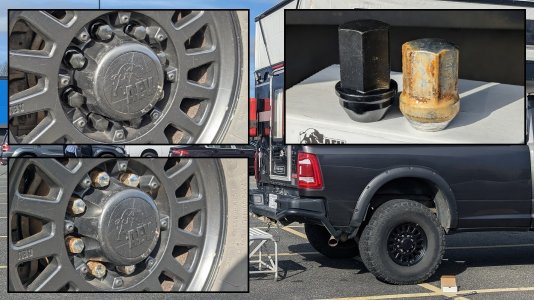
Parked amid wintry winds, my AEV Prospector undergoes transformation as I swap rusted chrome lug nuts for sleek black AEV ones, using a breaker bar to torque each of the eight per wheel on those precise hub-centric rims - a time-consuming but invigorating ritual. Close-ups reveal the contrast: corroded chrome caps prone to swelling versus solid-steel blacks, slightly longer for greater durability.
RC 25-636.jpg

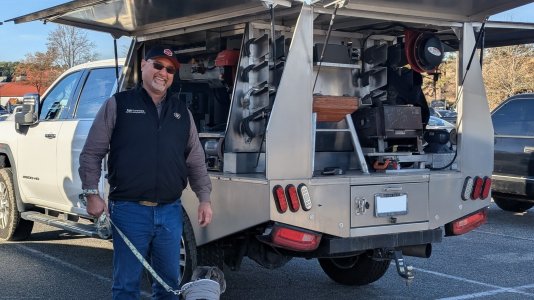
Pausing for a meal in winter's chill, I met Sean, the California-bred farrier, who eagerly demonstrated his truck's clever design - panels rising to expose supplies for equine care, centered on a furnace that transforms flat bars into bespoke shoes via blacksmith artistry. We chatted for nearly an hour about his life serving equines, from mules to donkeys, and the quirks of owners and students. This chance meeting, rich with shared stories, affirms our divine rights to pursue vocations freely, fortifying personal domains.
RC 25-637.jpg

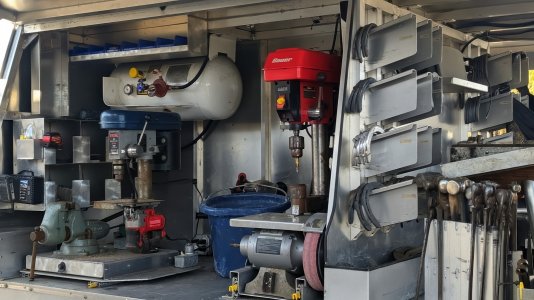
A close-up of Sean's truck flank unveils functional elegance: compressed air setup, robust Wilton vise (echoing my machinist and general Yosts), multiple drill presses, abrasive wheel, and organized hand implements. With a grin, he fetched his dusty percolator, insisting coffee kicks off every job-site arrival, then schooled me on the nuances of equine footwear for various breeds.
RC 25-638.jpg

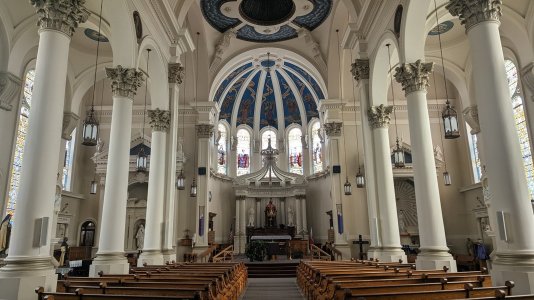
On a blustery day in Erie, Pennsylvania, I approached Saint Stanislaus Roman Catholic Church, a Gothic-inspired haven built in 1885 for Polish immigrants, its cornerstone blessed amid pennies and nickels scraped together by devoted families. Knocking at the rectory, the priest lamented locked doors guarding against worldly intrusions - neighborhoods now filled with non-English speakers hostile to the faith, preserving the late-19th-century sanctity. Escorted through a hidden passage to the high altar, I stepped into silence, then gazed eastward at timeless beauty, a refuge echoing my ancestral ties and unshakable traditional Catholicism during this Christmas pilgrimage.
RC 25-639.jpg

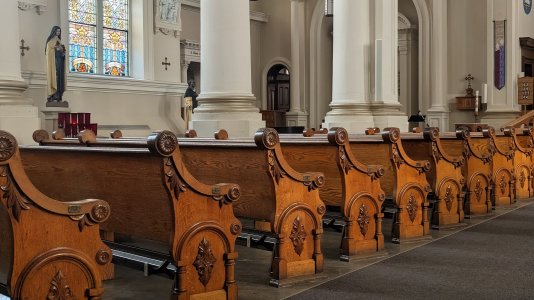
The handcrafted wooden pews of Saint Stanislaus gleam with intricate carvings, each curve and joint a masterpiece of 19th-century Polish artisanship designed to elevate the soul toward divine glory. Every detail - from polished grains to ergonomic forms - honors Him alone, overwhelming with stained glass above, stone statues, and masonry rivaling heaven's gates. In this selfish yet sacred appreciation, I find solace, as such beauty mirrors traditional Catholicism's call to glorify God through excellence.
RC 25-640.jpg

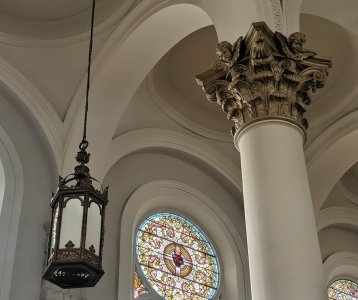
Gazing upward at mighty columns, cherubic angels encircle the capitals, smiling guardians looking down to protect, embodying Catholic teaching that each soul receives a divine angel for guidance and safeguard from infancy to death, ever beholding God's face. The pendant lamps, elegant relics of 19th-century craftsmanship, hang from an era when faith illuminated this industrial town. Intruding stained glass windows illustrate saints and scriptures, their soft arches representing divine harmony. Why have we forsaken such builds? Modern cookie-cutter structures seem to mirror an inner rot where virtues wane and morals perish - a theological lament on humanity's drift from God-centered creation.
RC 25-641.jpg

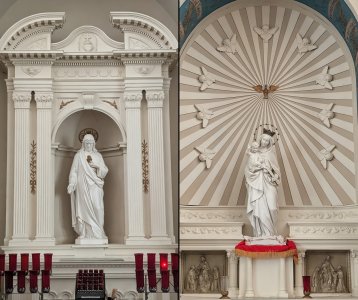
Flanking altars showcase Jesus's profound depth on the left and Mary's tender hold of the baby Jesus on the right, intricate sculptures and symbols conveying eternal truths: gold accents evoking purity, carvings denoting reverence, halos signifying holiness, poses evoking intercession - all meticulously meaningful. In Catholicism, Mary receives veneration, not adoration reserved for the Trinity; God employs her to vanquish Satan, her depictions often with the serpent underfoot from Genesis, a fury to the fallen.
RC 25-642.jpg

From Saint Stanislaus's high altar, facing east toward the symbolic rising sun of Christ's return - ad orientem orientation rooted in ancient tradition - the scene unfolds: central gold crucifix flanked by St. Peter with keys (binding heaven and earth) and book (doctrine), and St. Paul wielding a double-edged sword (spiritual warfare, martyrdom). Embedded relics, likely a first-class bone of St. Stanislaus, symbolize the saints' ongoing presence. Arched beams protect above, stained glass circles evoking eternity. In the Traditional Latin Mass, the altar hosts the unbloody re-presentation of Calvary - the Last Supper's institution, Christ's sacrifice, and Resurrection - where priest and faithful unite in timeless mystery.

May the Infant Jesus bless you and your loved ones with His peace this Christmas season.

RC 25-643.jpg
 
Last edited:
Solar System Monthly Validation Report – December 2025

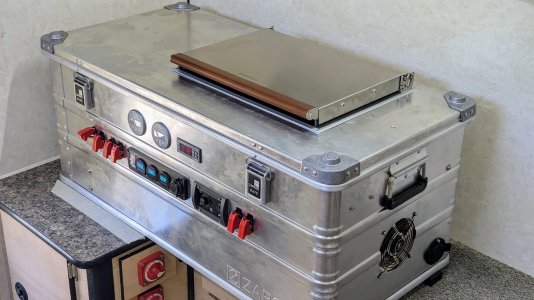
This report presents the system validation and verification results for my solar power system and battery bank after 122 days of off-grid travel. The sole power source consisted of two 250-watt solar panels (Rich Solar) connected to a solar charge controller (SmartSolar MPPT 100/30) and a 200 Ah battery bank (two LiTime 12V 100Ah Group 24 Deep Cycle LiFePO4 batteries). Neither the AC-DC charger (Blue Smart IP22 Charger 12V-30A) nor the DC-DC charger (Orion XS 12/12-50A) was used during this period. The objective was to evaluate the adequacy of the solar system and battery bank capacity to support off-grid travel demands.

System validation and verification for a vehicle’s solar-based electrical system involves confirming that the setup meets design specifications and performs reliably under anticipated operating conditions. Validation ensures the system addresses the intended purpose (e.g., providing consistent power for off-grid requirements), while verification confirms proper integration and functionality of components. This process is critical for my setup, where approximately 65% of operation occurs under forest canopy (reducing solar input) and 35% in semi-open areas with partial sunlight, enabling early identification of inefficiencies.

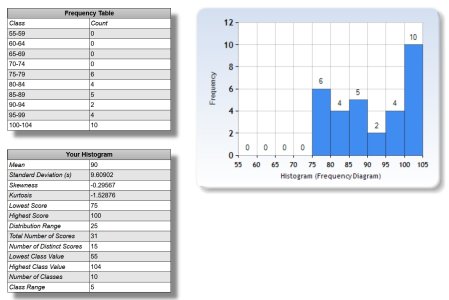
The histogram below illustrates the maximum state-of-charge (SOC) achieved by the battery bank during each 24-hour cycle. Over the most recent 31-day period, the maximum SOC ranged from 75% to 100%, with 16 days recording values between 90% and 100%. Although I did not log the specific times when SOC reached 100%, this value was frequently attained around midday. These results indicate that the system has sufficient solar capacity for most of December's operating conditions. It will be valuable to assess performance during January and February, when solar input slowly begins to rise. Overall, I am satisfied with these findings, as the system exceeded the design goal of providing sufficient power for seven days using solar energy alone, successfully delivering power for the entire 122-day period.

RC 26-001.jpg

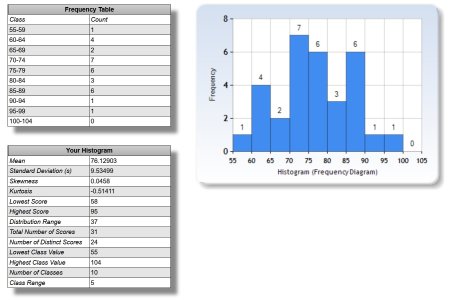
The histogram below illustrates the minimum SOC achieved by the battery bank during each 24-hour cycle. Over the most recent 31-day period, the minimum SOC ranged from 58% to 95%, with 9 days recording values between 80% and 90%. The minimum SOC was typically reached early in the morning, just before sunrise. During the system design, my goal was to ensure the SOC rarely dropped to 25%. The fact that the lowest recorded SOC over the 31-day period was 58%, with all other values higher, demonstrates the system’s robust performance.

RC 26-002.jpg

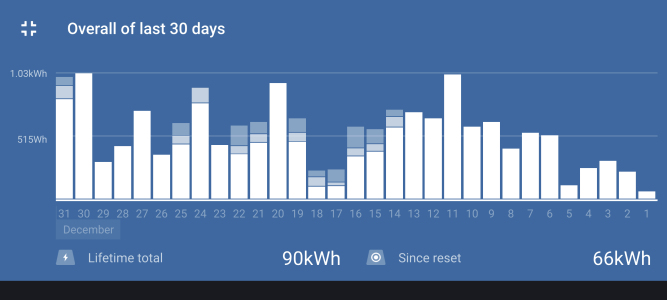
The screenshot below, captured from the Victron Energy solar charge controller, displays the energy collected by the system over the past 31 days. The white portion of each column represents the percentage of time spent in Bulk charge mode, while light blue indicates the Absorption phase and medium blue denotes the Float phase. The data shows that the system reached the Float phase on one-third of the days. This indicates that the system was fully or nearly fully charged for approximately one-third of the time.

On December 01-10, snowy and overcast conditions limited solar input, while on December 11-14 the system quickly recovered pulling in as much as 1.02kWh on a single day. Despite the wide range of overcast, cloudy, and clear days, coupled with temperatures that ranged from the 12°F through 49°F, the system. On days when the temperatures dropped below freezing, I was able to maintain the battery temperature above freezing by leaving the door to the battery compartment open at night while my diesel heater ran.
RC 26-003.png

This data is associated with the chart above. I attempted to attach the CSV file to this post for further review but the uploaded file does not have an allowed extension.

RC 26-004.jpg

I will periodically measure system performance and publish updates similar to this report. Evaluating the system’s behavior over the coming years will provide valuable insights into its long-term performance and alignment with design expectations.
 
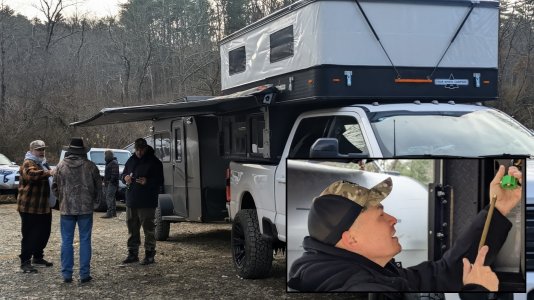
Green Ridge State Forest, Western Maryland

Camping Meet Up


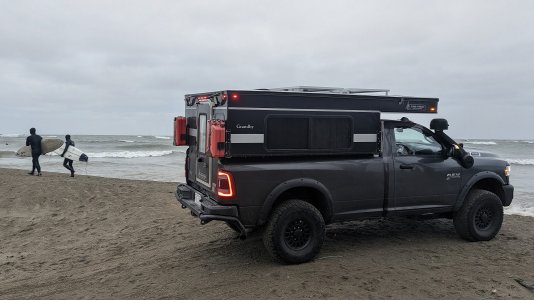
Parked on the shores of Beach #10 at Presque Isle State Park, Lake Erie, my AEV Prospector and Four Wheel Camper withstands teens temperatures and blustery conditions while three young men surf - two on foot, one in the water. A 15-minute walkabout led back to the truck's protected interior, where memories surfaced of solo helicopter jumps into 25-35 foot swells and 35-45 mph winds in the far North Atlantic. Age shifts priorities, yet that experience informs every upgrade I design. It's time for me to chase the sun south.
RC 26-005.jpg

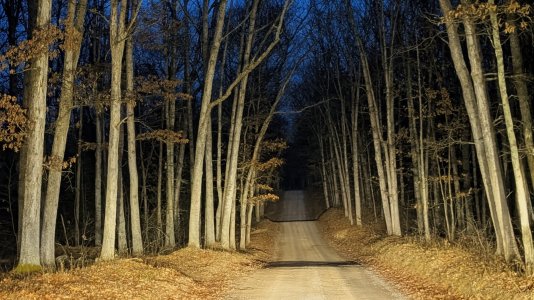
Heading into Green Ridge State Forest under fading light, striking blue skies peek through the canopy. Spanning 49,000 acres with abundant roads and campsites, it draws adventurers seeking solitude or company. Expected single-digit nights and teen days added edge to the event, raising thoughts of sparse attendance. Extreme tests like this validate engineered solutions. If you're crafting your own rig, embrace harsh weather outings - they sharpen your designs and fuel the drive to travel farther.
RC 26-006.jpg

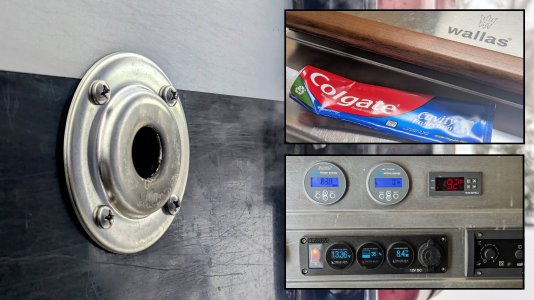
Steamy exhaust vents outdoors from the camper side, avoiding the moisture issues common when combustion byproducts (water vapor from any fuel) discharge inside. Toothpaste softens under the Wallas Nordic DT's warm airflow - a practical discovery in sub-zero conditions. Monitor shows 9.2°F system and 8.4°F interior as the cold-weather camp stretches five days and four nights, proving the setup's resilience. Smart venting and quiet heating choices pay off. Design with these principles; they'll support extended trips and inspire confidence.
RC 26-007.jpg

First-time Hawk camper owner Jay troubleshoots his propane heater with my onboard air, successfully blowing out potential blockages. The roar upon startup reminded me why quiet diesel options win out. Helpful and friendly - hope to meet again. Practical utilities like compressed air belong in every serious build. Integrate them to handle surprises gracefully and assist others, building connections through shared adventures.
RC 26-008.jpg

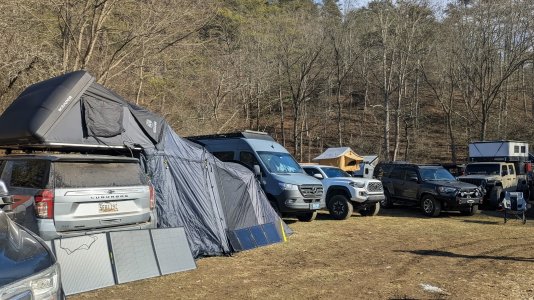
A daytime row features varied setups: a late-model Suburban with rooftop tent and large annex, a fully equipped Sprinter van, a pair of Toyotas, and a Jeep Gladiator with Four Wheel Project M. Dozens more vehicles scattered about showcased tents, campers, and custom solutions, sparking valuable owner conversations. Variety drives innovation. Study different approaches to refine your own design and pursue unique travels.
RC 26-009.jpg

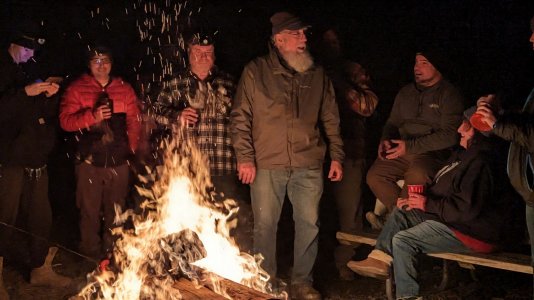
Organizer Billy wisely used the $10 entry fees for the campsite reservation and firewood stockpile, creating wonderful fires each evening where attendees shared stories and grilled food. Strong female presence notwithstanding, it remained a typical overland demographic, a friendly "sausage fest."
RC 26-010.jpg

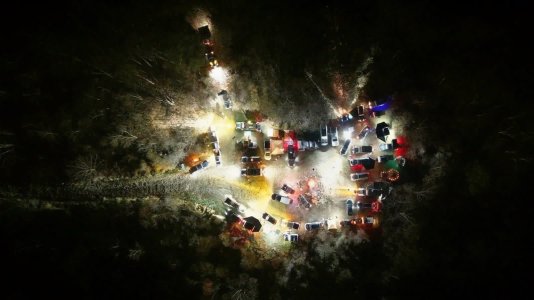
Drone overhead at night shows the campsite alive with vehicle lights per Billy's direction - turned out beautifully. Saturday's influx merited a second take, reflecting our final count of roughly 40 rigs and double the attendees.
RC 26-011.jpg
photo by Billy H.

Billy, behind his Project M-equipped truck, ran everything flawlessly - experience from several annual outings shows. For those near the DMV, follow East Coast Overlanding Coalition on Facebook under his moderation to participate in rewarding group adventures. Organized events like this spark ideas worth incorporating into your own designs.
RC 26-012.jpg

The group area empties to just my truck and camper Monday morning after weekend farewells, cold lingering without fires, natural sounds returning beneath cloudy skies. I thrive in both company and solitude - the latter for deep reflection at my pace. Watching others head back to trade time for money prompts reflection on our industrialized paradox: material abundance alongside experiential scarcity, crowded cities breeding isolation.

"I would rather be a superb meteor, every atom of me in magnificent glow, than a sleepy and permanent planet. The proper function of a man is to live, not to exist." ~ Jack London

RC 26-013.jpg

This 30-minute video by Jay features extended time interviewing me and touring my engineered rig, upgrades, and systems in detail. Excellent production - enjoy, and let it inspire your next project or trip.
 
Last edited:
Billy’s meetups are indeed awesomely entertaining and informative. So many neat rigs to tour. I regret missing this recent one.

With this cold weather experience are/have you done any insulation to the windows? I recently ordered the insulation package for our Hawk windows from FWC.

Also planning to buy some faced batting material and add a bit of insulation to my old style FWC insulation at the head & foot of the bed area.
 
With this cold weather experience are/have you done any insulation to the windows? I recently ordered the insulation package for our Hawk windows from FWC.

Also planning to buy some faced batting material and add a bit of insulation to my old style FWC insulation at the head & foot of the bed area.

No, I haven't added any extra insulation to the windows or anywhere else - in fact, I ended up removing the optional insulation package that I ordered with the camper back in 2020. Next winter I’m planning to run some side-by-side tests with and without it reinstalled to get real data on the difference.

Full-time living in it made the drawbacks pretty clear: the material picked up dirt and started showing wear and degradation in places fairly quickly. It also cut down noticeably on natural light, leaving the interior quite a bit darker during the day.

Rather than trying to add more insulation, I went the active-heating route and installed a diesel heater (variable output, roughly 3,000–6,400 BTU). It’s proven more than capable of keeping the camper toasty even in seriously cold weather, easily offsetting the heat loss through the thinner walls and windows.

Your approach with the new FWC window insulation kit plus the faced batting at the head and foot of the bed sounds like a smart upgrade - should help a lot if passive heat retention is your priority. I’d love to hear how it performs for you once you get it into some real cold snaps!

Here’s a shot from my Sonoran Desert traverse a couple years back that didn’t make the original edit - thought you might enjoy it.
RC 26-014.jpg
 
Last edited:
Forum statistics

Threads
190,964
Messages
2,930,931
Members
234,813
Latest member
rocksandtrails
Top