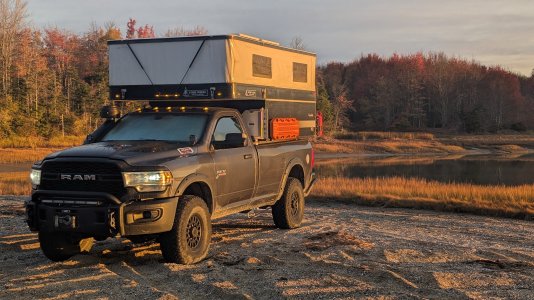
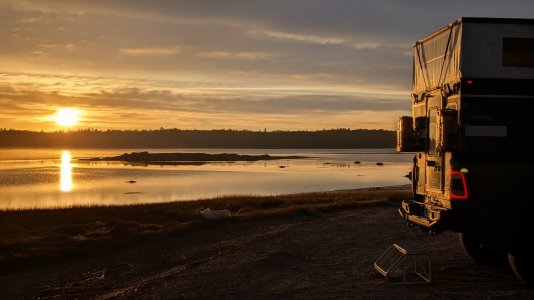
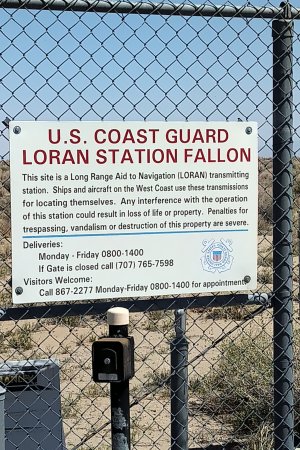
2021 RAM 3500 Tradesman | AEV Prospector | FWC Grandby

@Mekcanix - Feel free to use this as you wish. Although most assembly information for these components was sourced from manufacturer manuals and professional publications, download and review the originals yourself. This provides deeper insight into component expectations, limitations, and interactions. When performance deviates or behavior changes abruptly, knowing where to start troubleshooting is essential.

Below are rough rules of thumb for an average system:
  • Identify your primary power source
    • Solar: wild camping in open areas
    • Shore power: campgrounds
    • DC-DC: multi-hour drives for weekend camping
  • Size the system to your requirements
    • Battery bank
      • 50–100 Ah per day of camping
      • 50 Ah for light loads with alternate sources (solar, shore power, etc.)
      • 100 Ah for heavy loads with no or limited alternate sources
    • Solar system
      • If primary source: 2–4× battery bank capacity
      • Example: 200 Ah battery bank with 500 W solar (2.5×)
    • Shore power
      • Basic system: 15–20 A
      • Heavy system (AC, microwave): 30–50 A
    • DC-DC
      • Backup to solar or shore power: 30–50 A
      • Primary for weekend camping: 50–100 A
  • Premium products and services yield higher performance and safety
    • Components: Victron, REDARC, etc.
    • Wire and lugs: ANCOR, Pacer, etc.
    • Accessories: Blue Sea Systems, Marinco, etc.
    • Use the correct tool for each task
    • Engage top-tier installers (rare but available)
Here is a photo of a M134 mounted to the starboard side of a UH-1 Iroquois:
RC 25-494.jpg
 
Last edited:
Trans Maine Overland Trail

Part One of Three

After years of chasing backcountry routes across the country - from the Appalachians to the Southwest deserts, Great Plains to coastal dunes - the Trans Maine Overland Trail (TMOT) stands out as a raw traverse through Maine’s remote interior, stitched together by forgotten logging roads, mountain passes, backcountry paths, and moose-haunted forests, where cell service fades and self-reliance takes over for hundreds of miles of moderate, immersive wilderness travel. The TMOT offers two routes: a 373-mile (blue) west-to-north path from the western border to the state’s northern edge, and a 237-mile (green) eastern expansion connector that extends the journey to Maine’s eastern tip. I have chosen the 373-mile west-to-north route, which ends farther north than the entire province of Nova Scotia.
RC 25-495.jpg

Much of the TMOT passes through the North Maine Woods, a 3.5-million-acre privately owned timberland - one of the largest undeveloped forests east of the Mississippi. These woods offer unparalleled solitude for overlanding, hiking, camping, and wildlife viewing among dense forests, pristine rivers like the Allagash, and abundant moose, bears, lynx, and loons, with access via gated checkpoints and modest daily fees. For solo travelers like me, its remoteness heightens risks: tire punctures from shale or studs can strand you without cell service; fuel runs dry on 200-plus-mile gaps, demanding jerry cans and careful planning to avoid walking in bear country; wildlife threats include defensive moose charges, bear camp raids, or winter coyote packs; add black flies, flash floods, hypothermia, and zero emergency services - making recovery gear and a filed itinerary essential for survival.
RC 25-496.jpg

The first full day on the trail was uneventful, yet I savored the fact that easily ninety-five percent of my time was spent on logging roads and dirt two-tracks. There is a deep, quiet joy in piloting a rig all day through a fall-drenched forest at a deliberate twenty miles per hour - windows cracked, heater warming my boots, the rhythmic crunch of BFG KO3s rolling over gravel and packed dirt the only soundtrack. No traffic, no horns - just golden light filtering through turning maples and clean, resin-rich air flooding the cab. The slow pace unwinds the mind, lowers cortisol, and resets the nervous system; studies show even brief immersion in natural soundscapes and negative-ion-laden forest air slashes stress hormones, sharpens focus, and lifts mood - proof that this solitary, low-speed cruise is not merely travel, but therapy on all-terrain tires.
RC 25-497.jpg

I spent the first night in the forest, rose early, and prepared another of my signature breakfast sandwiches on the diesel cooktop: bacon, eggs, Swiss cheese, a dab of Duke’s mayonnaise on a potato/Hawaiian roll - followed by a tall glass of vitamin D milk and another of orange juice. A fine start. Around lunchtime I rolled into Rockwood near Moosehead Lake and paused at a boat ramp to enjoy warm sunlight, fresh air, and a beautiful view. I liked it so much I stayed two days.
RC 25-498.jpg

Just under a mile due north of where I camped stood Mount Kineo, a striking 700-foot rhyolite peninsula thrusting dramatically from the deepest heart of Moosehead Lake - Maine’s largest. For Indians, the site served as a sacred summer ground and premier flint quarry; for European settlers, it became a Gilded Age playground, home to the opulent Mount Kineo House hotel, which in the late 1800s hosted up to a thousand “rusticators” fleeing urban heat.
RC 25-499.jpg

Studying my map, I realized this was likely my last opportunity to top off fuel tanks before pushing north to the border. With that in mind, I drove twenty minutes south to Greenville, filled up on water, gasoline, and diesel, and passed Currier’s Flying Service, which offers sightseeing flights in seaplanes. I considered booking a short flight but decided to leave it for another visit; I am certain I will return to Moosehead Lake. Another reason weighed heavier: I had somewhere far more important to be, a place that had occupied my thoughts for days.
RC 25-500.jpg

Greenville, Maine - a classic lakeside town of 1,500 on the southern tip of 118-square-mile Moosehead Lake - serves as the gateway to the North Maine Woods and the departure point for ferries to Mount Kineo. Known for its small-town charm, vibrant fall foliage, and outdoor outfitters, it offers float-plane tours, historic Katahdin steamship cruises, and a welcoming mix of diners, craft breweries, and gear shops - making it the perfect launchpad for overlanders, paddlers, and hikers heading into the wild.
RC 25-501.jpg

The gravel road ends at a small clearing, and I kill the engine. Silence drops like a curtain - no birds, no wind, just the low hum of memory in my ears. I step out, boots crunching on dry leaves and cold stone, and the sign reads “B-52C Crash Site, January 24, 1963.” My pulse answers before I do. Thirty-three years after my own wreck - metal folding around me at night - the air here still smells of fuel and pine, though I know the scent is not real; it is only my mind stitching old wounds to new ground.
RC 25-502.jpg

I follow the short trail through birch and spruce. Twisted aluminum glints between the trunks - ribs of a bomber that sheared apart when the vertical stabilizer snapped in turbulence. A wing section lies half-buried, moss creeping over stenciled letters that once spelled a call sign. I kneel, run a finger along a jagged edge, and feel the same cold jolt I felt when flesh and bone met metal and the world vanished. Seven crewmen perished here; two parachuted into the January night and survived. My own survival had been quieter - no ejection seat, just leather and luck - but the arithmetic is identical: one moment you are flying, the next you are alone counting heartbeats in the dark.
RC 25-503.jpg

At the memorial plaque I sit on a fallen log. I close my eyes and let the truth settle. This place is not a graveyard; it is a mirror. The pilots felt the airframe betray them the way fate betrayed me - sudden, absolute, unfair. Yet the forest swallowed the wreckage and kept growing, indifferent yet generous. I breathe in the cold, exhale the old, and for the first time in years the scar tissue and steel in my bones feel less like armor and more like grace. I kneel, pray for those who perished and for those who lived yet still carry the burden, and walk back lighter, though the weight of memory lingers. The mountain does not absolve; it simply reminds us of that great gig in the sky.
RC 25-504.jpg
 
Last edited:
Trans Maine Overland Trail

Part Two of Three

Overland travel in the North Maine Woods means stopping at every staffed checkpoint - Telos, Allagash, Clayton Lake - to register, pay fees ($13–$18 day-use, $12–$15 camping), and pick up a Land Use Permit. Only high-clearance rigs under 48 ft combined length (motorhomes ≤28 ft) are allowed on the private logging roads - no ATVs, UTVs, motorcycles, bikes, or horses - and loaded trucks have absolute right-of-way. Camping is designated sites only, 14-day limit, pack everything out, and open fires need a Maine Forest Service permit. Watch for real-time closures (like Wadleigh Rd, Nov 6–7), expect sudden weather (May snow, freezing nights by mid-September, 30-inch November storms), boil all water a full minute for Giardia, and keep repellent and head nets for black fly season (late May–July). No through traffic to Canada - exit the same gate you entered.
RC 25-505.jpg

I travel through time across these United States mostly as an observer - listening, taking notes, sometimes a photo. One truth keeps showing up: in towns with a shared blood and belief, life runs slow, easy, and smooth. I get why Maine votes the way it does - they’ve got little to fear, living in one of the most homogeneous corners of the country: 93% non-Hispanic white, deep Protestant roots in the soil. The villages I’ve rolled through are still fishing or lumber camps - families with Anglo-Saxon names, Congregationalist churches, and that old Yankee streak of doing for yourself. They run on selectmen, small schools, Calvinist lessons, and quiet New England rules: work hard, waste nothing, help your neighbor.
RC 25-506.jpg

I rolled out of Twenty Mile Checkpoint and turned east onto the Golden Road - 96 miles of private gravel built for pulp and profit, stones popping under my tires as the forest breathed around me. Ten years ago I never pictured this: walking away from the office, the fake life, the blue-pill script - and choosing the red pill instead. Now everything is real - the dust in my nose, the bounce of the truck, the smell of pine, no filters. I kept glancing at the map, watching for Caribou Checkpoint, then the left onto Telos Road. Figured an hour north to the Telos gate, and after that - nothing but deep woods to Canada. No towns, no signal, no gas, no stores, maybe not even another rig. Just me and the trail.
RC 25-507.jpg

The dome light in my AEV Prospector barely cut the dark as I spread the creased North Maine Woods map across the console, lines flickering under the maplight. Behind it, GAIA GPS glowed a useless green smear - no signal, just land and water, mocking me as the odometer clicked past the last known point on the Trans Maine Overland Trail. I was alone, miles from any checkpoint, and the choice to leave the route for the Ghost Trains sat heavy in my chest. The paper showed nothing but blank forest ahead. I should’ve downloaded the high-res layer back in Rockwood when I had bars. But the legend was calling. I killed the light, let the engine growl, and rolled into the unknown.
RC 25-508.jpg

Headlights carved a shaky tunnel down the two-track, gravel pinging the skid plates as I crawled at 10 mph - every rock a threat, ready to repeat the nightmare of Five Tribes Overland in Texas, where a thumb-sized shard of limestone punched my tread at dusk, or the Flint Hills in Kansas, where chert left me stranded in a thunderstorm. Here, the road was barely a suggestion, occasional ruts deep enough to swallow a tire, shadows hiding sharp edges. The slow pace sharpened the nerves - forest pressing in, evergreen scent thick through the vents. One hand on the wheel, the other holding the map, I just kept praying the 37s would hold.
RC 25-509.jpg

An hour of stumbling through black spruce - path gone, roots grabbing boots, branches clawing sleeves - finally spilled me into a silent clearing where the Eagle Lake tramway locomotives lay half-buried in moss and moonlight. Dozens of miles from any light or voice, the night was absolute. I set the camera on a fallen log, opened the shutter for thirty seconds, and swept the Surefire 6PX PRO across rusted boilers and broken couplers, painting the Ghost Trains in silver streaks. In the long exposure, they appeared - two iron hulks side by side, wheels and track sunk into the earth, air so still I almost heard the phantom whistle of loggers lost when the trestle collapsed in ’33. Then the light died, the shutter clicked, and the forest took it all back - leaving only the afterimage of iron ghosts and the quiet certainty that some legends wait for the lone traveler to find them.
RC 25-511.jpg

When the team broke apart on the North East Backcountry Discovery Route, the disappointment cut deep - a small death of shared maps and campfires. But the old truth held: Deus vult. What looks like ruin is often God’s quiet preparation for a beauty we couldn’t draw ourselves. Now, driving alone under this second-growth canopy - trees thirty, forty feet high, straight and young after the last cut - I see the mercy in the scattering. He broke us so I could find Him here, in the hush of a forest rising again, every sapling whispering that nothing is wasted in His design.
RC 25-512.jpg

I’ve been tracing the Trans Maine Overland Trail for five or six days now - time slips when some legs I run by sun, others by star, and if a lake or ridge feels right, I’ll park for a day or two just to take it in. Night driving has become my rhythm - the headlights open tunnels where the wild comes alive. Moose, bears, foxes, owls - they all move freer after dark, unbothered by human eyes. Tonight, that truth charged ahead of me: a rut-crazed bull moose, antlers wide as my outstretched arms, galloping down the dirt track, grunting, thrashing brush, searching for cows in the fall madness. I eased off the gas, kept my distance, and let the ancient dance play out in his dust - proof that the deeper you go into the North Maine Woods, the more the wild decides when you’ll meet it.
RC 25-513.jpg
 
Trans Maine Overland Trail

Part Three of Three

There is a weight here, an ancient, muscular force that no human hand could tame - water that has carved granite since the glaciers retreated, pines that have stood through centuries of storm, and stone that will outlast every tire track I leave behind. In this wild place the earth still speaks with the same voice it had on the morning of creation, raw and magnificent, reminding me that the same Hand that flung these rapids into being also shaped the mountains and set the seasons in their turning. All of it - every crashing wave, every blood-red maple, every breath of cold air off the water - was made for us, His children, not merely to use but to meet, to stand before in silence and feel something of the immense love of our Father who spoke such power into existence and then, in His kindness, invited us to camp beside it, light a small fire, and listen.
RC 25-514.jpg

After four years and over 100,000 hard miles on nearly four dozen expedition trails across these United States, my AEV Prospector remains mechanically sound, yet the mileage now dictates a comprehensive service: full inspection of steering, braking, and suspension components, replacement of plugs and all filters, and complete fluid changes for the transmission, transfer case, differentials, power steering, and brakes. Given the remote and extreme environments I routinely operate in, I will perform this work myself to personally verify every torque specification, fluid specification, and component condition - eliminating the elevated risk of failure thousands of miles from help. Experience has shown that dealership labor rates of $175–$195/hr, flat-rate incentive structures that prioritize speed, and the common practice of assigning fluid-and-filter jobs to junior technicians collectively increase the probability of overlooked details that can manifest as critical failures under heavy off-road loads; from a pure engineering and risk-management perspective, direct personal execution is the most reliable path to sustained operational readiness.
RC 25-515.jpg

The modern LED headlights of my rig throw stark white light across the weathered planks of the logging bridge as I ease to a stop above the Allagash, roll down the windows, and shut off the engine. In the sudden silence the river speaks - a low, steady hiss of black water sliding beneath the timbers. I close my eyes and for a moment time collapses: Thoreau and his Penobscot guide paddled this reach in 1857, Henry David Redding poled lumber down it a generation later, and for centuries before any road penetrated these woods, birchbark canoes carried Penobscot families, French trappers, and early settlers along this same liquid corridor. Roads and four-wheel drive are efficient, but water was long the only practical highway through the North Maine Woods. One day I’ll return, trade steel and rubber for a packraft or canoe, and run the full 92-mile Allagash Wilderness Waterway the way it was designed to be traveled - downstream with the current, camping on gravel bars, letting the same ancient river that carried so many before me carry me quietly home.
RC 25-516.jpg

For most of the 19th and early 20th centuries, this was the heart of Maine’s great logging era. Each winter, crews from Bangor headed north to cut spruce and pine on the Allagash, St. John, and Penobscot watersheds, living in remote camps through sub-zero nights. In spring, when the ice went out, the rivers turned into moving carpets of logs - millions of board-feet floating downstream, guided by fearless river drivers who broke jams and rode the logs through rapids that swallowed the careless. Those drives ended decades ago, but the woods are still actively and carefully logged today, and the same rivers that once carried timber now draw those chasing solitude. It’s a working forest that still feels wild.
RC 25-517.jpg

When I rolled up to the Telos Checkpoint a few days ago and told the attendants my destination was Fort Kent - due north on the Canadian border - they exchanged glances and asked if I really meant to take the paved route via Ashland. I said no, I intended to drive straight north through the heart of the North Maine Woods on the logging roads. Their worried expressions said it all. I asked how many miles lay ahead; I’d last filled up in Greenville over 100 miles earlier and my gauge was already dropping. They couldn’t give a precise number - no one, they said, really drives that direct line. Studying the map, I estimated 100–125 miles of remote gravel to the final checkpoint, with another 30 miles still to go before Fort Kent. It would be close, but my calculations showed I’d roll into town with between 1/8 and 1/4 tank remaining, plus two full Wehrmachtskanisters in reserve. The 6.4L HEMI never faltered, and when Fort Kent finally appeared, the fuel needle was exactly where I’d predicted. Mission accomplished.
RC 25-518.jpg

The man behind the Trans Maine Overland Trail is Justin, the heart and soul of 207 Overland. A Maine native who grew up driving every back road he could find, he spent years quietly piecing together the TMOT from thousands of miles of personal 4x4 exploration. What drives him is pretty simple: he wants more people to feel the magic of the deep North Woods the way he always has. When I finally rolled into Fort Kent, tired, dusty, and grinning after finishing his trail, I got to meet Justin in person. Shaking the hand of the guy who drew the map I’d just followed across half the state felt like the perfect ending to the adventure, one overlander welcoming another home.
RC 25-519.jpg

After a week of dust, gravel, and jerry-can math across the TMOT, I rolled into tiny Saint Francis and pulled up to the Forget Me Not Diner, a classic north-woods eatery that feels like it’s been here since the river drives. I’m sitting in a booth and have not showered or changed clothes since Rockwood; and the waitress (who’s probably seen every hungry logger and overlander who ever limped in here) slides over a steaming plate the size of a hubcap: golden fries buried under fresh cheese curds and a dark, peppery gravy that smells like victory. One bite of authentic Maine-border poutine and every mile of that 400-mile gauntlet suddenly feels worth it. This, I decide between mouthfuls, is the real finish line.
RC 25-520.jpg

There is a violence in convenience: it quietly removes every reason we once had to be strong, alert, resourceful, and grateful. Tap water erased the skill of finding a spring; supermarkets erased the prayer over a successful hunt; electric heat erased the nightly ritual of laying tomorrow’s firewood. We traded mastery for ease and called it progress, but the soul keeps its own ledger. Out here, where the cell signal dies and the nearest light is the one you make yourself, the ledger balances again. You feel it the first night you fall asleep exhausted but complete, the first morning you drink coffee boiled over a fire you built with your own hands. So here’s the warning and the invitation at once: go find a piece of country big enough to swallow your excuses, turn the truck off, and stay a while. Fish for supper, sleep under stars, let the wind comb the softness off you. Trust that you are still the same animal your ancestors were - tougher than you’ve been allowed to remember. You will wake up. And the only real risk is that you might meet the man you were supposed to be all along - and decide you like him too much to ever go back.
RC 25-521.jpg
 
Last edited:
Experience has shown that dealership labor rates of $175–$195/hr, flat-rate incentive structures that prioritize speed, and the common practice of assigning fluid-and-filter jobs to junior technicians collectively increase the probability of overlooked details that can manifest as critical failures under heavy off-road loads; from a pure engineering and risk-management perspective, direct personal execution is the most reliable path to sustained operational readiness.

I might have that statement printed and framed to put it on my workshop wall
 
Loring Air Force Base

Limestone, Maine

Loring Air Force Base (AFB) is located in the northeastern corner of Maine, approximately 5 miles west and south of the international border at New Brunswick, Canada, and 400 miles north of Boston. Major components of the base include the airfield, the Alert Area, and the Weapons Storage Area (WSA). Pursuant to the recommendation of the 1990 Defense Base Closure and Realignment Commission, Loring AFB was closed in September 1994, and currently is in caretaker status.

Building 8250 (Arch Hangar) The Arch Hangar was the first major structure built at Loring to serve Strategic Air Command’s core mission: holding the Soviet Union at risk with instant, overwhelming retaliation. Completed in 1951, it set the pattern for rapid, all-weather maintenance of heavy bombers on an Arctic frontier base. Its 340-foot clear span sheltered crews working through −40°F nights so the alert force could launch within minutes.
RC 25-524.jpg
Historic American Engineering Record, Creator, et al., photographer by Bates, Jeff.

Building 8250 (Arch Hangar) At the time of construction it was the largest monolithic concrete arch roof in the United States. Engineers poured an inverted catenary shell only 5 to 7 inches thick across a 340-foot gap, divided into six independent 50-foot segments to handle thermal movement. The formwork rode on rails and jacks, sliding forward as each new bay cured - an audacious ballet of concrete and steel performed on bedrock in the dead of a Maine winter.
RC 25-525.jpg
Historic American Engineering Record, Creator, et al., photographer by Bates, Jeff.

Building 8280 (Double Cantilever Hangar) The Double Cantilever Hangar was the crown jewel of Loring’s flightline. It remains the only hangar on the base that could swallow five B-36 Peacemakers wingtip to wingtip, or later three B-52s with room to spare. Built in 1954, it anchored the maintenance complex and embodied SAC’s demand for bigger, faster, unobstructed space to keep the nuclear fleet combat-ready around the clock.
RC 25-526.jpg
Historic American Engineering Record, Creator, et al., photographer by Bates, Jeff.

Building 8280 (Double Cantilever Hangar) Ninety-five-foot trusses cantilever out from central supports with zero visible columns inside the 250 × 600-foot bay. Arched longitudinal trusses give full height clearance while ejected caisson foundations resist frost heave. The design is so precise that even after seventy years of neglect the roofline has not sagged or swayed a fraction of an inch—an engineering poem written in steel and concrete.
RC 25-527.jpg
Historic American Engineering Record, Creator, et al., photographer by Bates, Jeff.

Between Pennsylvania and Georgia Avenues the barracks stand hollow, windows punched out like missing teeth. Birch and goldenrod have conquered the basketball courts where airmen once played under floodlights at 2 a.m. Vines climb the fire escapes; the steam heat is long cold. Yet if you stand on the cracked sidewalk at dusk you can still catch ghosts of floor wax, Brasso, and burnt dayroom coffee drifting on the wind. The Maine forest is patient; it reclaims one shattered pane at a time.
RC 25-528.jpg

They were nineteen, twenty, twenty-one - handed the codes to apocalypse and told to act like adults. Inside these same crumbling walls they pulled alert, slept with go-bags under the bunk, and tried to look calm when the klaxon screamed at 0300. They flew chrome-plated bombers to the top of the world and back, then landed to cheap beer and Lynyrd Skynyrd blasting from Building 1308. They thought the Cold War would outlive them. Instead the buildings they cursed every winter are outliving the war itself, while the forest grows through the floors where they once stood inspection.
RC 25-529.jpg

Building 262 (South Sentry Post) This seven-foot concrete cube, poured in 1952, once housed a single armed guard watching the weapons storage area. Narrow horizontal slits ring the top for vision and, if necessary, rifle fire. A small heater kept the sentry from freezing while he stared across snowfields toward whatever might come out of the north.
RC 25-530.jpg

Building 260 (Storage Structure A) From the outside it looks like a plain two-story warehouse - blind windows, blank walls, a deceptive entrance porch. Step through the heavy steel door and you descend into fortress-thick concrete: a 10-foot-wide outer wall, a dog-leg corridor, and four vault rooms lined with shelving once reserved for nuclear weapon components. The upstairs was never real; it exists only to fool reconnaissance satellites passing overhead.
RC 25-531.jpg

Building 272 (Plutonium Storage Building) Built in 1955 and nearly identical to 260, Building 272 hides its true purpose even better. The entire above-ground “building” is a concrete mask - fake windows, fake doors, fake second floor. The real entrance is a basement stair on the east side leading to another 34-foot corridor and four vaults buried beneath the lie. Even the forest seems to respect the deception; trees grow right up to the blind walls but never quite touch them.
RC 25-532.jpg

Bunker 251 (Weapons Storage Area) The blast door hangs half open like a broken jaw. Inside, bare concrete sweats in the damp air where steel racks once cradled hydrogen bombs nose-to-tail. The only marks left are faint scuffs from bomb carts and the chill that never left. This cavern kept Armageddon chilled to exact specifications for decades. Now it is only absence - an echoing vault heavier in silence than any warhead it ever held.
RC 25-533.jpg
 
Last edited:
Trans Maine Overland Trail - East Extension

Part One of Three

After knocking out the 373-mile western-to-northern (blue) leg of the Trans Maine Overland Trail, I pointed south down U.S. Route 1 from Fort Kent, chasing warmer air. For a moment I daydreamed about following that highway all the way to Key West someday, but the maps spread across the passenger seat had a better idea: the 237-mile (green) eastern extension that would carry me clear to Maine’s wild edge. That felt right.
RC 25-495.jpg

Nothing says rural Maine like an honor-system roadside stand - eggs, pumpkins, and a wooden box for cash sitting alone in the sun. These little outposts only work where people still trust one another without cameras or locks, a quiet remnant of an older, more homogeneous America. They were once everywhere; now they survive in pockets where theft is still rare and neighbors remain neighbors.
RC 25-534.jpg

First time I hit the Golden Road–Telos Road junction, the North Maine Woods felt like another planet: endless gravel, black spruce walls, that old bridge rising out of the fog like a gate to nowhere. I crept through it half-crouched, an intruder. Weeks later I rolled back in and the same dusty crossroads greeted me like an old dog that remembered my scent - the rusted mailbox, the crooked “Telos 7” sign, even the same axle-eating pothole. Suddenly the wilderness wasn’t indifferent anymore; it felt almost protective, as if it had decided I belonged.
RC 25-535.jpg

Just before the hard turn east to Big Ambejackmockamus Falls, the river charged north in a boiling riot of whitewater, hurling mist and thunder against the rocks. I followed a rough trail back through the spruce until the falls themselves exploded into view - only then did I raise my camera, frame the chaos, and let it drop again. No image could carry the roar in my ribs or the cold spray on my face. Some beauty demands to be met raw. The falls stay hidden behind a dark wall of spruce in the picture below, and I’m keeping it that way. Go find them yourself someday; if you can’t, send a kid you love and let them bring the sound back in their own breathless words.
RC 25-536.jpg

Back when I punched a clock, meals were an annoying interruption - four quick bites and back to the grind, blind to what I was throwing away. What a fool. Now I light the diesel cooktop just to hear its soft roar, slice meat slowly with my father’s Randall knife while birds welcome me to their living room, and sometimes I pause as a single leaf lets go overhead, drifts down, and lands with a soft kiss that begins its quiet return to soil. Slow down. Make the meal the main event. Take longer than you ever dared, chew until the flavors confess, and remember why you were given a body in the first place.
RC 25-537.jpg

She rises alone, Katahdin - black-blue granite throne of the north, catching the first fire of morning long before the rest of us wake. From my southern ridge she loomed like a cathedral built by glaciers in the Hands of God, knife-edge ridge slicing the sky while the foreground blazed: maples bleeding crimson, birches spilling molten gold, stubborn oaks still clutching emerald, and the pale bones of ash already singing winter. The Penobscot is born in her shadow, the Appalachian Trail dies at her feet, and every October she wears a wilder crown than any king ever forged. Look long enough and time itself pauses, bows, and steps aside for this ancient queen who outshines every ruby autumn dares to offer.
RC 25-538.jpg

Pushing east along the East Extension, I rolled into Millinocket as fog lifted off the lakes and stopped at the old seaplane base - home of Katahdin Air Service - where red-and-white floatplanes sat tied to the dock like bright birds dreaming of flight. I stood on the ramp breathing avgas and pine, watching beavers glide beneath the floats, and made a promise: one day I’ll climb aboard, let them drop me deep in the green heart of the North Maine Woods, shoulder a canoe, and paddle out under my own power. After stocking up on meat and potatoes in the little town that still calls itself “Magic City,” I rolled south to Lincoln, fueled up, and slept on the shore of Mattanawcook Lake at the public landing, windows cracked to the loons, dreaming of that future flight.
RC 25-539.jpg

The lake that night lay so still it stole the sky and wore it like a second skin - perfect impossible blue stretching down into the water where every tall pine stood upside-down, spires touching root-to-root with their twins beneath the surface. For one breathless moment the world doubled itself in quiet glory, and I just sat letting the reflection remind me that some beauty only exists when everything holds still long enough to look at itself.
RC 25-540.jpg

Deeper into the hush of Redington Forest on Bryant Ridge Road, the track suddenly stopped at five massive, moss-laced boulders planted like a giant’s knuckles across the path - no sign, no warning, just the quiet finality of a trail that had closed its door. The big BDRs would have a dozen detours posted by supper; these small, private woods roads belong to fewer tires and wilder moods. That’s the deal: there is no right or wrong path, only the one in front of you and the one you choose next. Obstacles aren’t insults; they’re invitations. And the farther you go, the truer the only rule rings out: never quit. I killed the engine, stepped into the cool spruce silence, and started walking the edges, smiling, because the forest had just made the day interesting again.
RC 25-541.jpg

I found the faint go-around soon enough - a narrow green tunnel marked only by the thin scars of side-by-side tires, nothing the width of a full-size truck and camper. I walked it first, boots sinking in moss, brush clawing back the moment I passed, a half-mile of overgrown maybe until the boulders faded behind me. But the question hung like woodsmoke: would another wall of rock wait on the far side, and if it did, would the forest leave me room to breathe? I stood there listening to a raven laugh overhead, then climbed back in, fired the 6.4L HEMI, dropped into two-low, and nosed the rig into the green throat. Branches scraped paint like slow fingernails, saplings bent and sprang back, and I eased forward into the unknown, smiling at the only certainty I carried: whatever waited ahead, I still haven't found what I'm looking for.
RC 25-542.jpg
 
Last edited:
Trans Maine Overland Trail - East Extension

Part Two of Three

I probably jumped the gun pushing straight into the East Extension right after finishing the west-to-north spine. The ridges, the spruce corridors, even the mud all mirrored what I’d just left behind, and the spark of new-country excitement refused to catch. Don’t misunderstand; I was still eating the miles alive, but the scenery was running the same checksum, a predictable side-effect of saturating yourself in one wilderness quadrant. Yet out there alone, when the repetition grows almost oppressive, the old instruments pick up something else: a rational order beneath the sameness, a harmony that humbles you and, at the very edges of hearing, the whisper of a darker reckoning with what you carry inside.
RC 25-543.jpg

Most of my traverse is solo, a deliberate drop of the signal-to-noise ratio to damn near zero so every sensor can run wide open: raw light, uncompressed sound, stone biting into palms, snow tasting of granite and sky. Out here the world is 100 % load-bearing reality - no render layers, no synthetic aperture lies. Mountains mass in gigatons, coywolves howl with living lungs, resin and salt air no chemist has ever counterfeited cleanly. Inside the city grid the same bandwidth is choked with counterfeit photons, eight-millimeter marble veneers over steel skeletons, fragrance labs pretending woodsmoke never came from fire. The contrast is structural: one will hold your full weight in the dark, the other collapses. I’ve run that test a thousand nights under open sky. Only the real earns trust. Give me the unfiltered nature; I’ll pitch my shelter there.
RC 25-544.jpg

Eastbound, the terrain clamps down hard: canopy lowering, brush thickening, air going cold and salt-heavy; every gauge swinging at once. The longer you log hours under open sky, the sharper the old instruments read; pressure drop, leaf angle, bird silence, scent vectors; data streaming straight into the spine like it once did for every man who ever walked upright. That native firmware used to run as quietly as breath. Now I scan the modern grid and most units are blind, needles frozen under layers of concrete and signal bars while the forest broadcasts urgent reports in ten languages at once. I keep moving, letting the wild zero the dials back to factory true.
RC 25-545.jpg

The trail dives into Passamaquoddy Indian Township Reservation (sovereign ground, 200,000 acres of tribal forest and wetland), just nature standing guard over seasonal beaver floods that can swallow a pickup. When the track ahead disappears under brown water, I stop. To punch a vehicle through 2–3 feet of standing or slow-moving water: wade it with a stick to map the firm road crown, prep with 4-Low and diffs locked (if available), then enter at fast walking pace (3–5 mph) while holding 1500–2000 RPM. The gentle bow wave drops the water level at the grille by half a foot. Straight line, no sudden moves, steady throttle all the way to dry ground. Momentum without speed, torque without wheelspin.
RC 25-546.jpg

From Calais I cut south along the coast, paused at Saint Croix Island to eat lunch and scan charts, then shot the unmarked causeway onto Moose Island and rolled into Eastport on pure hunch. What waited was the easternmost city in the States: a raw-knuckled fishing port lashed by twenty-five-foot tides, brick streets diving straight into the Bay of Fundy, sardine ghosts still owning the air. One uncharted vector, no preconception, and the wild handed me a hard, clean truth.
RC 25-547.jpg

In the Bay of Fundy the tide does not rise; it is raised, salt water lifted by the moon, the moon itself swung by the earth, the earth by the sun, each mover moved, each power borrowed, until the chain ends where motion itself begins: in that single, unmoved Act whose essence is simply To-Be. Here the sea preaches more plainly than any disputation - I stand near the exposed harbor and know that every drop by drop, wave by wave, the ocean confesses what the philosophers labored to prove: all that is moved is moved by the First Unmoved Mover.
RC 25-548.jpg

For two days Eastport’s quiet wharves turned carnival when a cruise ship taller than any local roof tied up and spilled passengers hungry for mustard-yellow statues, bronze pirates, waterfront art shacks, and the climb to Shackford Head. I traded trail miles for their sea miles; then later stood alone on the pier at dusk while ten decks of light eased away, running lights slipping into the darkness until the night swallowed them whole. For an instant I was twenty again on a super-carrier's fantail, watching foreign ports shrink to a single glow before the black water took everything but the wake; same engine heartbeat, same quiet lesson that every departure is just rehearsal for the final one.
RC 25-549.jpg

The people of Eastport, and especially the Port Authority crew, were pure Maine gold: quick with a wave, quicker with local knowledge, zero attitude about a mud-spattered truck and a stranger asking a hundred questions. Sometimes I’ll see a scene and the shutter clicks almost before I decide. Later, back in my camper, I use my mind to lay the images out like puzzle pieces and watch a bigger picture assemble itself, one no single frame could ever carry. So get out there, wander without a script, burn a little gas and time, snap everything that makes the heart lurch, and then tell the story only your own scattered fragments can tell. The world is waiting for your version.
RC 25-550.jpg

He sits in the worn-out pickup parked at the very end of Eastport’s pier, window creaked open to the salt wind, wire-framed glasses catching the low sun. The truck hasn’t moved in years and neither has he, not really; the engine is cold, the tires flat-spotted, but from that high cab he still commands the entire Bay of Fundy. Eyes sharp behind the scratched lenses track every roller marching in from the Atlantic. Hands that used to reef and steer now rest quiet on the cracked steering wheel, yet the sea knows its own: every flood tide licks the pilings beneath him like a faithful dog, murmuring the old promise that the day will come when the truck, the pier, and the worn-out body will simply dissolve into blue water and he will be underway again, bound for the deep horizon he never stopped sailing toward. And soon I will be free...
RC 25-551.jpg
 
Last edited:
I’m parked on a quiet pull-off along mid-coast Maine tonight, the Wallas Nordic DT diesel heater humming low in the Four Wheel Camper while the wind rips in off the Atlantic and the AEV Prospector’s thermometer sits at 32 °F. My ten-year-old North Face down puffy finally gave up the ghost last winter - baffles flat, loft down 30%, patched three times, and smelling like a campfire that lost a fight with a wet dog. I missed the spring clearance window (lesson re-learned: on the road full-time, you buy it when it’s in stock), so after weeks of weighing options from only the brands I’ve trusted for decades - L.L.Bean, Patagonia, Eddie Bauer, and Helly Hansen - I just ordered the Helly Hansen Men’s Verglas Down Jacket 2.0, 750-fill hydrophobic goose down, Pertex Quantum shell, under 9 oz shipped. It’s in the mail and due any day now.

Here’s the straight engineering truth after years of living in this stuff from throughout these United States: nothing beats premium down for warmth-to-weight and packed size. The Verglas will loft huge, disappear into its own pocket, and let me split firewood in a t-shirt at 10 °F while breathing better than any synthetic on the planet. The HyperDRY treatment means I won’t die if I get caught in a Maine sleet storm. But I also know the long game - repeated stuffing fractures clusters, salt air and body oils cook the fill, and in five to eight hard seasons of full-time use it’ll lose 15–20 % loft permanently. I’ll baby it: store it loose and give it the annual Nikwax bath.

Modern high-end synthetics would shrug off wet snow, stay warm when soaked, and probably outlast the truck, but they cost me 25–30% more weight and twice the space in a rig that’s already packed. For a full-time overlander who counts every ounce and every cubic inch, that’s a non-starter.

So yeah, I went down again. When that box shows up later this week, I’ll have the lightest, warmest insurance policy money can buy for another decade of winters, desert nights, and everything in between. Gear is life out here - and with the Wallas keeping the camper cozy, I’m already looking forward to breaking in the new Verglas the hard way.

RC 25-552.jpg
 
Solar System Monthly Validation Report – November 2025

This report presents the system validation and verification results for my solar power system and battery bank after 91 days of off-grid travel. The sole power source consisted of two 250-watt solar panels (Rich Solar) connected to a solar charge controller (SmartSolar MPPT 100/30) and a 200 Ah battery bank (two LiTime 12V 100Ah Group 24 Deep Cycle LiFePO4 batteries). Neither the AC-DC charger (Blue Smart IP22 Charger 12V-30A) nor the DC-DC charger (Orion XS 12/12-50A) was used during this period. The objective was to evaluate the adequacy of the solar system and battery bank capacity to support off-grid travel demands.

System validation and verification for a vehicle’s solar-based electrical system involves confirming that the setup meets design specifications and performs reliably under anticipated operating conditions. Validation ensures the system addresses the intended purpose (e.g., providing consistent power for off-grid requirements), while verification confirms proper integration and functionality of components. This process is critical for my setup, where approximately 65% of operation occurs under forest canopy (reducing solar input) and 35% in semi-open areas with partial sunlight, enabling early identification of inefficiencies.

The histogram below illustrates the maximum state-of-charge (SOC) achieved by the battery bank during each 24-hour cycle. Over the most recent 30-day period, the maximum SOC ranged from 71% to 100%, with 21 days recording values between 90% and 100%. Although I did not log the specific times when SOC reached 100%, this value was frequently attained around midday. These results indicate that the system has sufficient solar capacity for most of November’s operating conditions. It will be valuable to assess performance during December and January, when solar input is typically lower. Overall, I am satisfied with these findings, as the system exceeded the design goal of providing sufficient power for seven days using solar energy alone, successfully delivering power for the entire 91-day period.

RC 25-553.jpg

The histogram below illustrates the minimum SOC achieved by the battery bank during each 24-hour cycle. Over the most recent 30-day period, the minimum SOC ranged from 67% to 91%, with 18 days recording values between 80% and 91%. The minimum SOC was typically reached early in the morning, just before sunrise. During the system design, my goal was to ensure the SOC rarely dropped to 25%. The fact that the lowest recorded SOC over the 31-day period was 67%, with all other values higher, demonstrates the system’s robust performance.

RC 25-554.jpg

The screenshot below, captured from the Victron Energy solar charge controller, displays the energy collected by the system over the past 30 days. The white portion of each column represents the percentage of time spent in Bulk charge mode, while light blue indicates the Absorption phase and medium blue denotes the Float phase. The data shows that the system reached the Float phase on half of the days. This indicates that the system was fully or nearly fully charged for approximately half of the time. On November 20–22 and 25-30, snowy and overcast conditions limited solar input, while on November 23-24 the system quickly recovered pulling in as much as 1.03kWh on a single day. Of special note is the fact that no solar energy was harvested on November 27-28 since my system is configured not to permit lithium battery charging when measured battery temperature is below 0 °C.
RC 25-555.jpg

This data is associated with the chart above. I attempted to attach the CSV file to this post for further review but the uploaded file does not have an allowed extension.

RC 25-556.jpg

I will periodically measure system performance and publish updates similar to this report. Evaluating the system’s behavior over the coming years will provide valuable insights into its long-term performance and alignment with design expectations.

Here are links to all previous reports:

 
Last edited:
Trans Maine Overland Trail - East Extension

Part Three of Three

After a grueling yet rewarding month traversing Maine's backcountry, I've finally reached the end of the Trans Maine Overland Trail (TMOT) East Extension. This final leg brought me to the easternmost reaches of the United States, where I savored the solitude and unexpected hospitality of coastal communities. I'm not sure what drew me to linger in Eastport, Maine's easternmost city, but I decided to spend an extra day camped on the breakwater pier, simply relaxing. The novelty of camping on a working pier, something I'd never imagined, was a highlight.
RC 25-557.jpg

My final day in Eastport offered a sensory immersion I wish I could fully convey: the fresh salty air carried on a cool breeze, waves lapping below, tide rising then falling, seabirds calling, and the occasional rhythmic chug of an old diesel engine boat passing by. The sun broke through the clouds intermittently, making the waves sparkle and dance. It's one of those places you must experience firsthand, so I hope you get the chance to visit this coastal gem, which also hosts annual festivals celebrating its maritime heritage.
RC 25-558.jpg

It had been the better part of a month since I first entered Maine, and I found myself unexpectedly falling in love with this rugged state. My initial visit was back in February 1987 for Navy SERE (Survival, Evasion, Resistance, and Escape) Level C training - a rigorous program established to prepare personnel for cold-weather survival and evasion in harsh environments. Here I was decades later, slowly rolling through the countryside, spotting moose, and camping on the water's edge. That's the spice of life, we never know what the future holds. I stopped for lunch at Fisherman’s Wharf Restaurant in Lubec with views of Johnson Bay and options for whale-watching tours right from the dock. Nearing the end of a journey I wasn't ready to conclude, I slowed my pace even further, camped on the shore of Johnson Bay, and treated myself to a $5 hot shower at the Regional Medical Center at Lubec the next morning.
RC 25-559.jpg

One of my favorite ways to explore new areas is pulling over for a short hike. The average human walking speed on flat ground is about 2.5 mph, so a three-mile loop with some elevation might take just over an hour - allow 1.5 hours with stops. This helps me plan around meals or other activities. Another useful tip: the average stride length is around 2.5 feet on level ground, so four paces cover about 10 feet, aiding in navigation or tracking distance.
RC 25-560.jpg

My friend, I've reached the coast, and the end of my journey is mere steps away. To delay the inevitable, I made one last detour and hiked south along the shoreline to this stunning spot. Maine's shore is rugged, handsome, and imposing - the waves do not gently flow or settle; they crash and smash relentlessly, day and night. It's an endless battle: when a wave finally breaks off a piece of rock, another steps in to continue the fight. As men, we must prepare for similar scenarios; when the one ahead falls in battle, it's "next man up."
RC 25-561.jpg

The southern hiking trail climbed higher, offering ascents through intriguing terrain like this mix of exposed tree roots and packed dirt, which added a layer of challenge and natural beauty to the path. Quoddy Head State Park, encompassing 541 acres with over five miles of trails through dense forests, peat bogs, and diverse habitats, provided the perfect backdrop for this final push.
RC 25-562.jpg

At the trail's end, a vantage point high above overlooked the Atlantic Ocean from the Coastal Trail; a four-mile route known for its dramatic ocean vistas, cliffs, and opportunities to spot wildlife like bald eagles and seals. It was a fitting conclusion to my adventure. I spent time there alone, reflecting and smiling. A few other hikers and visitors passed with nods and smiles, everyone energized despite the cold, windy day. Being outdoors feels naturally refreshing and uplifting - perhaps one of the best remedies available without a prescription.
RC 25-563.jpg

Here marks the true end of the Trans Maine Overland Trail East Extension: the West Quoddy Head Lighthouse, a candy-striped tower built as the easternmost point of the U.S. mainland. I'm glad I broke from the group to complete the Northeast Backcountry Discovery Route solo over a month ago; otherwise, I might never have discovered the TMOT and all its beauty. This journey has left me with a fresh perspective on self-reliance and the wild allure of Maine, and I came away with a different point of view.
RC 25-564.jpg
 

Forum statistics

Threads
190,790
Messages
2,931,728
Members
234,541
Latest member
jasper.mullins
Top