reverse01134
New member
I pulled the trigger on what I thought a great idea: converting a commercial aluminum cap into a camper... and now I'm starting to understand why this isn't a popular path in DIY camper communities. Before I go any further, I should admit that I have no engineering background and no experience building a DIY camper. That said, I've learned a lot through research and in hindsight, I'm not sure if I would've still purchased the ARE DCU cap if I knew what I know now.
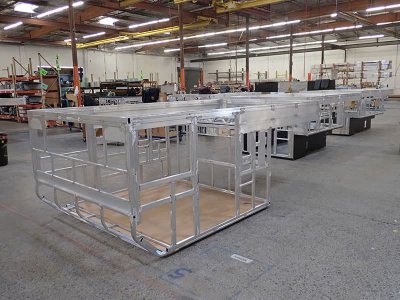
It seemed like a brilliant idea that I could purchase a plain aluminum shell with a full height vertical rear door under $3k and customize however I wanted. I was planning to add RV windows and mount gear like awning, propane tank, Rotopax, etc on the exterior walls. Unfortunately, the shell is made of thin aluminum tubing, the 0.035" outer aluminum skin add no structural strength and the frame welds are pretty poor. Forget about all the stuff I wanted to mount, I'm not even confident the camper can handle long term off road use as-is.
At this point, the camper has been delivered and I have to live with it. As long as I can improve the structural integrity of the shell, I think I can still turn it into a solid camper for my needs. I don't plan to put much load on the camper itself beyond some lightweight gear. All interior features - bed platform, drawers and countertop - will be mounted to the truck bed. Other than possibly adding solar panels later, nothing will go on the roof. The camper is mostly meant to function as a hard-sided "shell".
However, I do need enough rigidity for the shell to handle rough terrain. And that's where I'm looking for some structural engineering guidance. I'm not sure which part of the frame structure will experience the most stress under torsional loads. I assume the weakest points are the welds. I plan to add gussets and shear panels in the most critical areas but want to avoid overstiffening it.
I asked ChatGPT for FEA style analysis after providing photos and all the background details - materials, dimensions, etc. It suggested the followings:
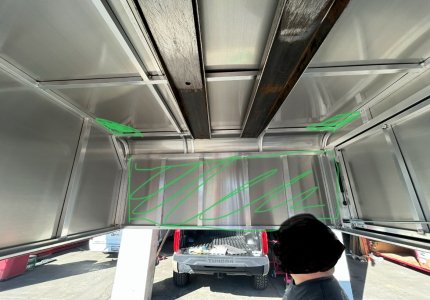
- Add shear panel to the front vertical wall using 16 gauge aluminum sheet.
- Add gussets to the 2 front roof corners.
- Add diagonal braces to each side of the rear door opening.
Does this seem like the right approach? Any suggestions would be really appreciated.
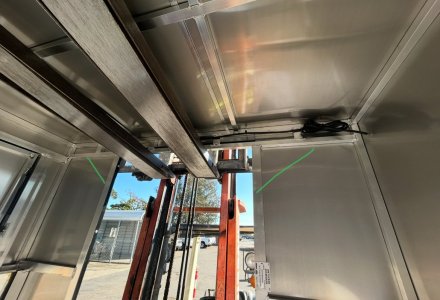
It seemed like a brilliant idea that I could purchase a plain aluminum shell with a full height vertical rear door under $3k and customize however I wanted. I was planning to add RV windows and mount gear like awning, propane tank, Rotopax, etc on the exterior walls. Unfortunately, the shell is made of thin aluminum tubing, the 0.035" outer aluminum skin add no structural strength and the frame welds are pretty poor. Forget about all the stuff I wanted to mount, I'm not even confident the camper can handle long term off road use as-is.
At this point, the camper has been delivered and I have to live with it. As long as I can improve the structural integrity of the shell, I think I can still turn it into a solid camper for my needs. I don't plan to put much load on the camper itself beyond some lightweight gear. All interior features - bed platform, drawers and countertop - will be mounted to the truck bed. Other than possibly adding solar panels later, nothing will go on the roof. The camper is mostly meant to function as a hard-sided "shell".
However, I do need enough rigidity for the shell to handle rough terrain. And that's where I'm looking for some structural engineering guidance. I'm not sure which part of the frame structure will experience the most stress under torsional loads. I assume the weakest points are the welds. I plan to add gussets and shear panels in the most critical areas but want to avoid overstiffening it.
I asked ChatGPT for FEA style analysis after providing photos and all the background details - materials, dimensions, etc. It suggested the followings:
- Add shear panel to the front vertical wall using 16 gauge aluminum sheet.
- Add gussets to the 2 front roof corners.
- Add diagonal braces to each side of the rear door opening.
Does this seem like the right approach? Any suggestions would be really appreciated.