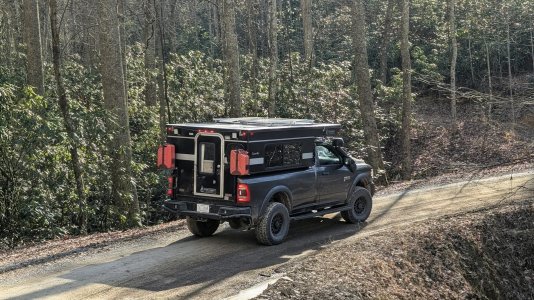
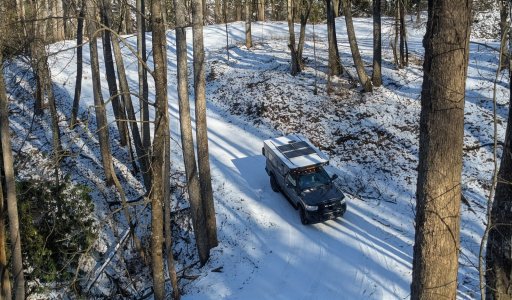
2021 RAM 3500 Tradesman | AEV Prospector | FWC Grandby

IDK man, although being a one off, would be willing to bet that anything similar produced in any kind of production /“professional” fashion probably wouldn’t look much different than what you did.

Your encouragement means a lot - thank you. While I appreciate the vote of confidence, I know there are skilled professionals out there who would spot plenty of rough edges in what I've built. I approached this as a personal challenge with what I had on hand: basic tools, limited experience, and everything done right in my driveway using just a single extension cord. It wasn't perfect by any stretch, but it was a rewarding hands-on project, and I'm genuinely glad others followed along and shared in the journey. If it inspires anyone to try something similar (or do it better!), that's more than enough for me.

Have you measured temperature inside the box when heat was in use? It would be interesting to see how hot it gets and the longevity of the equipment inside. I assume one fan is in a push setup and the other is in a pull setup?

Yes, I monitor the internal temperature of the Zarges K470 enclosure (what I'm calling the MES-K470 setup) using a probe tied into an Inkbird ITC-1000 controller. That feeds a compact Noctua NA-FC1 fan controller, which handles two Noctua NF-A12x25 PWM fans in a push-pull arrangement - one pushing cool air in, the other pulling warm air out.

I set the fans to kick on at 90°F and shut off once it drops to 80°F. To size the system, I ran through various load scenarios (mixing solar charge controller output, DC-DC charging, inverter draw, diesel heater operation, etc.) in both hot and cold ambient conditions, then designed around a conservative worst-case estimate. With the fans at full PWM speed, they move enough air to refresh the enclosure's internal volume dozens of times per minute - plenty of margin for the loads I run.

As one example taken moments ago: with the diesel heater on low, the solar charge controller active, and the inverter running, the internal temp stabilized around 85.2°F (battery at 97.6% SoC, solar input just trickling at ~3W in float mode). I'm pleased with how it performs under real use, though I fully recognize the setup is more elaborate than most people would need - this was largely an engineering experiment and learning exercise for me.

If you're building something similar, I'd be happy to share more details on the calculations or component choices; happy to help anyone avoid some of the trial-and-error I went through. Thanks again for engaging!

RC 26-035.jpg
 
I selected the Luverne Grip Step 7" x 98" aluminum wheel-to-wheel running boards after a thorough search for options suited to a regular cab with long bed. Full-length boards proved scarce - most covered only the cab area - while I required frame-mounted brackets exclusively, avoiding any rocker panel attachment. I also prioritized a flat platform with expanded metal tread surface for superior traction and debris shedding in demanding environments. These Luverne steps uniquely met all criteria, making them the clear choice for my build.
RC 26-025.jpg

The 7-inch-wide stepping surface ensures safe, comfortable access and egress. The open expanded metal treads effectively shed dirt, snow, and debris from boots, and the powder-coated aluminum construction delivers strength, low weight, and complete rust resistance.
RC 26-026.jpg

As installation neared completion, I briefly considered omitting the end caps. Upon reflection, their smooth, rounded profile eliminates sharp edges and neatly conceals what would otherwise be an exposed, unfinished end - enhancing both safety and aesthetics.
RC 26-027.jpg

Two standout features deserve mention. First, the expanded metal tread pattern matches that of my camper entry step stand, creating uniform footing and boosting overall safety. Second, the running boards mount at precisely the same height as the top step of my stand. This eliminates the need to haul the stand when securing or releasing the front four roof latches on my Four Wheel Camper - a small but meaningful efficiency gain. In freezing conditions (teens or twenties), manipulating cold metal saps hand warmth quickly, and gloves compromise the dexterity needed for those stubborn latches - making this integration a genuine time- and comfort-saver.
RC 26-028.jpg

This is the front mounting bracket on the driver's side. The powder-coated brackets employ stainless steel fasteners and exhibit high-quality fabrication.
RC 26-029.jpg

The instructions were thorough and illustrated, but contained a notable gap: body mount bolts are to be discarded without reuse, yet no guidance addresses the substantial factory washers (~4" OD). Luverne tech support offered no explanation for their function and insisted on non-reuse per the manual. Observing the kit's bolts were 10 mm longer each, I applied basic load-distribution logic: the washers must remain to spread force evenly over the rubber body bushings. This critical detail appears to have been omitted during the transition from design to documentation.
RC 26-030.jpg

Here is the rear cab bracket on the driver's side. On a crew cab, an additional body mount and bracket would appear between front and rear; for my standard cab, only two per side are required. Vertical adjustment capability here is a smart, practical touch.
RC 26-031.jpg

Close inspection of the load reaction studs reveals how they preload the brackets against the frame, channeling step loads directly into the chassis rails. This is a solidly engineered approach with broad adjustment capability that impressed me.
RC 26-032.jpg

The rearmost bracket attaches to the side of the front eye bracket for the rear leaf spring on my one-ton truck. It uses a 30 mm head bolt torqued to 350 ft-lbs (my son handled the final torque). Horizontal adjustment is available if needed. In summary, the frame brackets reflect thoughtful, heavy-duty engineering with practical adjustability.
RC 26-033.jpg

Tonight I camp in the Croatan National Forest where it's been in the 20s the past few nights, the crisp air sharpening every rustle in the underbrush. Named for the Croatoan tribe who once called this region home, the forest guards the echoes of the enigmatic Lost Colony - those 115 English souls who disappeared from Roanoke Island in the late 1580s, leaving behind a single carved word: "CROATOAN." Many believe they blended into the local Native communities hereabouts, their fate a mystery that still draws explorers like me to these shadowy pocosins and tidal edges, searching for traces in the silence.
RC 26-034.jpg
 
As I continue my slow trek south, I paused in New Bern, North Carolina, to visit an old friend and explore the area. Founded in 1710 by Swiss settlers, it's the "daughter city" of Bern, Switzerland. The downtown exudes rich colonial history the moment you step onto its streets - quaint restaurants, cafes, art galleries, and antique shops abound. We toured the magnificent Tryon Palace, its surrounding museums, impressive architecture, and stunning gardens. Full-time travel keeps delivering these surprises: places you've never heard of that make you think, "Why didn't I come here years ago?"
RC 26-036.jpg

We devoted a full day to Tryon Palace and its grounds. The highlight was a one-hour guided tour led by docents in period dress who brought the place to life. It reminded me of Colonial Williamsburg - similar feel, but on a much more manageable scale (Williamsburg needs 3–5 days). In the upper-left photo, you'll see the handsome horse stalls; I have a weakness for fine old wood, brick, and craftsmanship. The other three shots show interior details, where our guide did an excellent job explaining daily life for the household and servants.
RC 26-037.jpg

Built 1767–1770, Tryon Palace stood as North Carolina's first fixed colonial capital and home to Royal Governor William Tryon - under the reign of George III, a king whose House of Hanover was unequivocally German in origin. The dynasty originated in Hanover, Germany, and ascended the British throne in 1714 with George I, a German elector chosen over closer Catholic heirs. This German royal line governed Britain (and its colonies) for nearly two centuries, with George III himself holding dual roles as British sovereign and ruler of the German Electorate of Hanover. Tryon departed for New York in 1771; Josiah Martin followed until his 1775 escape at revolution's outbreak. Patriots then used the Palace as the new state's capitol, hosting foundational General Assembly meetings. The monarchy's deep German ancestry persisted; only in 1917 did King George V rename the house from Saxe-Coburg and Gotha (another German branch) to Windsor to quell wartime anti-German sentiment.
RC 26-038.jpg

When Governor Martin fled in 1775, he left behind most of his fine furniture. The revolutionaries auctioned it off, using proceeds to fund the war effort. Many pieces ended up with local families. Today, a few originals from Martin's household - along with items tied to first state governor Richard Caswell - have been returned or replicated in their proper places. On tour, you can spot them if you know what to look for; it's a tangible link to that chaotic transition.
RC 26-039.jpg

Tryon Palace holds a strong collection of 18th- and 19th-century furniture - mostly English, with American examples from New England, Mid-Atlantic, and select North Carolina pieces (heavy on New Bern/Craven County). The American items relate mainly to Josiah Martin's time (1771–1775). A former New York-based officer who married his first-cousin, he included pieces like a Chippendale mahogany desk, pierced-back chair, and large eight-legged dining table - possibly auctioned in 1777 and acquired by Caswell.
RC 26-040.jpg

The grand staircase was a showpiece - crafted from costly West Indian mahogany that ran 600 pounds (24–30 times an average North Carolinian's annual wage). It highlights the stark class divide: this ornate "canal lever" design (a sophisticated engineering feature) welcomed guests and displayed power, while servants used hidden, steep "lesser stairs." The design literally separated worlds; the social engineering is as evident as the joinery.
RC 26-041.jpg

This view from a second-floor window shows the well-kept neighborhood - fresh paint, tidy yards, classic homes in fine shape. It was cold and rainy, but we made the most of it and enjoyed ourselves. My bird-savvy friend noticed external bird-themed architecture, which launched us into a lengthy talk about homing pigeons, doves, herons, falconry, and related topics. Always good to have company with specialized knowledge.
RC 26-042.jpg

The Kitchen Office (first floor: kitchen, scullery, wash house, secretary workspace; second: servants' chambers and laundry) was cutting-edge for 1770 - modern conveniences of the day. It still feels primitive now, but the sights, sounds, and smells of 18th-century cooking are vivid. Daily period dishes use garden produce. The clock jack and weight stood out - similarities to the micro-mechanical timepieces I collect from Switzerland and Germany. Solid engineering for its era.
RC 26-043.jpg

The North Carolina History Center offers rotating exhibits, interactive displays, waterfront dining, and shopping - aimed at freshening the historic experience. It covers coastal formation to regional shaping. In my view, though, it's a misallocation of funds. After days of classic craftsmanship and quiet elegance, I found it disappointing: stark modern exterior, disjointed interior design, and heavy emphasis on environmental warnings and certain groups' contributions - while downplaying others. The bright colors and constant music felt overwhelming. I shared my thoughts politely on the way out - gentlemanly disagreement is still possible.
RC 26-044.jpg

Let's close with Tryon’s Latham Garden; a classic formal English-style parterre - flowers, clipped hedges, pathways - evoking 18th-century Britain. Overall, 16+ acres in colonial revival design (1950s, Morley Jeffers Williams) include patterned formal gardens, heirloom blends, a kitchen garden with heritage herbs/vegetables, pollinator-friendly natural areas, and three period houses with distinct themes: camellia-focused lawn, white-themed Georgian, and Southern-style Victorian. A peaceful, well-executed landscape.
RC 26-045.jpg
 
This photograph shows the truck after the shop removed it from the lift. They had disassembled part of the rear driveshaft, making the vehicle undriveable, and were uncertain how to complete the u-joint replacement.
RC 26-047.jpg

A few weeks ago, while departing Virginia, I detected a low rumble in the floorboard at 30–35 mph under normal acceleration - indicative of a rear u-joint starting to fail. Upon arriving in New Bern, North Carolina, to visit a former military colleague, the joint began chirping and squeaking at low speeds, confirming the need for immediate repair.
RC 26-048.jpg

I briefly considered handling the repair myself, but cold, windy conditions and an estimated hour of labor per joint favored a local shop. That decision proved fortunate. Ram employs a factory process called plastic-injected retention: molten thermoplastic is injected into channels around the bearing caps during assembly, hardening to secure them without snap rings or clips. This provides precise alignment and vibration damping in high-torque truck applications but renders OEM u-joints non-serviceable, intended as lifetime components.
RC 26-049.jpg

To summarize events thus far: I drove the truck in for a quoted u-joint replacement, with the service writer detailing the OEM plastic retention. After disassembly, they determined they lacked the capability to finish. The vehicle was moved aside to free the bay, I was deferred, and a tow to another facility was offered. During the wait, I gathered information: my son contacted a local Ram dealership service manager; a principal mechanical engineer colleague at NASA LaRC (a muscle car builder) provided input; and I consulted the service manager at a large Ram HD dealership in the Raleigh-Durham-Chapel Hill region.
RC 26-050.jpg

With the additional details confirmed, I returned to the service writer and outlined the facts calmly: the vehicle was driven in for an agreed repair, partially disassembled (now undriveable), and then completion declined. To the manager, I presented two professional options: finish the work here at the quoted price, or arrange it at another shop for the same amount. The discussion remained courteous as we resolved the matter.
RC 26-051.jpg

In the end, they sourced and installed a non-OEM u-joint. Though not my first preference, the repair was satisfactory, and I departed under my own power, aware the remaining joint may require attention in the future.
RC 26-052.jpg

Recommended locally, appears competent in general. The difficulty originated from an early process gap. The local Ram dealership noted that OEM u-joint part numbers are obscured in their system behind a filter requiring manual override - possibly signaling specialized ordering, training, or tooling needs that were not fully relayed to the service writer.
RC 26-053.jpg

The quotes in order: initial for three OEM u-joints and three hours labor at $795.26 (I later pointed out it is a single rear driveshaft with two joints and two hours); revised to two OEM u-joints and two hours at $539.07; final invoice for one non-OEM u-joint and 1.2 hours at $242.82.
RC 26-054.jpg

The shop personnel are capable, but an initial oversight escalated into a larger delay. The key lesson is to confirm details early - ensure mutual understanding of the procedure, including any unique methods, tools, or materials. I should have questioned the plastic retention specifics more thoroughly rather than assuming expertise from the quote alone. In the end, all parties gained insight, and I'm now traveling with the lower rear u-joint replaced; the technician noted the upper remains in good condition. Future service may involve refreshing both, or - with this experience - I may handle it myself.
RC 26-055.jpg
 
Funny, I once owned a '67 Cadillac Fleetwood Brougham which I bought '87 in Napa Valley and had it shipped to Germany. I remember the U-Joints were labeled "lifetime" and featured an OEM “Plastic Injection lock-up”.
We fixed it back then in a somewhat unorthodox way — burn the nylon with a blowtorch…
But to a German workshop in the late eighties, this was as common as a martian space ship.
 
South East Backcountry Discovery Route

Part One of Three

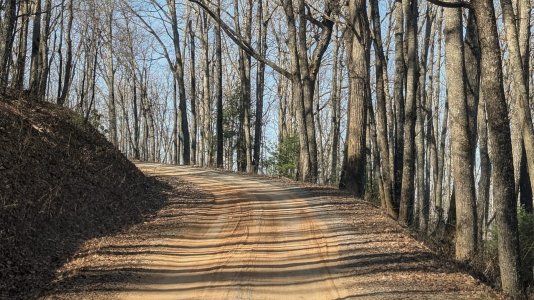
Today, I continue my journey southward along the Southeast Backcountry Discovery Route, a trail spanning roughly 1,300 miles through the diverse landscapes of the Southeast. For me, it begins in Damascus, Virginia - "Trail Town USA" - where it links to the Mid-Atlantic BDR, then winds through the Appalachians of North Carolina, Tennessee, North Georgia, Alabama, and across the Florida Panhandle, ending on the shores of the Gulf of Mexico. This SEBDR marks the end of my East Coast Trilogy - interconnected routes from Gulf to Canada - and I share it to inspire you: shed the chains of safety and truly live.
RC 26-056.jpg

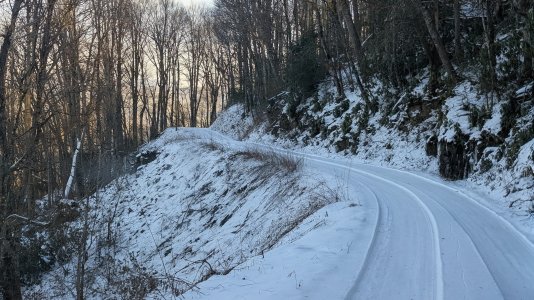
As I crossed into Cherokee National Forest's 660,000 acres of Southern Appalachian splendor, the route had me switching repeatedly between south- and north-facing slopes. Remember, weather and timing can make opposites similar or starkly different. In my case, south sides were often frozen dirt and gravel, reliable under tire, but north faces brought packed snow, slick ice, and minimal hold - a reminder that nature's whims demand respect.
RC 26-057.jpg

It was heartening to see signs of recent passage, from rangers or locals attuned to local conditions. Days earlier, milder weather might have melted snow slightly before a hard freeze locked it in. Despite shifting from icy miles to firm dirt and gravel, I held off on my PEWAG chains. Lowering tires to 25 PSI, I navigated carefully - part of the deliberate daring that defines adventure.
RC 26-058.jpg

Maintaining 15-20 mph through spots made good time toward my 100-mile daily target, wrapping the route in two weeks to match Florida schedules. Still, the hassle of chaining multiple times daily could extend it, leading me to ponder if winter was ideal. Over to the west, the 7,580-acre South Holston Lake, a TVA creation, shines as a premier smallmouth bass spot and fly-fishing paradise, a testament to the wild's rewards.
RC 26-059.jpg

Descending from the heights into historic Elizabethton, Tennessee, felt refreshing, but reality hit: Section 10 spanned 148 miles, and I'd covered only 60, lagging my 100-mile pace. Founded in 1799 and incorporated in 1905, Elizabethton is Tennessee's first town, dubbed "The City Where Independence Began" - the initial independent government west of the Appalachians. At the Doe and Watauga rivers' meeting, it features the 1882 Covered Bridge, Sycamore Shoals State Historic Park, and the Overmountain Men who marched from there to the Battle of Kings Mountain.
RC 26-060.jpg

From Elizabethton, a short southern jaunt turned southwest across the Tennessee line into North Carolina, entering Pisgah National Forest's 500,000+ acres of lofty peaks, waterfalls, and forested hills, dominated by hardwoods, rivers, and extensive trails. This forest sparked the eastern national system with its inaugural land buy, housed the nation's first forestry school (preserved as Cradle of Forestry), and claims two pioneering eastern wildernesses - sanctuaries calling me to explore and share the wild.
RC 26-061.jpg

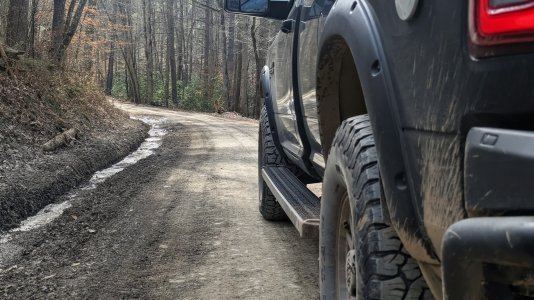
A caution for solo mountain ventures in foul weather, where traction can vanish, stranding you in danger: best to team with one or two equipped rigs, check ranger stations for updates, stick to daylight, and test grip often. Simple checks - like braking sharply in safe spots or accelerating in two-wheel drive - reveal surface hold, and since it shifts quickly, test frequently. If unsure, edge the ditch side (right here) to slide safely, not over cliffs - engineer prudence into your pursuits.
RC 26-062.jpg

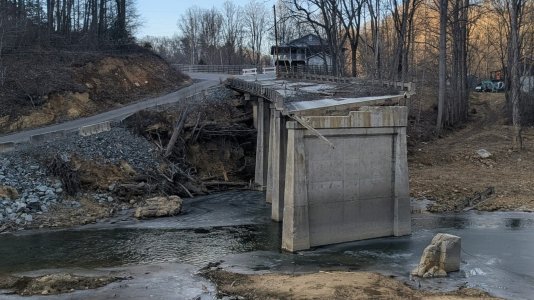
In late September 2024, Hurricane Helene's remnants unleashed devastating floods on eastern Tennessee and western North Carolina, pouring 20-30+ inches of rain in days over the Appalachians. This sparked flash floods, landslides, and river rampages that crushed infrastructure, damaging over 670 bridges in North Carolina and many in Tennessee, with waters washing away spans, eroding bases, and scouring paths. Once-calm rivers became monsters exceeding design thresholds, a humbling lesson in nature's might.
RC 26-063.jpg

This catastrophe highlighted water's overwhelming force against human builds: concrete bridges, designed for loads and standard floods, succumbed to hydraulic might, debris impacts, and undercutting from extreme surges. Many areas surpassed 500- or 1,000-year flood marks, showing infrastructure's limits versus a stalled storm's deluge. Billions in repairs continue into 2026, a reminder that nature can shatter the permanent.
RC 26-064.jpg

Winter solitude in these ancient forests is a lover’s embrace and a blade at the throat at once - this is an act of deliberate vulnerability: cell service fades, snow buries the road, and beauty arrives in stark, indifferent doses - ice-rimed ridges, frozen silence, vast white emptiness. Yet peril is never far; a fraction of lost traction on a descent and the slide begins - unhurried, merciless - toward wreckage or worse, leaving you injured or not, but always alone. Such risks are not recklessness; they are sacraments of aliveness. As St. Thomas Aquinas taught, true virtue often lies in measured daring; as St. Augustine of Hippo confessed, the heart knows no rest until it risks itself for something greater than safety. We must fear not dying, but dying having never lived.
RC 26-065.jpg
 
Last edited:
South East Backcountry Discovery Route

Part Two of Three

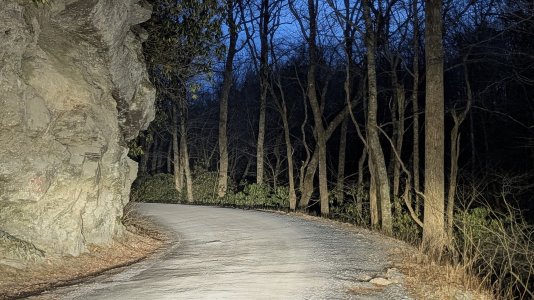
I had a decision to make: all the weather forecasts I sourced warned of a historic winter storm obliterating the mountainous area of eastern Tennessee and western North Carolina in the coming days. I read this objectively, realizing the role of news organizations is not necessarily to provide accurate and useful information as much as to make money for shareholders. I spent hours researching maps, examining routes for the next few days, and estimating descent times from any spot to a nearby town or village for shelter. I considered remaining in the mountains with enough food, water, and fuel for my diesel heater, but though it sounded rugged and romantic, staying in unfamiliar terrain with limited cellular service amounted to an unnecessary risk.
RC 26-066.jpg

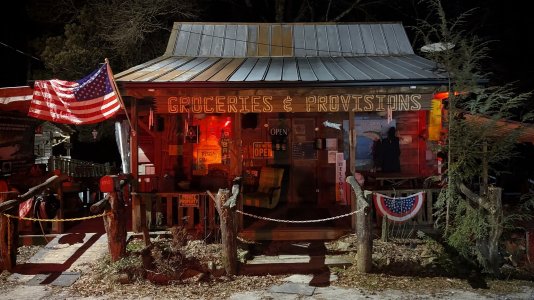
Tucked along a quiet mountain road in Collettsville, North Carolina, Betsey’s Ole Country Store feels like a step back into a gentler, slower-paced past. Housed in a weathered building rooted in the early 1900s, it carries the spirit of old Mortimer, where front-porch conversations and neighborly stops defined daily life. Today, it’s a beloved spot for locals and travelers, offering simple staples, cold drinks, and nostalgic hot dogs to hikers, anglers, and wanderers heading for Wilson Creek and Pisgah National Forest. With creaking floors, mountain backdrop, and timeless hospitality, Betsey’s isn’t just for provisions - it’s a living memory of rural Appalachia and small-town North Carolina’s charm.
RC 26-067.jpg

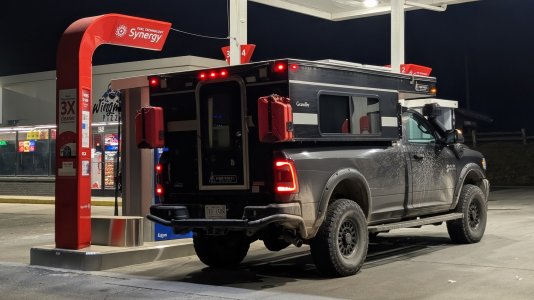
Nestled high in the Blue Ridge, Newland marked a quiet threshold along the SEBDR, transitioning from Section Ten to Nine - I’d completed 148 of 1,300 miles. Normally, it might invite a slower pause: a warm meal, a lingering look at darkening ridgelines. But that night, pressure mounted with a massive winter storm hours from engulfing the region. To stretch progress before conditions worsened, I rolled into a gas station minutes before 2300, likely their last customer under humming fluorescent lights. I refueled the truck and, breaking habit, grabbed energy drinks for alertness if the trail demanded more. Necessity, not comfort, guided the stop.
RC 26-068.jpg

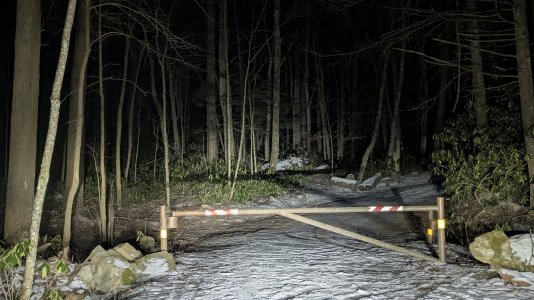
Just over two hours later, deep into the night, a seasonal gate stopped me - the GPX file from Backcountry Discovery Routes showed it closed December through mid-March, but I tried anyway. I understood the closure: elevation rose quickly to just under a mile high, with annual snow making it too dangerous open. Secretly, I’d envisioned the gate ajar, stopping to install my 140-pound PEWAG 8.2 mm square-link chains on 37x12.5 tires, crawling through tank-like at a few miles per hour. My concern? Crossing the highland only to hit a locked opposite end. Imagine turning a twenty-foot vehicle around on a ten- to fourteen-foot snow-packed shelf road after fourteen hours’ drive? That wouldn’t be fun - I’d likely park and wait for daylight. The closed gate was strike one; two more along the SEBDR meant scrubbing the mission for another time. At only 15% in, odds weren’t favorable, but I’d take the chance.
RC 26-069.jpg

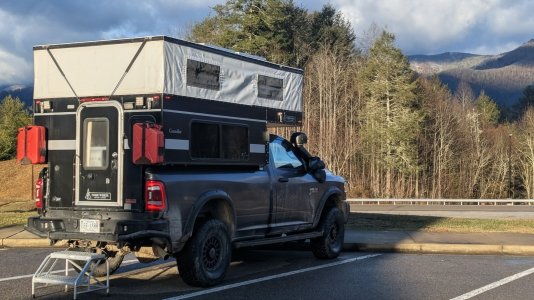
I studied my maps, dropped off the mountain, and found a detour for the short closed section: west a few miles to Unicoi, southwest to Erwin, Tennessee. It was the wee hours as I stopped in town, rolling down windows for fresh air. The place was dead, nothing moving but fast traffic nearby - Interstate 26. So late and tired, I needed a pullover spot soon. I came upon idling 18-wheelers outside town, but checking the map, I spotted a rest stop miles south. Pulling in, only one other car was there - perfect for quiet rest with another long day ahead. Waking in the morning, stepping out to stretch, I met a smiling girl in her early 20s, also full-time traveling in that car. I don’t recall her name, but I’ll call her Jabber-Jaw, that girl could talk endlessly. She said she awoke when I arrived, relieved after feeling scared alone in the lot. We chatted; I encouraged her to continue adventuring, find a husband, start a family.
RC 26-070.jpg

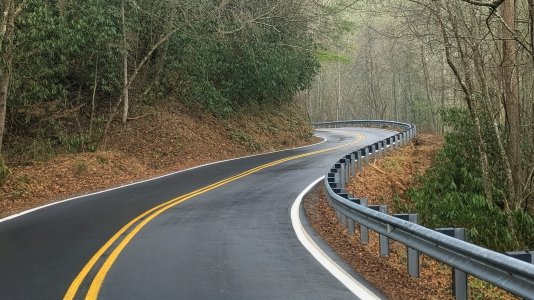
Not all overland miles are gravel and stone; along the SEBDR, occasional smooth two-lane pavement felt less like compromise and more like a gift. These roads swept through rolling countryside and mountain communities, revealing barns, valleys, and ridgelines rougher tracks hide. Far from diminishing, these sections affirmed overlanding is about the journey as much as the surface. As counterbalance to punishing rock and ruts, they added rhythm and variety - likely no more than 10 to 15 percent of my southbound miles so far, a modest contrast in a demanding route.
RC 26-071.jpg

I noticed a pattern: on average, below half a mile elevation (2,640 feet), no real snow or ice concerns. North faces always had more than south, so dirt and gravel might carry higher on south sides, while north encountered it lower. Depending on face perpendicularity, differences exaggerated. Some call this relating to nature; I see it as common sense we all have but rarely use. A key travel insight: groups bring radio chatter, vehicle spacing, stop coordination for food or camp - cluttering an immersive journey. I’m not negative on groups, but reinforcing our instinct to travel alone, immersing in the natural world.
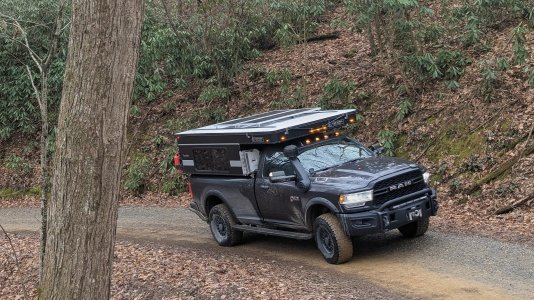
RC 26-072.jpg

Traveling over Bald Mountain north of Hot Springs, NC, felt like ascending into another season. The Forest Service road climbed the north face, hard-packed and ice-glazed, demanding patience with each turn. Towering rhododendrons closed in, forming a glossy green tunnel unreal against frozen brown earth. The contrast struck - vivid life in winter’s dead, ancient shrubs defiant amid ice, shadow, cold. Air hushed and heavy, tires spinning softly upward, it felt like passing through hidden sacred space, a corridor where winter loosened grip enough for green to endure.
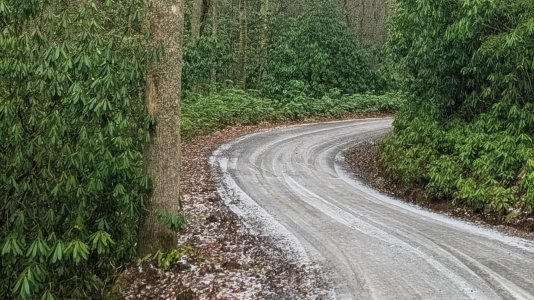
RC 26-073.jpg

At its core, "The Winners" reflects Kipling’s belief that progress and strength forge in solitude, not crowds. The line “He travels the fastest who travels alone” echoed as I rested by a creek, tracing gnarled roots gripping earth. That mirrored my path - years of solitary work, including jumps from helicopters into dark ocean, aircraft fading so I worked undisturbed. Kipling’s poem isn’t lonely; it’s resolute, arguing we must learn aloneness without diminishment, act decisively sans reassurance, stand firm when noise fades and responsibility remains.

RC 26-074.jpg

I found myself beside Paint Creek again, picking across rough slick stones, cold seeping through boots as I paused to absorb it. Across a wide, slow bend of partially frozen water, a waterfall whispered and thundered, forty feet away yet another world. Air crisp and clean, pine-scented, softened by canopy light, grounded by stone’s bite. The sound - steady, alive, magnificent - no recording captures without losing soul. Sitting there, I wished to hand it to you like warm coffee on cold morning. Instead: this weekend, explore. Even briefly, map a forest, park, wildlife area - federal, state, local. Your current vehicle is right. Join birds, fish, quiet woods watchers; immerse in the world our Father created for enjoyment. Happy trails.

RC 26-075.jpg
 
Solar System Monthly Validation Report – January 2026

This report presents the system validation and verification results for my solar power system and battery bank after 153 days of off-grid travel. The sole power source consisted of two 250-watt solar panels (Rich Solar) connected to a solar charge controller (SmartSolar MPPT 100/30) and a 200 Ah battery bank (two LiTime 12V 100Ah Group 24 Deep Cycle LiFePO4 batteries). Neither the AC-DC charger (Blue Smart IP22 Charger 12V-30A) nor the DC-DC charger (Orion XS 12/12-50A) was used during this period. The objective was to evaluate the adequacy of the solar system and battery bank capacity to support off-grid travel demands.

System validation and verification for a vehicle’s solar-based electrical system involves confirming that the setup meets design specifications and performs reliably under anticipated operating conditions. Validation ensures the system addresses the intended purpose (e.g., providing consistent power for off-grid requirements), while verification confirms proper integration and functionality of components. This process is critical for my setup, where approximately 50% of operation occurs under forest canopy (reducing solar input) and 50% in semi-open areas with partial sunlight, enabling early identification of inefficiencies.

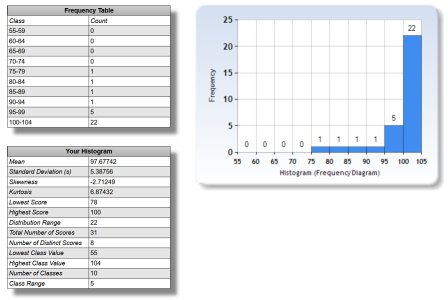
The histogram below illustrates the maximum state-of-charge (SOC) achieved by the battery bank during each 24-hour cycle. Over the most recent 31-day period, the maximum SOC ranged from 78% to 100%, with 28 days recording values between 90% and 100%. Although I did not log the specific times when SOC reached 100%, this value was frequently attained around midday. These results indicate that the system has sufficient solar capacity for most of January's operating conditions. It will be valuable to assess performance during February and March, when solar input slowly continues to rise. Overall, I am satisfied with these findings, as the system exceeded the design goal of providing sufficient power for seven days using solar energy alone, successfully delivering power for the entire 153-day period.

RC 26-086.jpg

The histogram below illustrates the minimum SOC achieved by the battery bank during each 24-hour cycle. Over the most recent 31-day period, the minimum SOC ranged from 70% to 92%, with 21 days recording values between 80% and 90%. The minimum SOC was typically reached early in the morning, just before sunrise. During the system design, my goal was to ensure the SOC rarely dropped to 25%. The fact that the lowest recorded SOC over the 31-day period was 70%, with all other values higher, demonstrates the system’s robust performance.

RC 26-087.jpg

The screenshot below, captured from the Victron Energy solar charge controller, displays the energy collected by the system over the past 31 days. The white portion of each column represents the percentage of time spent in Bulk charge mode, while light blue indicates the Absorption phase and medium blue denotes the Float phase. The data shows that the system reached the Float phase on one-third of the days. This indicates that the system was fully or nearly fully charged for approximately one-third of the time.

This period represents one of the lowest solar resource times of the year, with reduced exposure duration, oblique rays, and higher chances of overcast skies further diminishing power production from solar panels. On December 01-09, snowy and overcast conditions limited solar input, while on December 10-11 the system dipped even lower with heavy overcast. On December 12 the system quickly recovered pulling in as much as 1.07kWh on a single day. Despite the wide range of overcast, partially cloudy, and clear days, coupled with temperatures that ranged from the 21°F through 74°F, the system, the system performed better than expected throughout the most challenging time of the year for a solar system. On days when the temperatures dropped below freezing, I was able to maintain the battery temperature above freezing by leaving the door to the battery compartment open at night while my diesel heater ran.
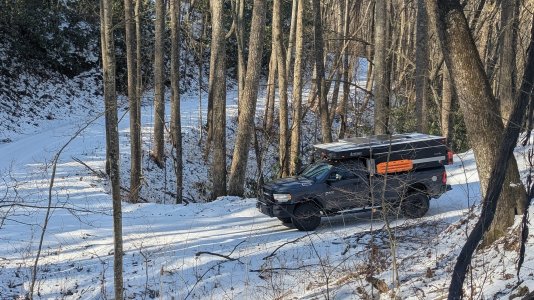
RC 26-088.png

This data is associated with the chart above. I attempted to attach the CSV file to this post for further review but the uploaded file does not have an allowed extension.

RC 26-089.jpg

I will periodically measure system performance and publish updates similar to this report. Evaluating the system’s behavior over the coming years will provide valuable insights into its long-term performance and alignment with design expectations.
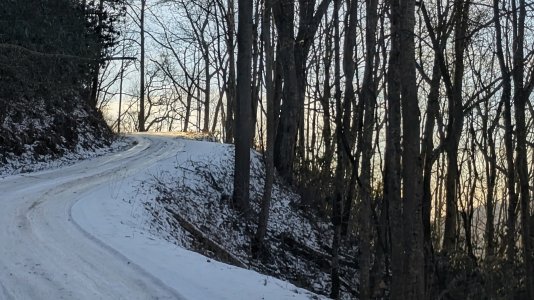
 
This photograph shows the truck after the shop removed it from the lift. They had disassembled part of the rear driveshaft, making the vehicle undriveable, and were uncertain how to complete the u-joint replacement.
View attachment 907237

A few weeks ago, while departing Virginia, I detected a low rumble in the floorboard at 30–35 mph under normal acceleration - indicative of a rear u-joint starting to fail. Upon arriving in New Bern, North Carolina, to visit a former military colleague, the joint began chirping and squeaking at low speeds, confirming the need for immediate repair.
View attachment 907238

I briefly considered handling the repair myself, but cold, windy conditions and an estimated hour of labor per joint favored a local shop. That decision proved fortunate. Ram employs a factory process called plastic-injected retention: molten thermoplastic is injected into channels around the bearing caps during assembly, hardening to secure them without snap rings or clips. This provides precise alignment and vibration damping in high-torque truck applications but renders OEM u-joints non-serviceable, intended as lifetime components.
View attachment 907239

To summarize events thus far: I drove the truck in for a quoted u-joint replacement, with the service writer detailing the OEM plastic retention. After disassembly, they determined they lacked the capability to finish. The vehicle was moved aside to free the bay, I was deferred, and a tow to another facility was offered. During the wait, I gathered information: my son contacted a local Ram dealership service manager; a principal mechanical engineer colleague at NASA LaRC (a muscle car builder) provided input; and I consulted the service manager at a large Ram HD dealership in the Raleigh-Durham-Chapel Hill region.
View attachment 907240

With the additional details confirmed, I returned to the service writer and outlined the facts calmly: the vehicle was driven in for an agreed repair, partially disassembled (now undriveable), and then completion declined. To the manager, I presented two professional options: finish the work here at the quoted price, or arrange it at another shop for the same amount. The discussion remained courteous as we resolved the matter.
View attachment 907241

In the end, they sourced and installed a non-OEM u-joint. Though not my first preference, the repair was satisfactory, and I departed under my own power, aware the remaining joint may require attention in the future.
View attachment 907242

Recommended locally, appears competent in general. The difficulty originated from an early process gap. The local Ram dealership noted that OEM u-joint part numbers are obscured in their system behind a filter requiring manual override - possibly signaling specialized ordering, training, or tooling needs that were not fully relayed to the service writer.
View attachment 907243

The quotes in order: initial for three OEM u-joints and three hours labor at $795.26 (I later pointed out it is a single rear driveshaft with two joints and two hours); revised to two OEM u-joints and two hours at $539.07; final invoice for one non-OEM u-joint and 1.2 hours at $242.82.
View attachment 907244

The shop personnel are capable, but an initial oversight escalated into a larger delay. The key lesson is to confirm details early - ensure mutual understanding of the procedure, including any unique methods, tools, or materials. I should have questioned the plastic retention specifics more thoroughly rather than assuming expertise from the quote alone. In the end, all parties gained insight, and I'm now traveling with the lower rear u-joint replaced; the technician noted the upper remains in good condition. Future service may involve refreshing both, or - with this experience - I may handle it myself.
View attachment 907245

You just melt the plastic pins out with a torch, they are not really a issue. Replacement cross has normal clips just like what you have. I sold piles of them to basically everybody that needed a u-joint in town and got sick trying to get an aftermarket cross it fit. Independent shops, DIYers over the counter etc, there was nothing special about installing a replacement Mopar cross.

The center base all the caps go on, the big round part in the center of most aftermarket crosses was too big to fit in aluminum driveshafts used in the 2500/3500 trucks. I don't remember steel shafts at all but std cab trucks are pretty scarce too. They would not shift far enough side to side to get between the ears. That was the only issue I ran into when I was parts manager at a CDJR dealer. If you note your new cross is a little more slender than normal, that is why.

We got into trying the aftermarket stuff during the restrictions during Covid/UAW strikes and discovered why the aftermarket ones were so terrible.

I wouldn't be surprised by now if they had figured out that they had to make somethings special and couldn't just cross an existing cross.

Ram dealer didn't want to give up a sale by giving you the part numbers. Some dealers have policies in place to that make a big thing out of it.

Transmission end of the driveshaft runs in a much cleaner environment and will outlive the differential end cross by a wide margin.
 
Last edited:

Forum statistics

Threads
191,137
Messages
2,933,428
Members
235,080
Latest member
NorthCaptiva
Top