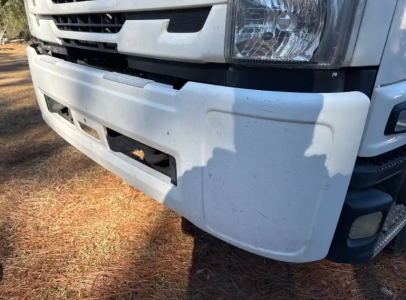
Isuzu npr 4wd

I based that comment on your very blurry photo, hence the word "likely".

Yea, the fuse / switch panel with a combination of 110 vac, 12v is fairly standard. See Bluesea. However this approach is not the only "quality" approach. And I see many of theses panels at the floor or close to the floor. Not necessary the best location.

Hence my analysis.
 
Generally speaking its not worth converting a level 2 charger down to 120V. While free ones do exist, most charge a decent amount per hour.

Regardless, it's not very courteous to sit at a level 2 charger, running at ~2kw of charging for hours. As an EV owner I would be quite angry if I needed to charge my vehicle, and there was some giant RV taking up two spots, charging their house battery. Double so if it was a free public charger.

If you are putting the effort in to allow using a level 2 charger, then install a 220VAC battery charger that can accept at least 5kw of input. Level 2 chargers scale up to 19kw, but most are in the 10-15kw range. If your battery/wiring can't handle that level of charging, then you probably shouldn't bother trying to connect to level 2 chargers.

Not to mention few want to spend half a day sitting in some suburban parking lot, especially when they have a full featured camper along.
 
Generally speaking its not worth converting a level 2 charger down to 120V. While free ones do exist, most charge a decent amount per hour.

Regardless, it's not very courteous to sit at a level 2 charger, running at ~2kw of charging for hours. As an EV owner I would be quite angry if I needed to charge my vehicle, and there was some giant RV taking up two spots, charging their house battery. Double so if it was a free public charger.

If you are putting the effort in to allow using a level 2 charger, then install a 220VAC battery charger that can accept at least 5kw of input. Level 2 chargers scale up to 19kw, but most are in the 10-15kw range. If your battery/wiring can't handle that level of charging, then you probably shouldn't bother trying to connect to level 2 chargers.

Not to mention few want to spend half a day sitting in some suburban parking lot, especially when they have a full featured camper along.

Sitting at a parking lot while working on a starlink mini for your employer remote sounds fine to me. Especially if it is on a bad rainy day and the solar panels yield little.
 
Last edited:
Sitting at a parking lot while working on a starlink mini for your employer remote sound fine to me. Especially if it is on a bad rainy day and the solar panels yield little.

Go for it I guess. But behavior like that will get RVs banned from level 2 charging stations. I have seen it happen in a few communities already. Folks feel entitled, and then we all loose the privilege.

In my opinion, if you want to sit all day and work remote, and need power, pay for a freaking campsite with power. It contributes to the local economy, and doesn't give vehicle dwellers a bad name.

Better yet, don't waste time and money on a level 2 charging setup until you have some experience using the vehicle. You may find you don't need it all.
 
Locating the subframe and habitat on the truck frame had its own issues. The rear spring brackets tuck inside the very end of the subframe just before the crossmember. That seems simple yet, the location on the truck frame is in a narrow available space.

View attachment 901502

Upon further calculation this location is behind the subframe altogether 8 1/2 inches. The truck frame rails were always known to be 6 inches longer than the habitat. Therefore rather than extend the habitat, we added a large rear storage box 18 inches deep with a frame below it. We wanted this rig to be about the length of a MB Sprinter 170. (about 30 inches shorter than a F550 build)

And the habitat four season design lacked interior storage. As water tanks and batteries consumed storage space. The rear storage box was designed with a collection of what we wanted to carry. We organized the items in a theoretical space, and then created the storage box size.
 
Last edited:
Re frame mounted storage compartments

If you run 37 inch tires the truck frame height is about 42 inches off the ground.

What is the standard for the frame mounted storage compartments?

How low should they hang from the truck frame top, where they mount to?
 
Last edited:
It would probably make more sense to attach them to your subframe.

Mine are ~22" off the ground which is several inches higher than the gas tank and rear tire.
 
  • Like
Reactions: mog
My NPR comes with a terrible plastic front bumper. (it goes in the garbage)

I don't like spending big bucks with vendors to replace it.

A after market winch tray is where I start. And will fabricate the frame hangers.

The FTR bumper is steel, a bit too tall, but fits the space correctly

1767287577765.png
 
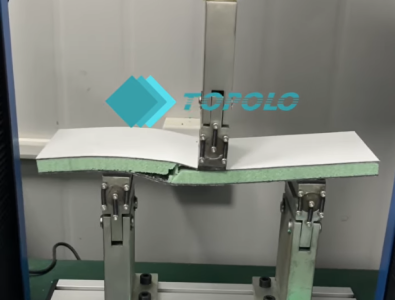
With the right forces delamination can happen.

Do not trust any in core laminated fixing points!

View attachment 905105

Sure, with sufficient forces any mechanical component will fail. By that measure all designs are "untrustworthy". Of course if you have no idea of the properties of the panel you are working with (such as if you sourced a panel from a fly-by-night supplier), then maybe there would be some concern. If you have some math and testing to offer, maybe a specific scenario you want to present, please do so.

However for a full tested and qualified composite, it is relatively straightforward to design co-molded/co-cured/co-bonded embedded reinforcements with sufficient strength for a load.

There are other reasons that one may want to avoid co-bonded reinforcements. Corrosion, thermal considerations, fabrication NDT etc, but they aren't necessarily a concern in a vehicle box. This isn't new science, there are mostly composite aircraft/airframes flying around for example. Next time you are on a commercial aircraft, have a look at the lavatories, galleys, and overhead bins. All of those composites are mostly attached with at least some "laminated fixing points". A mix of potted inserts, threaded blocks, etc. Typical core materials are nomex honeycomb, some low density rigid foams, with nomex, fiberglass, or aluminum skins. Heck, 787s and A220 aircraft have mostly composite fuselages and wings.

If you have some novel new analysis (laminar plate theory addendum perhaps?) which demonstrates why integrally bonded/molded/co-molded reinforcement is "untrustworthy" by all means let us know. Myself and thousands of composites design and repair engineers would be very curious if we have been implementing "untrustworthy" designs for all these years!


As a side note, for large composite structures it is actually desirable for a single attach point to fall. In fact delamination of the composite is critical to damage tolerance. It allows energy to be dissipated, and doesn't result in a single complete liberation, as with a fastener pull through. For a larger structure with multiple attach points, certain accidents, or overloading can cause a one of the attach points to exceed its limits, but the entire structure is still sufficiently attached. By allowing a single point to fail gracefully, its possible to avoid other more dangerous failure modes.

Essentially the mindset you are discussing is akin to a sophmore mechanical engineering student, who is concerned with "stronger better". When in fact just strong enough is often the best choice. Often for cost, weight, or damage tolerance. A perfect example is crumple zones in cars. Early car frames would often have minimum deformation during an accident. The car wasn't damaged as much, but the acceleration loading of the passengers caused severe injury often. Instead, designing the frame/body to crumple, reduces these forces. Many engine mounts are designed with intentional weak points, allowing the engine to drop out of the way, protecting the passenger compartment from load transfer or intrusion.


Another note, is that through-bolting composites has its own issues, including load distribution, core crush, interlaminar shear. It is not a panacea by any means.

 
Last edited:
It's so easy if you want to hang heavy objects: before making the panel, have the plan properly executed in AutoCAD and put 2mm steel sheets between the polyester and the XPS internally, and problem solved.
 

Forum statistics

Threads
190,931
Messages
2,930,483
Members
234,813
Latest member
rocksandtrails
Top