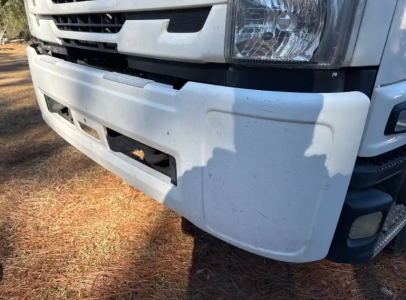
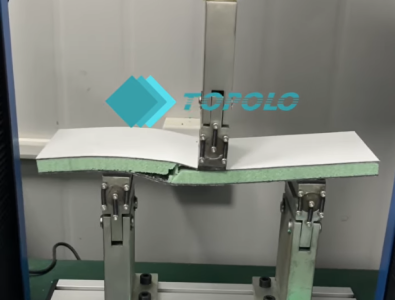
With the right forces delamination can happen.
Do not trust any in core laminated fixing points!
View attachment 905105
Sure, with sufficient forces any mechanical component will fail. By that measure all designs are "untrustworthy". Of course if you have no idea of the properties of the panel you are working with (such as if you sourced a panel from a fly-by-night supplier), then maybe there would be some concern. If you have some math and testing to offer, maybe a specific scenario you want to present, please do so.
However for a full tested and qualified composite, it is relatively straightforward to design co-molded/co-cured/co-bonded embedded reinforcements with sufficient strength for a load.
There are other reasons that one may want to avoid co-bonded reinforcements. Corrosion, thermal considerations, fabrication NDT etc, but they aren't necessarily a concern in a vehicle box. This isn't new science, there are mostly composite aircraft/airframes flying around for example. Next time you are on a commercial aircraft, have a look at the lavatories, galleys, and overhead bins. All of those composites are mostly attached with at least some "laminated fixing points". A mix of potted inserts, threaded blocks, etc. Typical core materials are nomex honeycomb, some low density rigid foams, with nomex, fiberglass, or aluminum skins. Heck, 787s and A220 aircraft have mostly composite fuselages and wings.
If you have some novel new analysis (laminar plate theory addendum perhaps?) which demonstrates why integrally bonded/molded/co-molded reinforcement is "untrustworthy" by all means let us know. Myself and thousands of composites design and repair engineers would be very curious if we have been implementing "untrustworthy" designs for all these years!
As a side note, for large composite structures it is actually desirable for a single attach point to fall. In fact delamination of the composite is critical to damage tolerance. It allows energy to be dissipated, and doesn't result in a single complete liberation, as with a fastener pull through. For a larger structure with multiple attach points, certain accidents, or overloading can cause a one of the attach points to exceed its limits, but the entire structure is still sufficiently attached. By allowing a single point to fail gracefully, its possible to avoid other more dangerous failure modes.
Essentially the mindset you are discussing is akin to a sophmore mechanical engineering student, who is concerned with "stronger better". When in fact just strong enough is often the best choice. Often for cost, weight, or damage tolerance. A perfect example is crumple zones in cars. Early car frames would often have minimum deformation during an accident. The car wasn't damaged as much, but the acceleration loading of the passengers caused severe injury often. Instead, designing the frame/body to crumple, reduces these forces. Many engine mounts are designed with intentional weak points, allowing the engine to drop out of the way, protecting the passenger compartment from load transfer or intrusion.
Another note, is that through-bolting composites has its own issues, including load distribution, core crush, interlaminar shear. It is not a panacea by any means.