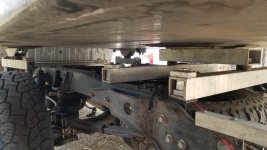
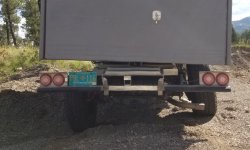
Do you have photos of this installed?
Many photos on my build thread
Do you have photos of this installed?
This will have to do for now. Basically where you want pivoting to occur the isolators need to be in a line. Can do 3 point or 4 point easily enough. These are the soft Energy Suspension universal body mount bushings, cost ~$20 each now. Though I was told these would take a static load of 800 lbs each, that might be optimistic.Interesting concept - do you have any photos?


Interesting - simple and effectiveThis will have to do for now. Basically where you want pivoting to occur the isolators need to be in a line. Can do 3 point or 4 point easily enough. These are the soft Energy Suspension universal body mount bushings, cost ~$20 each now. Though I was told these would take a static load of 800 lbs each, that might be optimistic.
It would allow a little, but not enough for a C-channel frame. You really want wide spaced mounts in front and all the rest on a center line. Or you could simulate a 4 point arrangement if that works better for you.I don't have a composite camper (just a traditional slide-in) and I wonder if mounting the flatbed that is laid out like the factory bed and installed using those universal body mount bushings at each bed mount (8 locations) would allow some flexibility and spread the load/flex out more
Yes I am working on a simple "flatbed" which will replicate the stock bed rails/bed and support the camper on the 4'wide x 8' base, be secured with torklift mounts to the flatbed, and the sides will be home made boxes and fold down sides (similar to sherptek). In the future I would love a custom camper, so if I can incorporate some flexible mounts now, it could save later.It would allow a little, but not enough for a C-channel frame. You really want wide spaced mounts in front and all the rest on a center line. Or you could simulate a 4 point arrangement if that works better for you.
If you mount a stiff flatbed to a flexible chassis, then the flex will just get transferred to the part that is still able. In that case the biggest stress concentration will be at the forward mounts. A lot of people seem to get away with this, but I've heard of failures also.
If the camper stays on the truck all the time, then the "flatbed" can be a pretty simple and light frame that reinforces and mounts to the camper, and allows pivoting.

the future custom camper would be a flatbed configuration with the same dimensions as my current slide in camper. So, ideally, the only change would be the mounting method and points to the flatbedWould the custom camper be a slide-in as well?