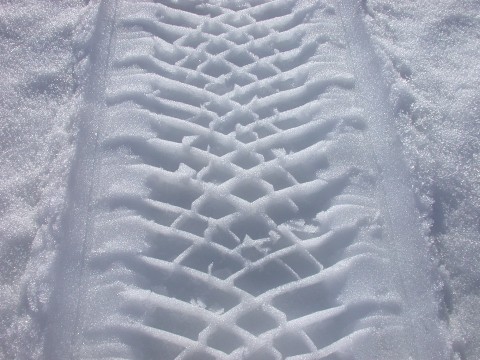
If snow just had one consistency then there would be just one answer to this question, but snow varies due to it's free water content. The typical Utah powder has little free water and when you drive over it doesn't from a large ice layer. Sierra Cement has a high free water content so when you drive over it forms ice.
The other variable are tires, treads, sipes, depth of tread etc. If you have a less aggressive tread then chains can provide great traction.
Deflating tires for floatation works well in some conditions as the tires ride on the top snow layer, stopping the car from becoming bogged down or sinking into the snow (think Iceland). But for changes in direction the tires have to have good tread.
Floatation is not required, nor is it necessarily beneficial, if the snow can be compacted, and the vehicle has clearance above the snow. In this case an aggressive tread pattern, or chains, along with a high psi from a small foot print are beneficial.
In addition to the snow variables, and tire variables, we have to add the variables of speed control, direction changes, and terrain changes (going uphill or downhill). As you can see the issue become very complex when you start to compound them.