Get your tickets to THE BIG THING 2026!

Demountable composite box to flatbed mounting system without pivoting subframe.

I manufacture insulated fiberglass truck utility bodies (which are sometimes used as a starting point for campers).

These trucks are DRW chassis cabs with C-channel frames and conventional flatbeds. Several of these trucks are used by rural fire departments, and are treated worse than a rental car by young men running "code three" to accidents, fires, etc and see lots of very rough use on poorly maintained fire service roads. The punishing use these trucks endure is much worse than most would want to subject their camper to, and the only structural damage any of them have picked up is from striking low hanging trees. 😄
 
Last edited:
I manufacture insulated fiberglass truck utility bodies (which are sometimes used as a starting point for campers).

These trucks are DRW chassis cabs with C-channel frames and conventional flatbeds. Several of these trucks are used by rural fire departments, and are treated worse than a rental car by young men running "code three" to accidents, fires, etc and see lots of very rough use on poorly maintained fire service roads. The punishing use these trucks endure is much worse than most would want to subject their camper to, and the only structural damage any of them have picked up is from striking low hanging trees. 😄
Cool. What are the details on your mounting system?
 
Last edited:
I manufacture insulated fiberglass truck utility bodies (which are sometimes used as a starting point for campers).
Cool... any links or more info?

The punishing use these trucks endure is much worse than most would want to subject their camper to, and the only structural damage any of them have picked up is from striking low hanging trees. 😄
The somewhat unique situation that overland campers have, is regularly going through ditches or ravines at an angle, or just ground that is very uneven. If the flatbed is stiff and heavy, then that will protect the camper from twist, but it will transfer more stress to the truck's frame, creating a stress concentration at the forward mounting point. Even if that was dealt with by reinforcing the frame, it's better for traction and performance to let the frame twist as it's designed, and have the flatbed articulate.
 
Cool... any links or more info?

My earlier post included a few details and several photos. I removed that info several days later. I am not trying to get free/stealth advertising from this site.

If the flatbed is stiff and heavy, then that will protect the camper from twist, but it will transfer more stress to the truck's frame, creating a stress concentration at the forward mounting point. Even if that was dealt with by reinforcing the frame, it's better for traction and performance to let the frame twist as it's designed, and have the flatbed articulate.

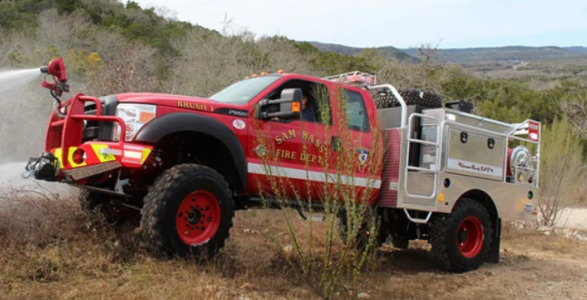
Chassis cab trucks are built to carry heavier loads than pickups (GVWRs 14k - 22k). My rural FDs run F450 and F550. These same trucks are often decked out as wildland fire engines which carry 300-400 gals of water plus PTO driven pumps, plumbing, winches, brush guards, hand tools, etc (vehicle weight 16k-19k). The heavy frames on those chassis cab trucks provide no noticable flex when carrying one of my big boxes of air, configured as a mobile command center (or camper).

brush truck.png
 
The heavy frames on those chassis cab trucks provide no noticable flex when carrying one of my big boxes of air, configured as a mobile command center (or camper).
Frame twist will be evident when 2 diagonal tires are carrying all the load. Even newer F550s are boxed under the cab, but C channel in back, and will readily twist unless some structure is resisting that motion. Most chassis designed to carry heavy loads are made this way.
 
Last edited:
My earlier post included a few details and several photos. I removed that info several days later. I am not trying to get free/stealth advertising from this site.


Chassis cab trucks are built to carry heavier loads than pickups (GVWRs 14k - 22k). My rural FDs run F450 and F550. These same trucks are often decked out as wildland fire engines which carry 300-400 gals of water plus PTO driven pumps, plumbing, winches, brush guards, hand tools, etc (vehicle weight 16k-19k). The heavy frames on those chassis cab trucks provide no noticable flex when carrying one of my big boxes of air, configured as a mobile command center (or camper).

View attachment 909816
My opinion is that you can post open source design details relevant to a discussion as a business entity without violating protocol.
 

Forum statistics

Threads
191,330
Messages
2,935,696
Members
235,317
Latest member
5mouse
Top