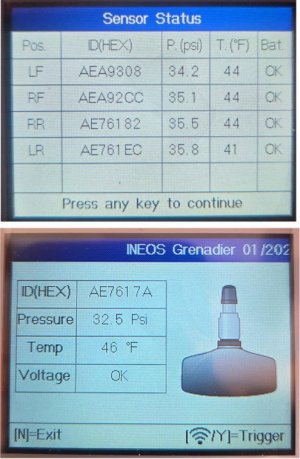
Outfitting my Grenadier Trialmaster

Wow, that's a crazy amount of miles and builds! Retiring two well-used Jeeps for a Trialmaster is awesome. I'm excited to see how your overland setups work on the Grenadier.
I got the Grenadier at the end of November last year and at the end of this November it had done just over 20,000 miles. That includes two trips out west (we live in Delaware), overland/camping in Death Valley and off-roading in Utah. So far all of the modifications/additions I've made are working well, especially out in the wild. My only complaints are things that Ineos didn't get right when they designed the Grenadier, like the TPMS system and a few other small things.
 
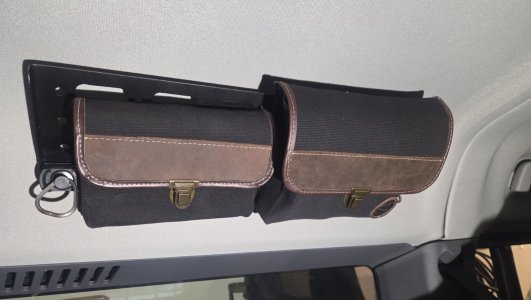
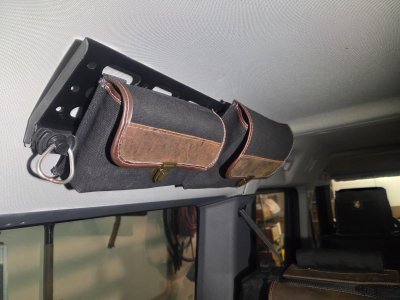
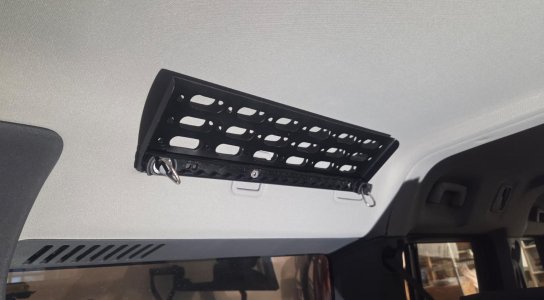
About two months ago I installed overhead MOLLE panels with L-Tracks in the cargo compartment above the side windows. I've been using mostly ordinary MOLLE pouches on the panels and they've proven to be very useful extra storage and the panels performed well on our off-road trip out west to Death Valley and Moab. I didn't have optimal size MOLLE pouches for this location so I sewed a few which should be more useful than the pouches I was using and I think they're better looking. I've done two sizes so far to see which size is most useful.

OverheadBags1.jpg

OverheadBags2.jpg

OverheadBagLining.jpg

OverheadMOLLE-LTrack.jpg
 
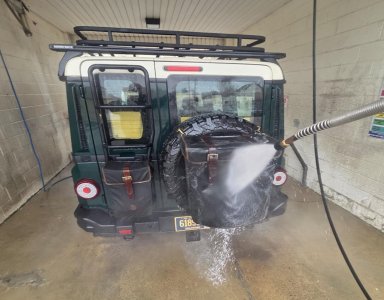
I drove about 300 miles the other day on salted New Jersey roads, when I got home the Grenadier was so salt encrusted that hardened salt deposits were building up on the hot tailpipe tips. Had to get the salt off so went to a self-serve carwash, in this photo I'm desalting the Sparehopper bag and Ladder bag. Nice that they can be pressure washed like this. When I don't have the roof rack on I go through the automatic car wash with them in place no problem.

CarWash.jpg
 
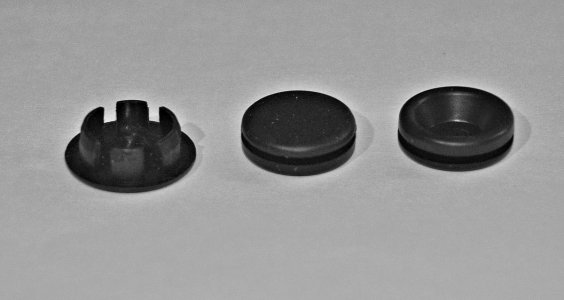
One of the little things that Ineos got wrong are the hole plugs in the plastic cowl panel by the wipers. I've seen many comments about them going missing and I discoverer that one of mine was missing the other day. Probably came out when I was in the manual car wash using the pressure wand. The factory plugs just don't fit tightly enough. I installed better ones that won't go missing - they're rubber and grip the hole all the way around. Left to right in this photo: factory hard plastic plug, new rubber plug topside up, new rubber plug bottom side.

CowlPanelPlugs.jpg

The plugs are for 5/8" holes in 1/16" panels and they fit very well.

They can be bought in small quantities although they're not the best deal that way. McMaster sells them in packs of 25 for $9.06 (plus shipping): https://www.mcmaster.com/9600K515/

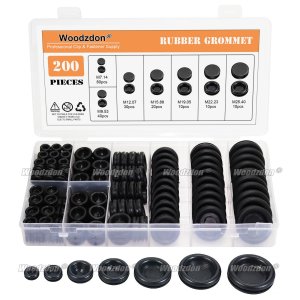
I bought mine on eBay, I got an assortment of 200 pieces of different sizes for $12.97 with free shipping. The 15.88 mm size is correct for this application. The assortment was less expensive than the McMaster ones would have been with shipping and it's a good assortment to have on hand: https://www.ebay.com/itm/335037975802

CowlPanelAssortment.jpg

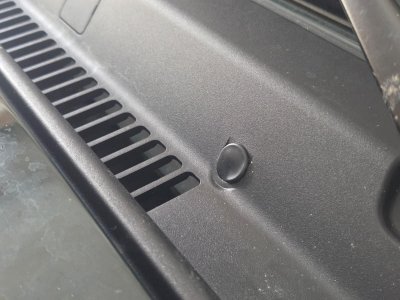
A new plug in place:

CowlPanelPlugs2.jpg
 
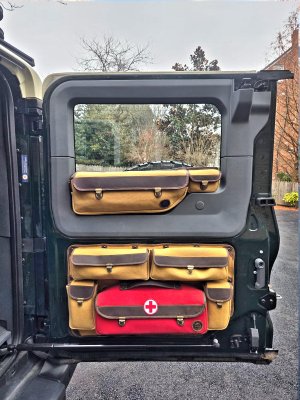
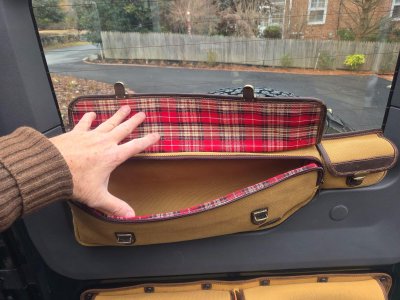
I received preproduction samples of the rear door window bags from the craftsmen at Overland Outfitters. I had designed and sewed a bag for the narrow door window as a proof-of-concept and six weeks ago I sent that bag and a design and patterns for a wide rear door window bag to them; they created samples for testing as a first step towards deciding if they should put these production.

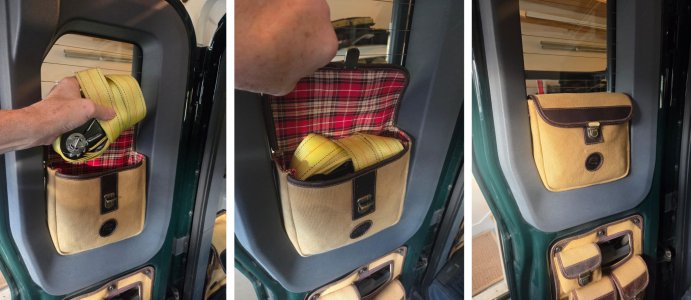
The narrow door window bag is basically a duplicate of the proof-of-concept bag I sewed. It's pretty much ready for production, but probably should undergo a little testing first. The pocket panel on the lower half of the door is already in production.

NarrowDoorBag.jpg

NarrowDoorBagOpen.jpg

The wide door bag has two pockets, a large pocket on the low side of the window and a smaller pocket on the high side.

WideDoorBag2.jpg

The wide side also has a zipper closure.

WideDoorBagOpen.jpg

I'm not completely satisfied with the fit of the wide door bag, so I'll make a few suggestions to the folks at OO and ask for another sample with the changes. Maybe I'll ask for a black sample to see how it looks in that color. Also the bags probably need some good testing before OO decides to put them in production.

The bags are not higher than the spare, so visibility out the back isn't any worse than it is without the bags. I designed the narrow door bag to be a little taller than the wide door bag, let me know if you think they should both be the same height, and if so, should the narrow door bag be lower or should the wide door bag be taller.

Both mount very securely without screws, double side tape or any other "destructive" attachment method; they don't damage the door and they're easily removable.

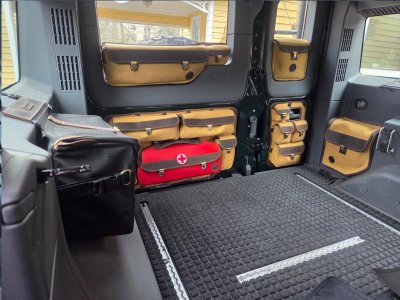
Here's a View of the bags along with some other Grenadier products from Overland Outfitters (https://www.overland-outfitters.com/ineos-grenadier.html#/):

AllBagsPsgrView.jpg
 
Pretty much every week I'm carrying something from some lumberyard on top of my Grenadier as we're in the process of renovating our new-to-us 200-year old home. I keep ratchet straps in the pockets on the rear doors for securing these loads and I'm testing the small door window bag by carrying two heavy-duty 2" x 20' ratchet straps in the bag. It's a total weight of about six pounds. Two straps just fit in the bag. The bag is doing fine, there's no movement even when slamming the door. I think this bag is ready for production. I'm going to ask for a few tweaks to the wide door window bag to perfect it's fit in that window space so that one will take a little longer to get into production.

NarrowDoorBagTesting.jpg
 
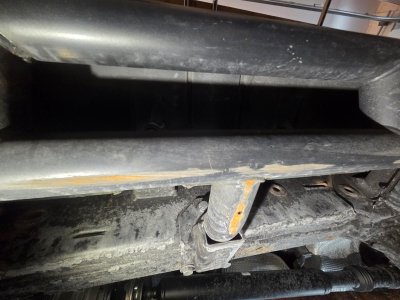
During my trail time in Moab, Utah in November my factory rock rails did their intended job - on one obstacle I scraped along on the driver's side rail. This exposed bare metal and in the six weeks since that trip, rust began to form.

RockRailRust.jpg

It's been too cold all that time to remedy the rust but today was warm enough so I applied Eastwood's Rust Encapsulator Plus to the affected areas. It dries to a matte finish, the photo shows it just after application.

RockRailRustEncapsulated.jpg

A topcoat is recommended because it isn't very UV-resistant, but in the past on other vehicles I've skipped that step because the encapsulated areas face the ground and won't see much sun.

RustEncapsulator.jpg

Keeping up with scrapes like this helps the rock rails last a long time.
 
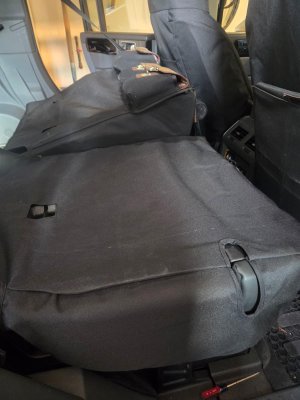
To gain a little more flexibility and space in the cargo area, I installed Rear seat quick release mounts from Askitus (https://askitus.com/rear-seat-quick-release-mounts/p4). These enable the seat bottoms to be removed with no tools, which allows the seat backs to fold down to a horizontal position.

The mounts are installed on the small side of the seat in this photo - the one closest to the camera is unsnapped.

SeatQuickRelease1.jpg

This photo shows the difference - the small seat bottom is removed and that seat back is horizontal, the wide seat back, which doesn't have these mounts installed yet, is higher.

SeatQuickRelease2.jpg

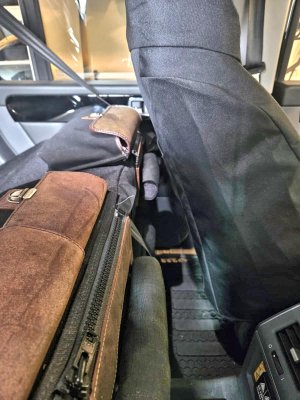
Another thing that's always bothered me - the two large headrests on the back seat. I'm 6'6" and have my driver's seat all the way back, and the seat backs with the large headrests won't fold down unless I move the seat forward. That's not useful for me so I swapped all three rear seat headrests for these low profile ones. In this photo they're pushed all the way down, but they do go up for better head support just like the factory ones.

LowProfileHeadrests2.jpg

With these the seat backs fold down while the front seats are all the way back. This picture was taken before I installed the quick release clips on this side so the seat back isn't all the way down but you can see how the headrests clear the back of the front seats.

LowProfileHeadrests3.jpg
 
For years I've had second spares for my Wranglers. I often carry them on expeditions in the event something fatal or not easily repairable happens to one of the tires on the vehicle. I don't want to be without a spare when I'm miles from the nearest road and even further from the nearest service.

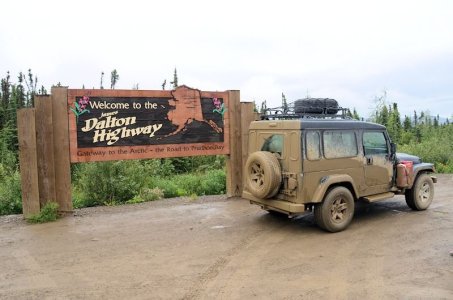
When I drove my '06 Wrangler up the Dalton Highway in Alaska to Deadhorse on the Arctic Ocean, I carried three spares. One on in the normal place on the tailgate, one inside in the cargo area and one on top. I did this because in the 500 miles between Fairbanks and Deadhorse there's only one place for possible service (at 250 miles) and there wouldn't be a replacement tire there anyway. The Dalton is well known for shaking parts loose from the oilfield trucks and I did end up with a bolt in one tire, although it held air until I got back to Fairbanks.

This photo was taken at the south end of the Dalton on the way home, it was a 1000-mile round trip from here to Deadhorse and back, half of which was unpaved. The bolt is still in the tire at this point, I swapped that tire for one of the spares after a thorough car wash. As long as it was holding air there was no need to get muddy doing the swap.
DaltonEnd.jpg

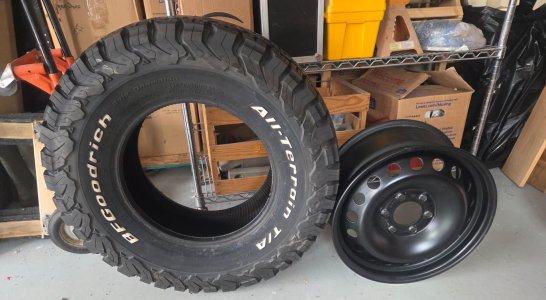
I've been looking for a second spare for the Grenadier and in the last two weeks I found a take-off wheel and a never-mounted KO2 tire, both for much less than retail.
TireAndWheel.jpg

I'll need to pick up a pressure sensor before I have the tire mounted.

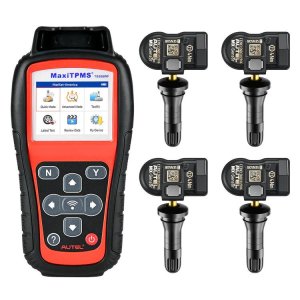
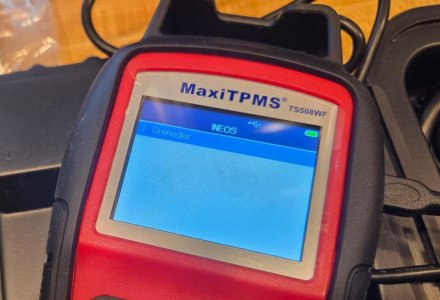
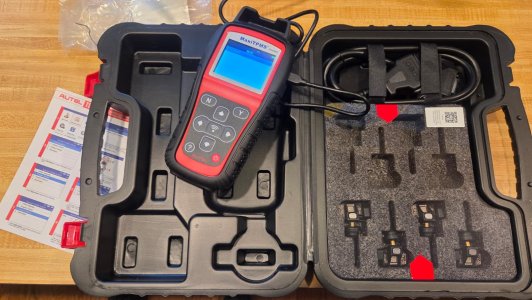
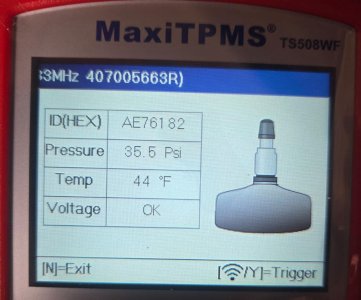
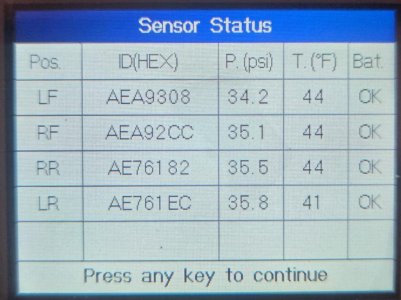
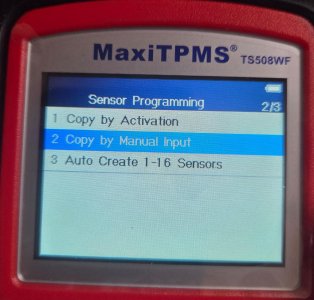
The other thing I want to get is a TPMS tool so I can program the sensors (and/or program the Grenadier). One of the annoying things about the Grenadier is the stupid TPMS system. I use the word stupid because it won't recognize when a tire has been changed - you need to either reprogram the vehicle to know about the new sensor or program the new sensor to have the same ID as the one removed. My 13 year old Wrangler will automatically recognize changes but not the Grenadier. I'm told that some people say the Grenadier will recognize one change after some miles and time, but I'm not sure I trust that.

I don't want to swap a tire on a trip and have a TPMS warning on the dash until I can get home and get to a dealer, so carrying a TPMS tool is a requirement. More on this subject when I get one.

 

Forum statistics

Threads
191,121
Messages
2,933,222
Members
235,045
Latest member
Driftwood_seq
Top