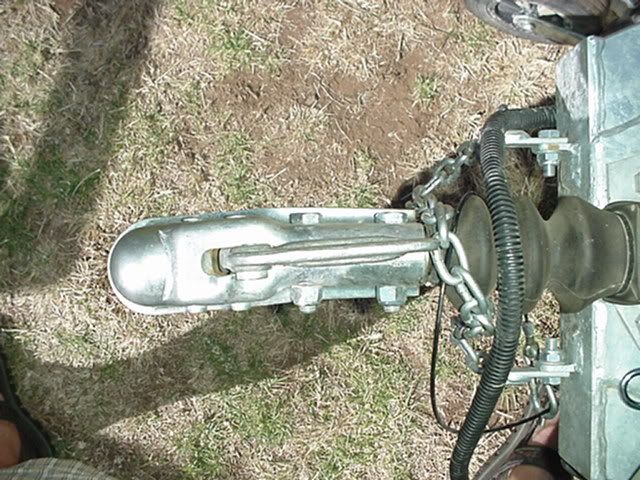
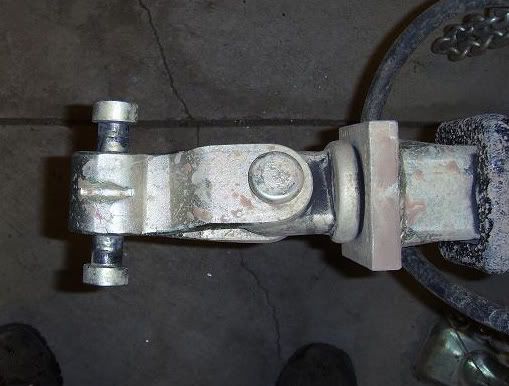
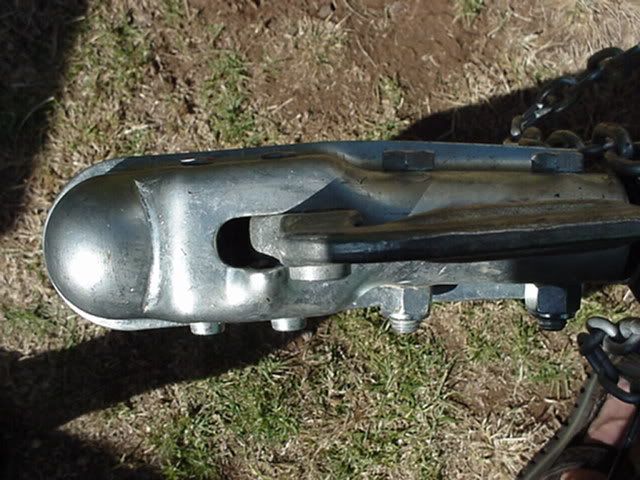
It's an interesting engineering problem this. We need many degrees of freedom to prevent binding, but not too many because that causes other problems.
The root problem for all the binding issues I have seen really only occurs in backing up - where the hitch is too flexible to avoid over-rotation and resultant binding. The only real solution is a more rigid coupling when reversing direction. The pintle/lunette arrangements is necessarily stiff, and thus really cannot bind (just rubs, clanks, bangs, and otherwise annoys all around).
The Max Coupler actually looks to be an interesting design in this respect, in that it limits the degrees of freedom in reverse. Of course, if you jack knife the trailer, you are probably going to damage the rotating pins. But the lack of a flexible link between rig and trailer should really help minimize binding potential.

In the Lock-n-Roll it's distorting the coupler, we know the coupler has been tested up to 18000 lbs (3 times it's rating),
I would think the test was a straight on pull? The LnR coupler is bending with much less than 18k lbs in this case. When it binds, the forces are being applied in a way the manufacturer didn't intend.
From personal experience I can attest to the fact that an inflexible ball coupler can also be bent due to jack knifing
I would think the test was a straight on pull? The LnR coupler is bending with much less than 18k lbs in this case. When it binds, the forces are being applied in a way the manufacturer didn't intend.
No doubt.
BTW I have also seen bent Lunettes and Pintles. They will bend if caught just right (90 right angle with an up or down angle can cause the ring to catch and torque on the pintle = bad news and no field fix unless you carry these as heavy spares).
Yes that is true - but the question I ask is why. When we use the term "jack knife" some of us are talking about the position of the trailer relative to the rig vs actual contact and damage due to contact with the rig. I have never seen a ball coupler get bent due to binding without contacting the tow rig from the side as well as the hitch. The ball, on the other hand, can get torn all to heck (as well as bending the ball retainer plate).
Is that what you mean? If not, please elaborate so we can visualize the forces leading to the failure.
The ball coupler appears to have been bent after the truck/trailer were truly jack-knifed, with the bodies touching, and the driver kept backing up.
By comparison, it appears to me that the LnR can bend not from a true jack-knife, but merely by backing up too far, then pulling forward. It's not a stress from body contact, but just because the coupler gets out of alignment.
The ball coupler appears to have been bent after the truck/trailer were truly jack-knifed, with the bodies touching, and the driver kept backing up.